
This art project invited students to explore their inner world and give a visual shape to their feelings. By creating a personal “Gallery of Emotions,” we combined self-reflection with artistic expression, using colors, shapes, and symbols to represent what we feel inside.
In this workshop, we explored our inner world by asking ourselves an ambitious question: is it possible to draw our emotions? By connecting our work to Goal 3 of the 2030 Agenda (Good Health and Well-being), we understood that well-being starts with the ability to recognize and express what we feel. Drawing inspiration from the lyrical abstraction of Kandinsky and the expressive power of artists like Pollock and Klee, we transformed the invisible into lines, shapes, and colors.
This activity allowed us to practice self-awareness, teaching us that art is a powerful tool for communicating who we truly are, moving far beyond our outward appearance.
Materials Needed:
- Drawing paper (24×33 cm)
- Black cardstock (A4 size)
- Watercolors, tempera or acrylic paint, oil pastels, and colored pencils
- Markers and pens
- Paper scraps for collage
- Scissors, glue, and adhesive tape
Step 1: Creating the Leporello
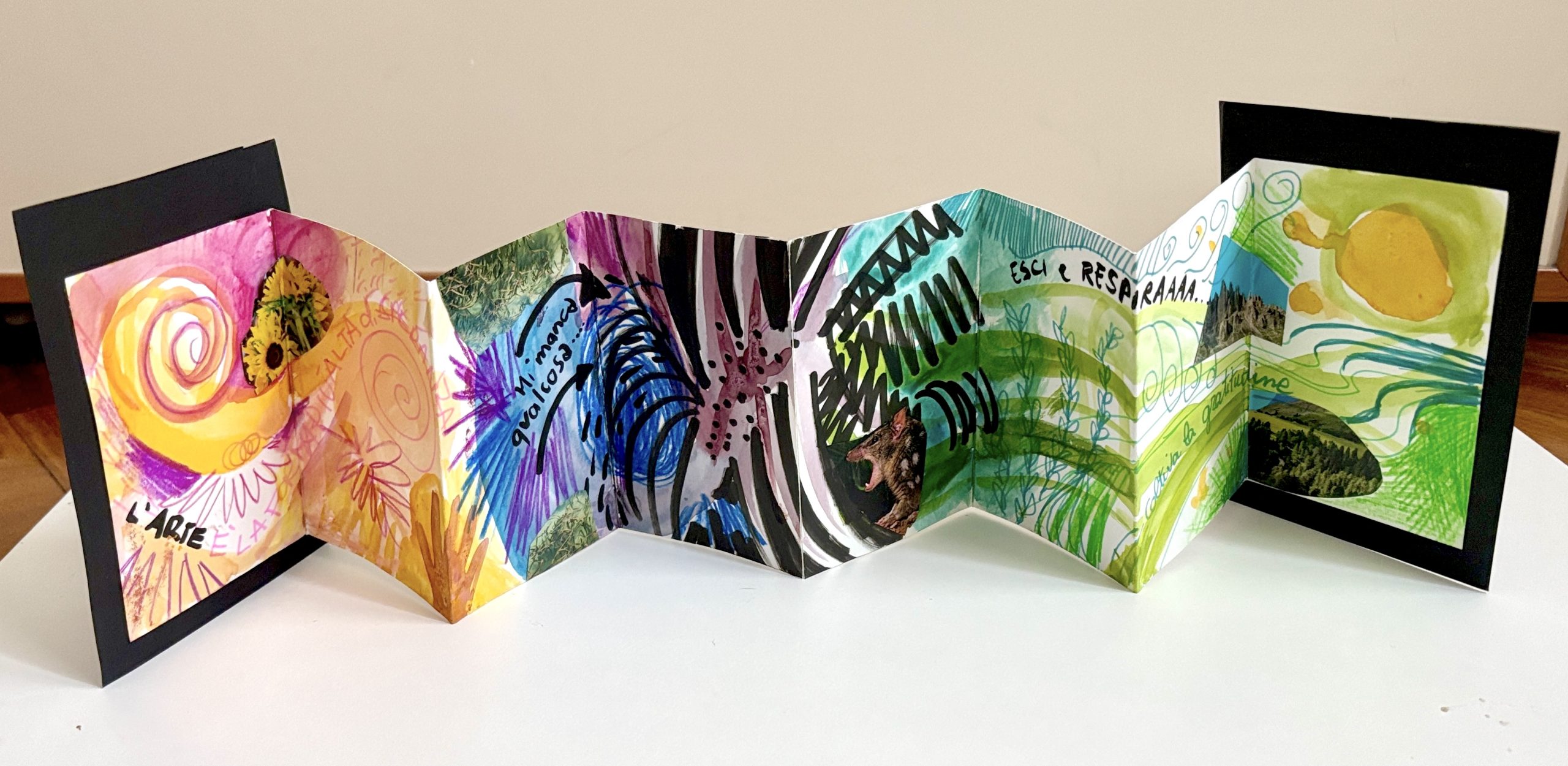
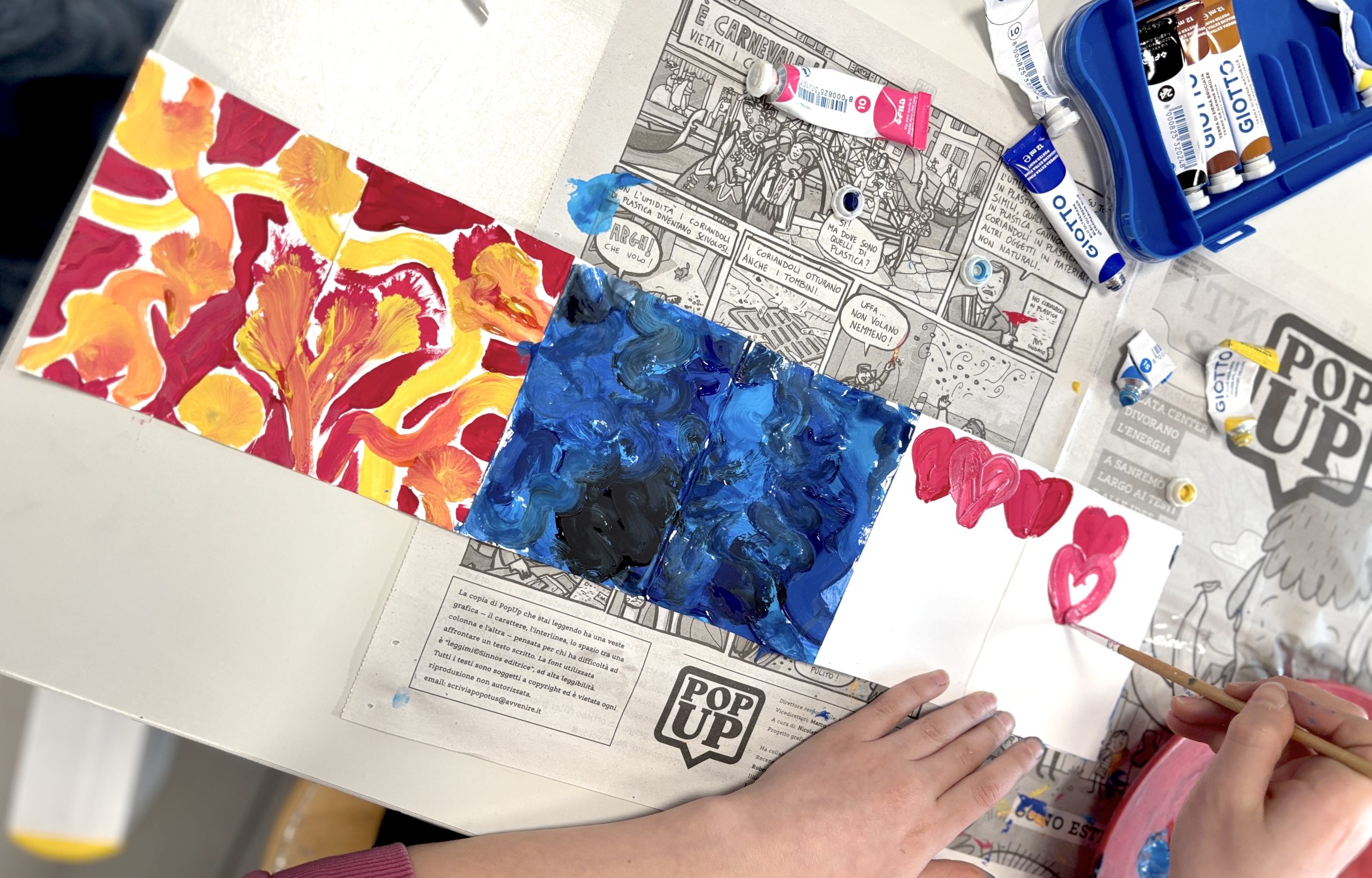
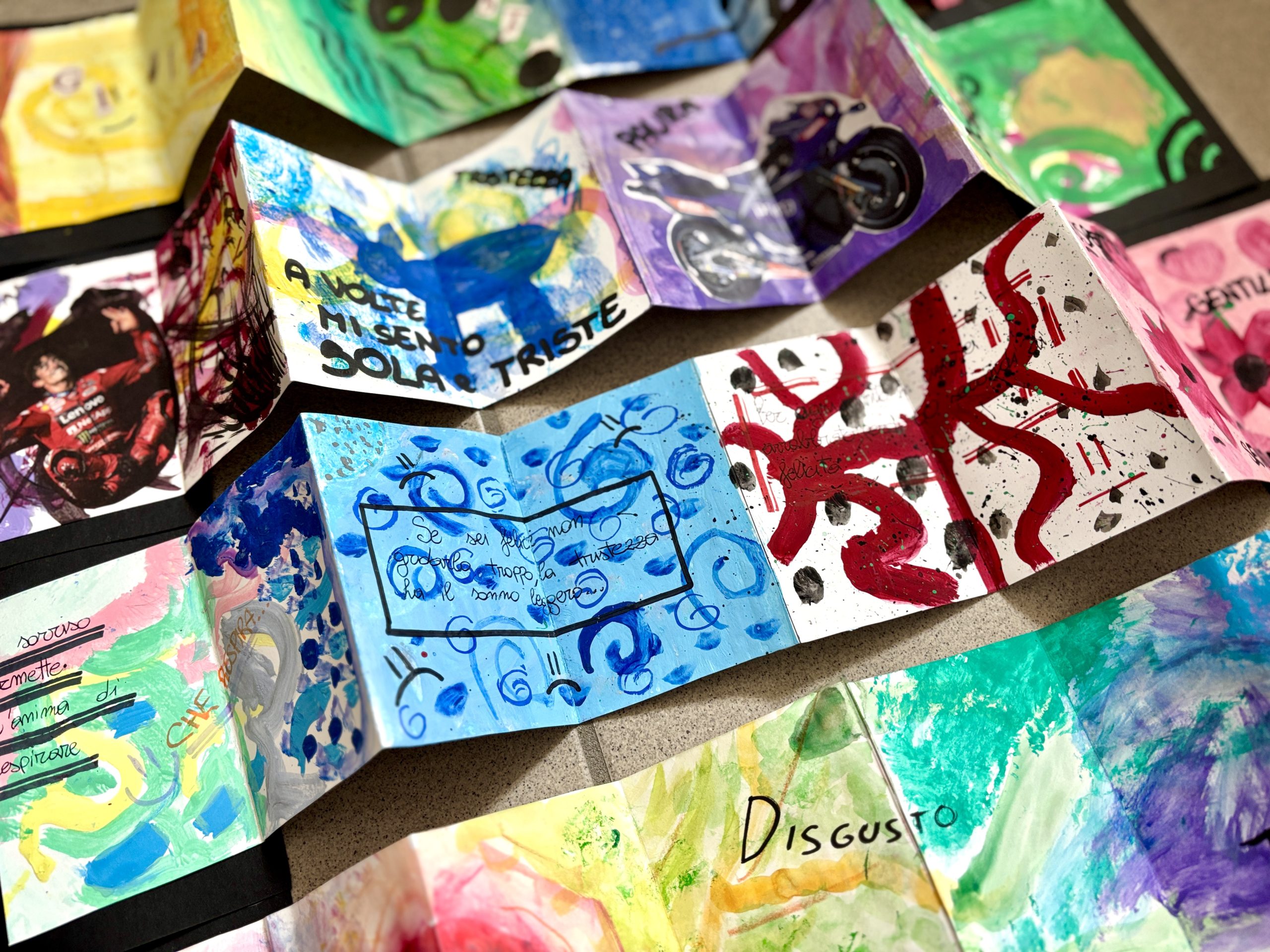
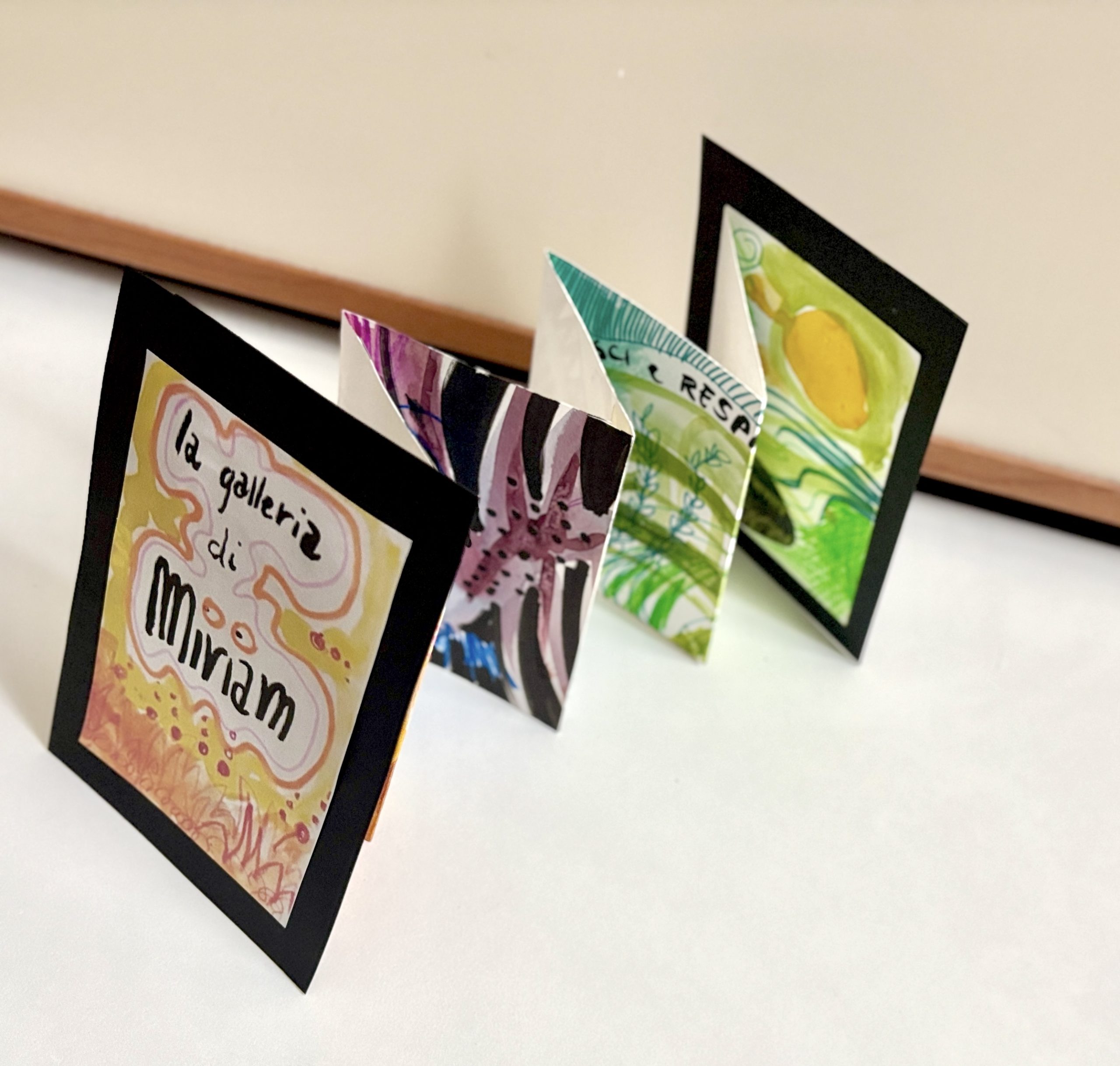
We began by preparing the structure for our project: we cut a sheet of drawing paper in half horizontally and joined the two strips with adhesive tape to create one very long strip. This base was then accordion-folded into eight equal parts to create a leporello (or concertina book). This specific format allows the content to be revealed or hidden—much like the way we sometimes handle our own feelings.
Step 2: Expressing Emotions Through Mixed Media
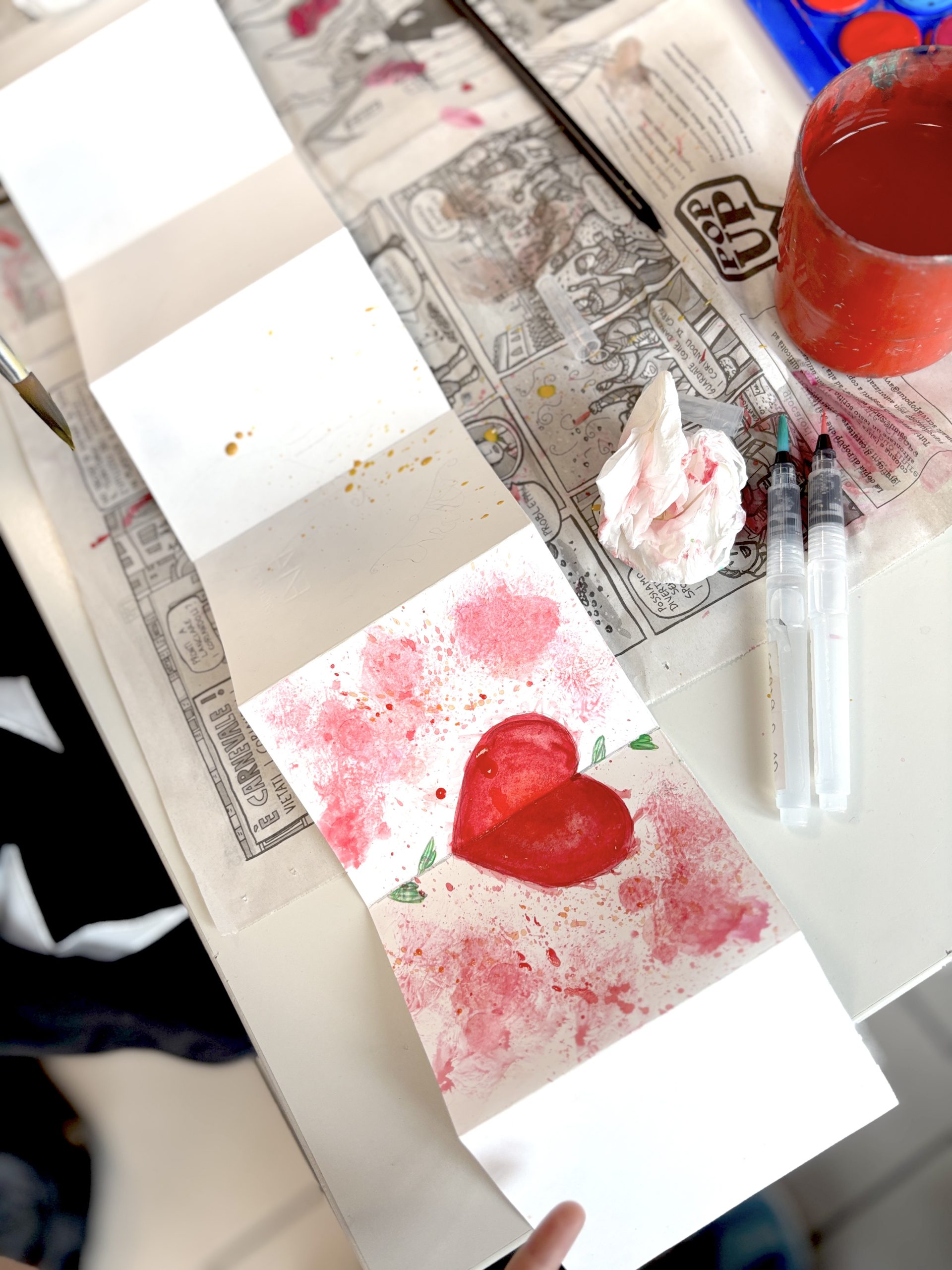
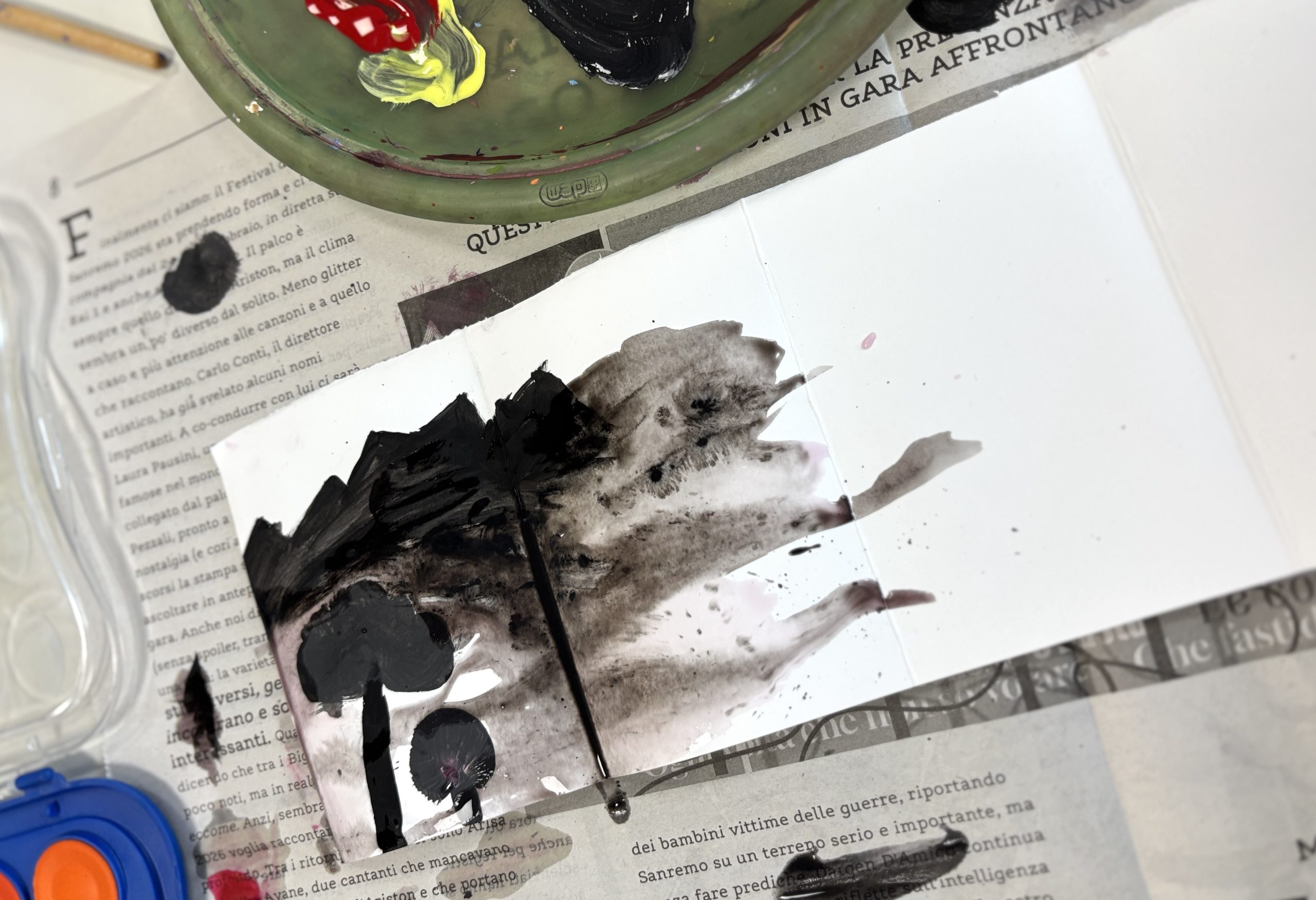
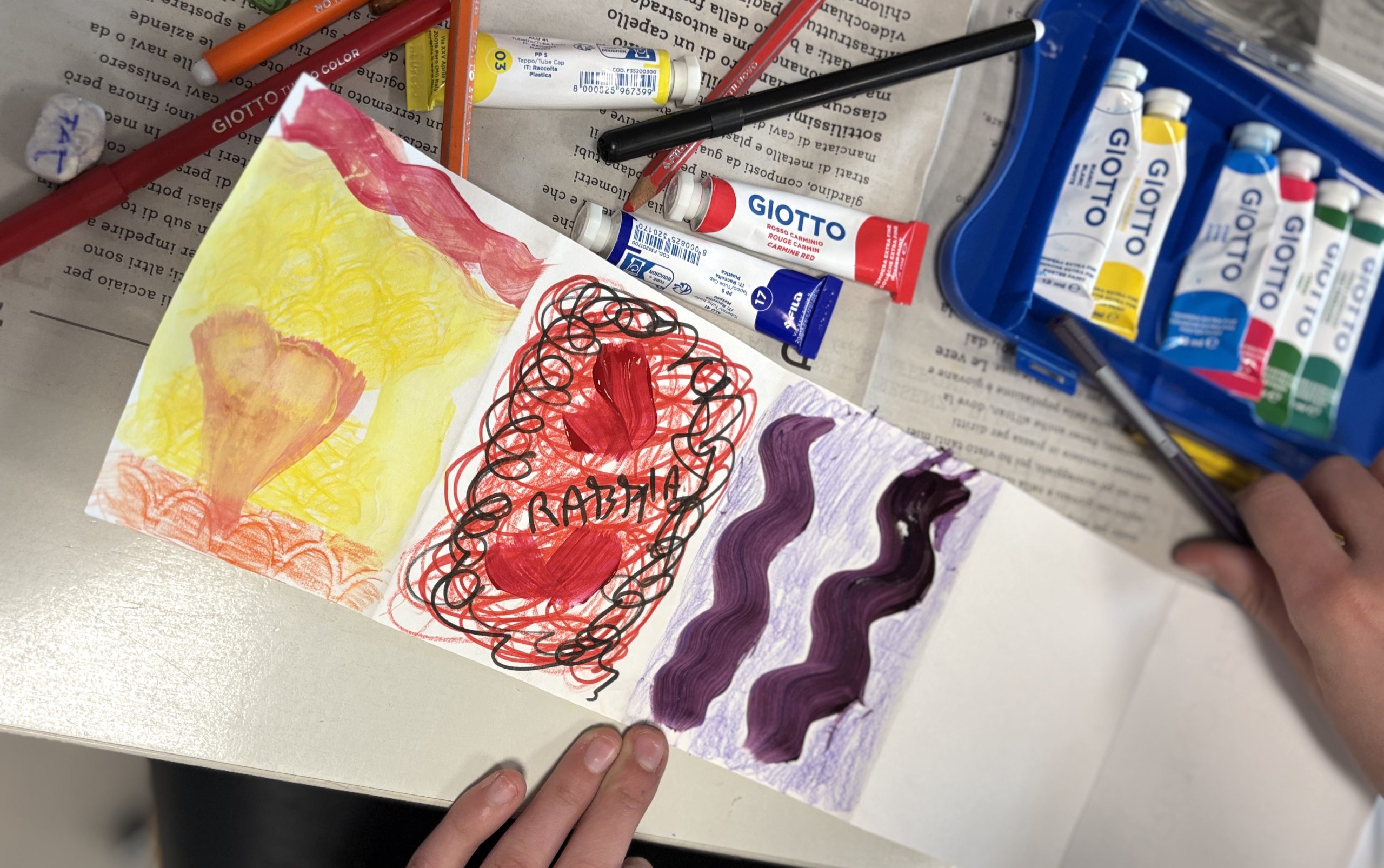
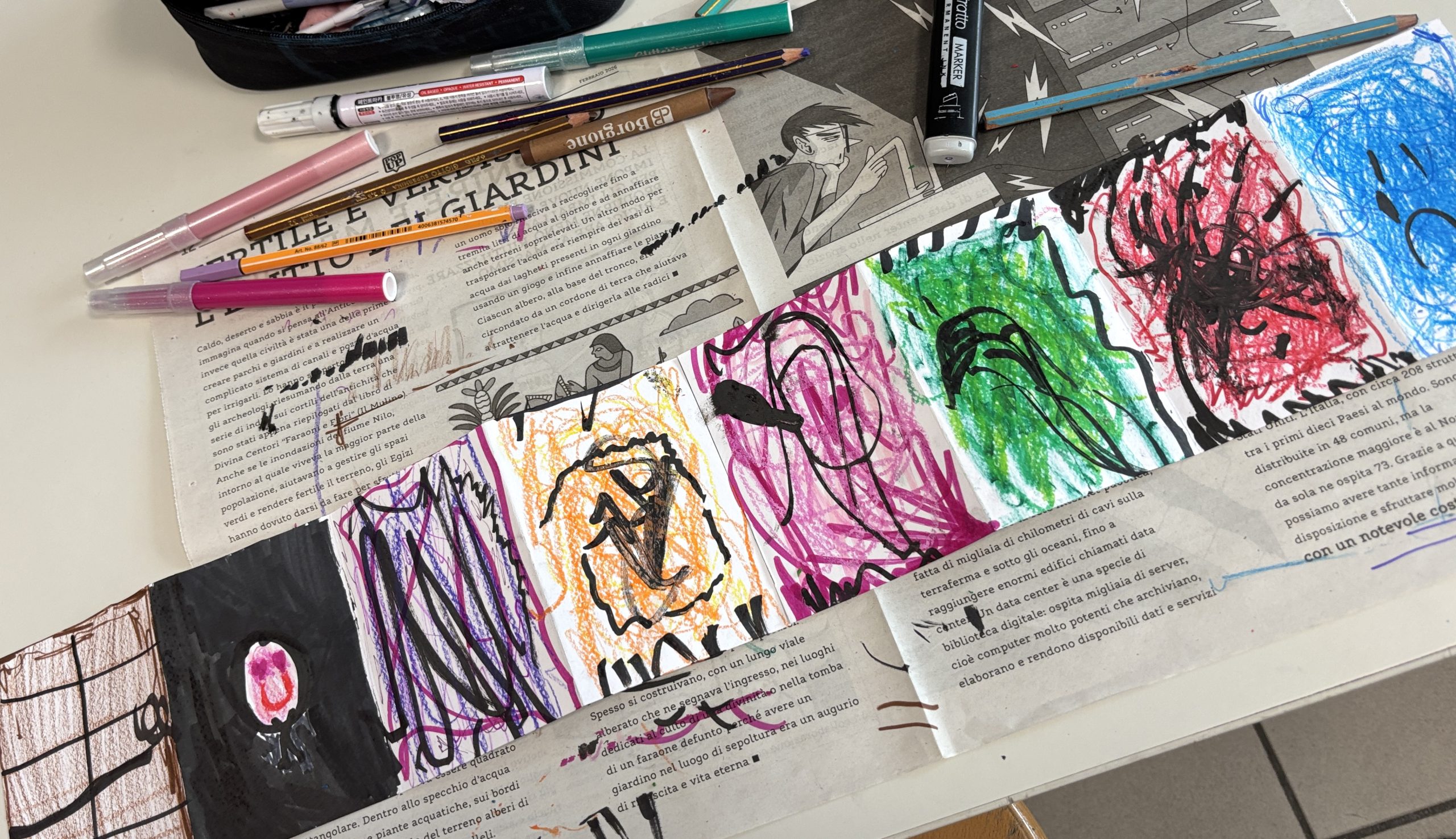
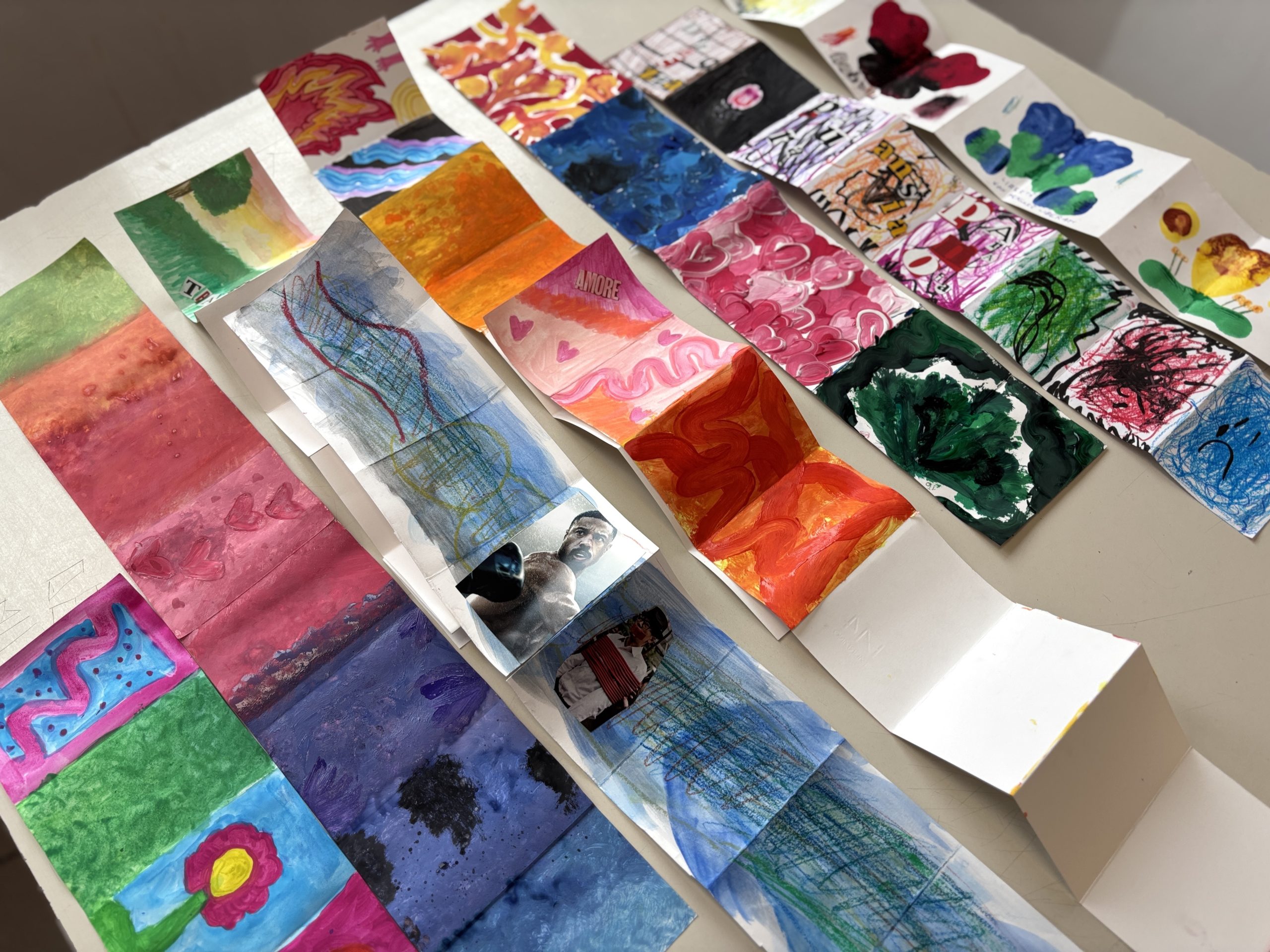
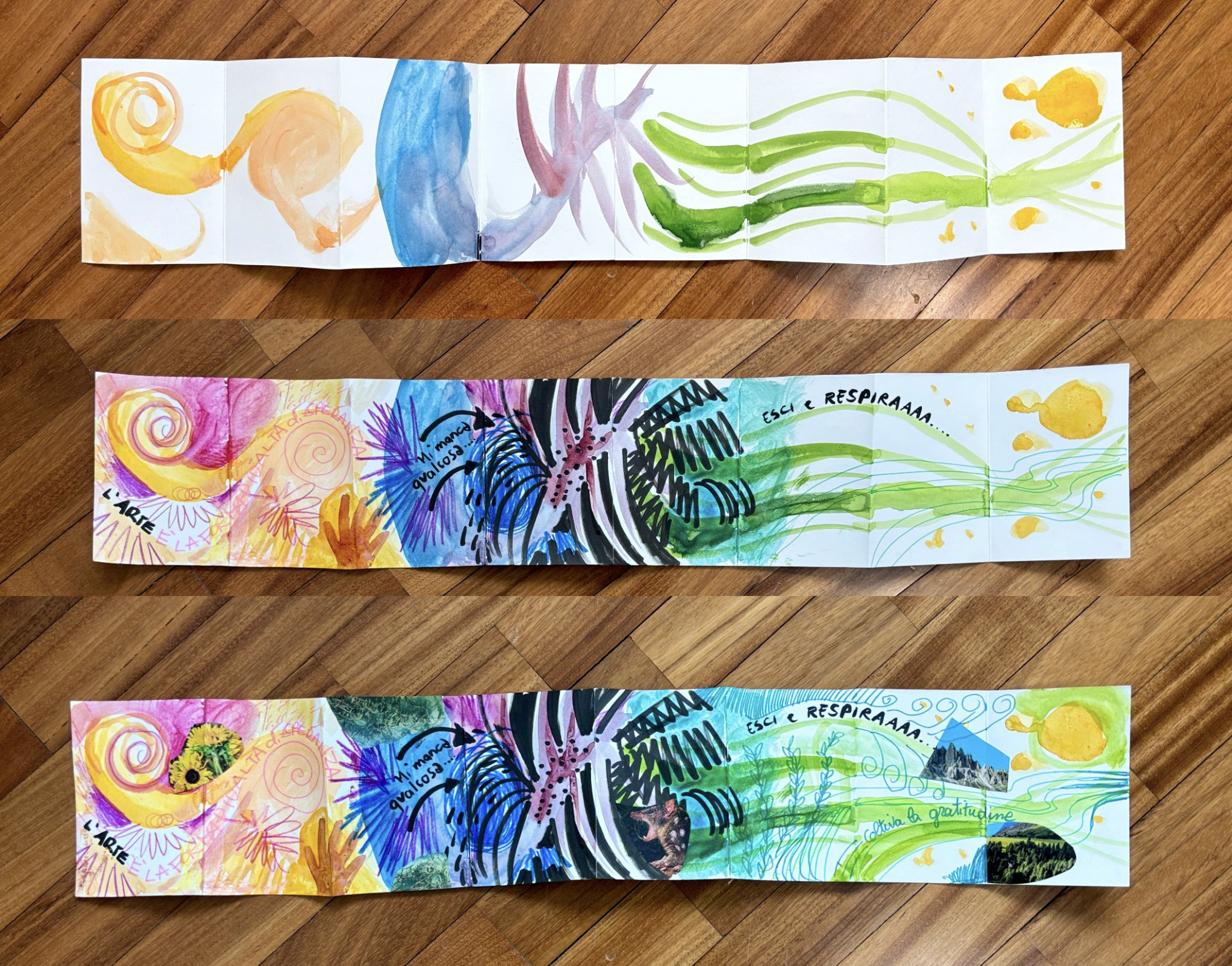
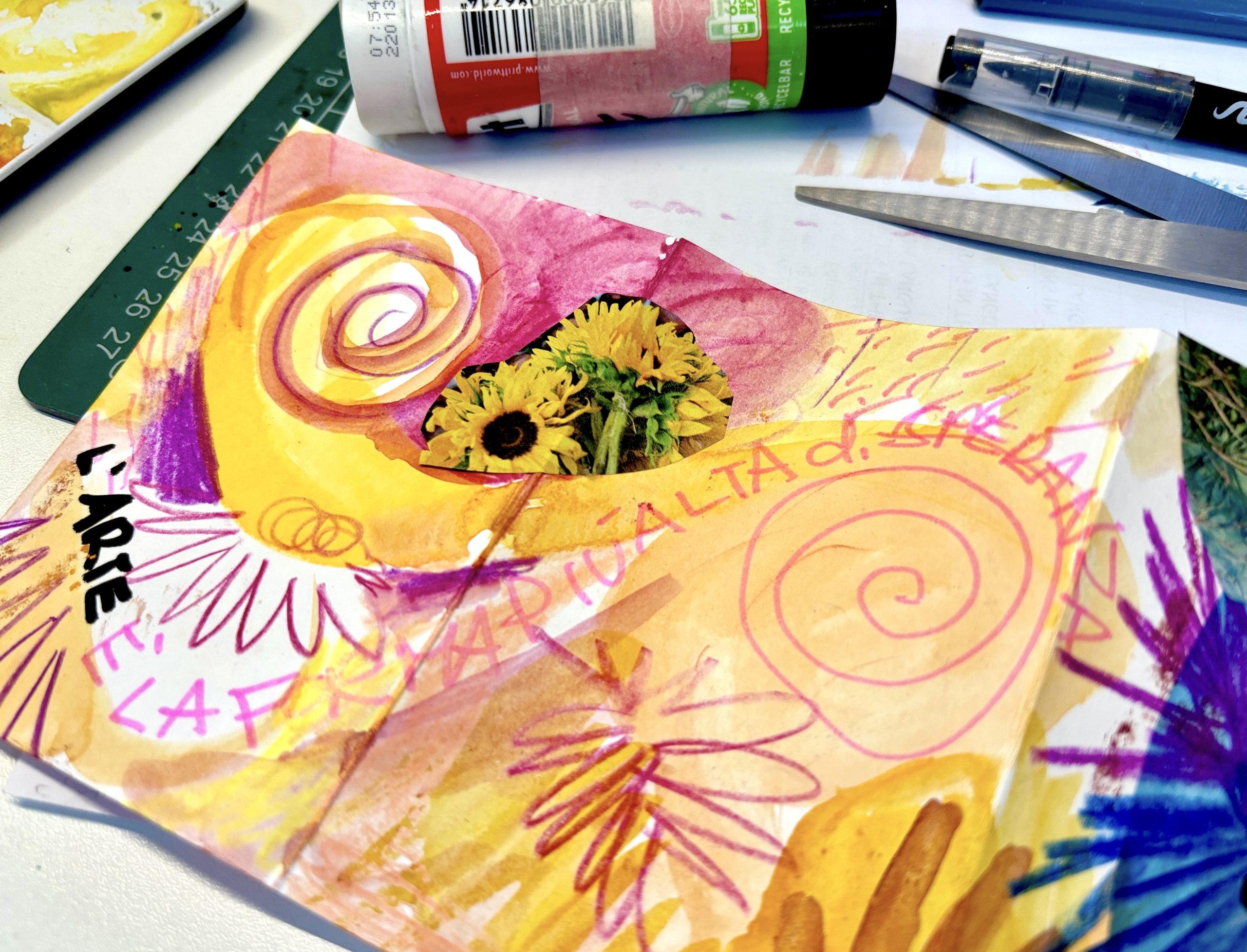
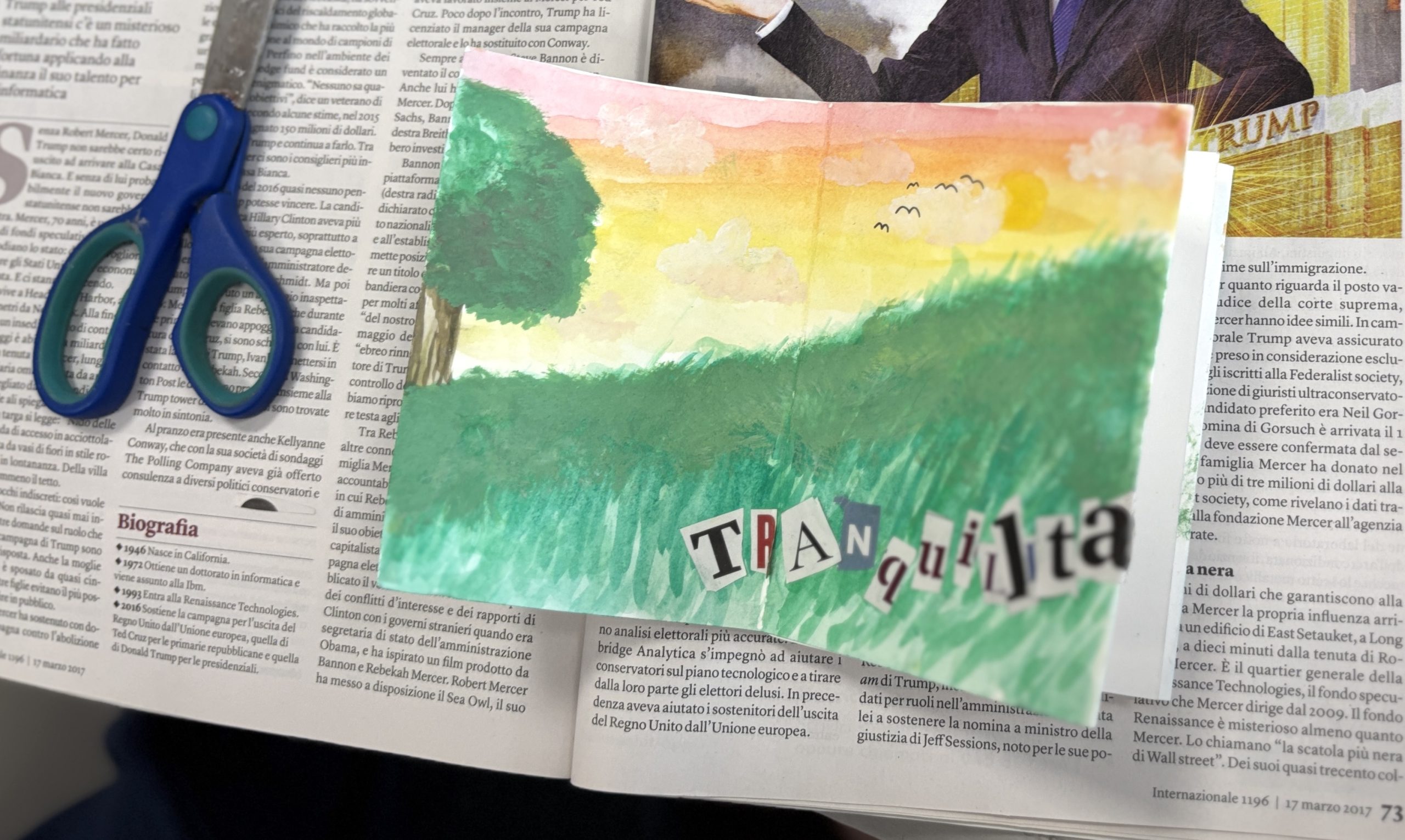
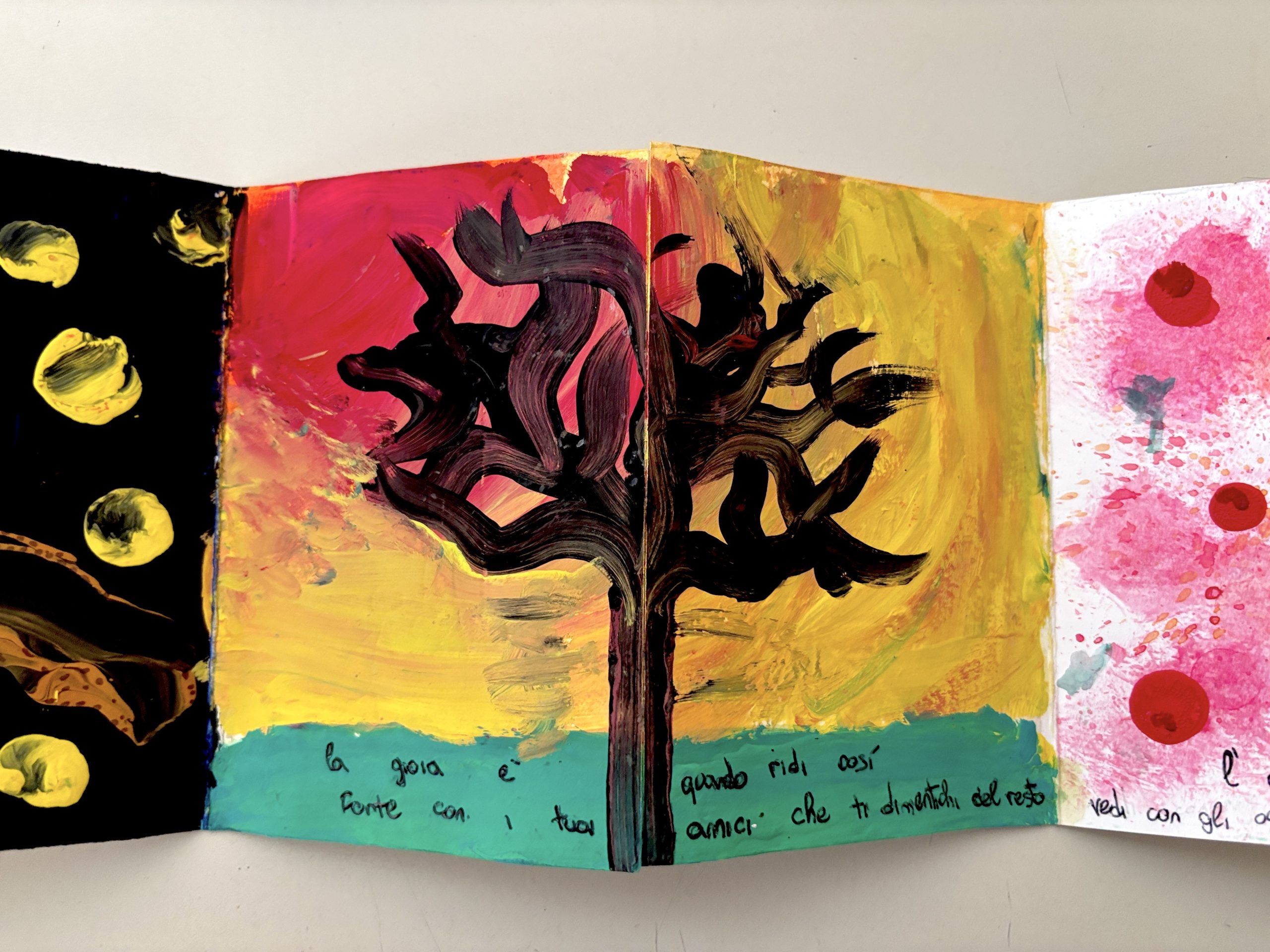
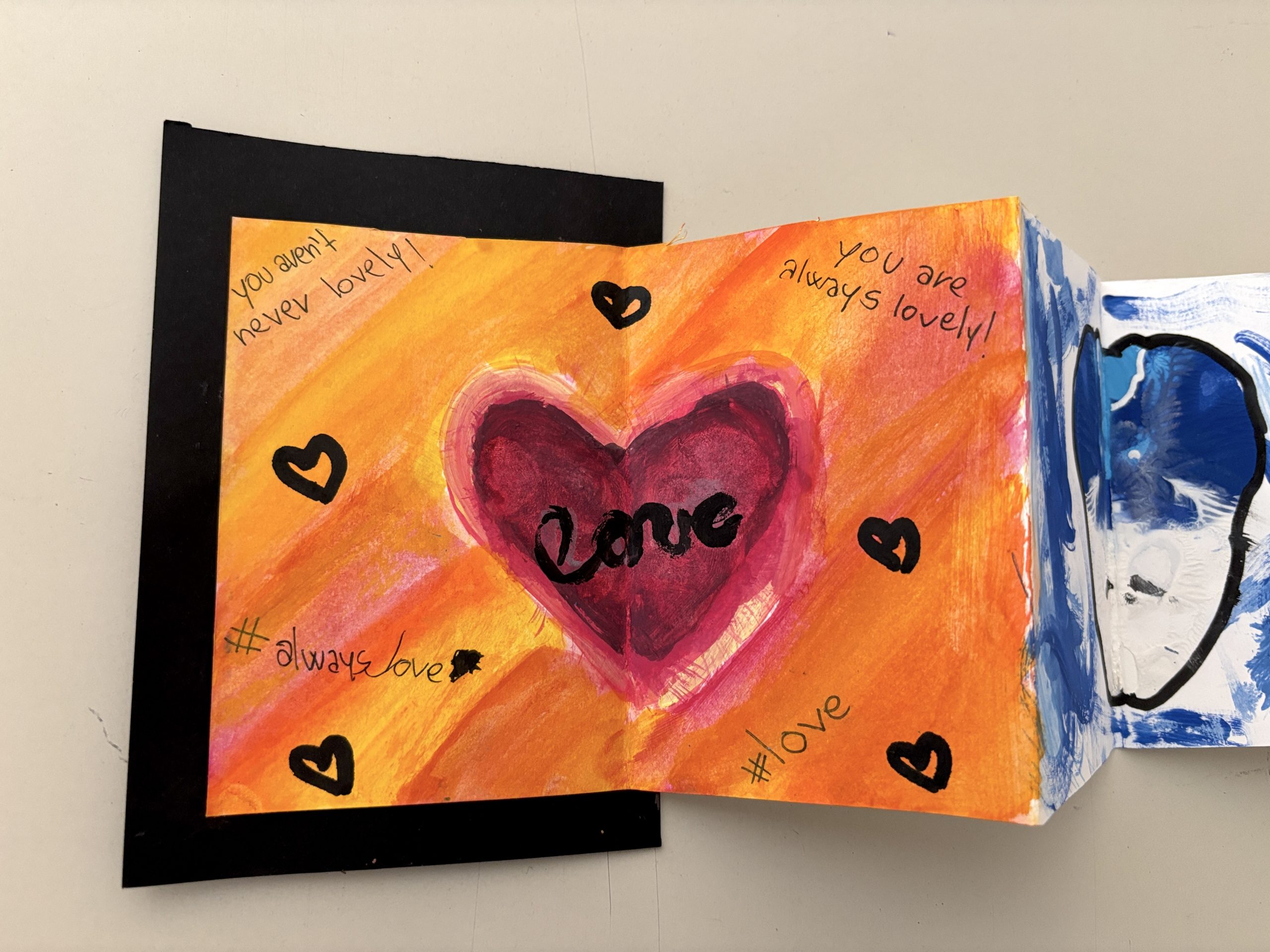
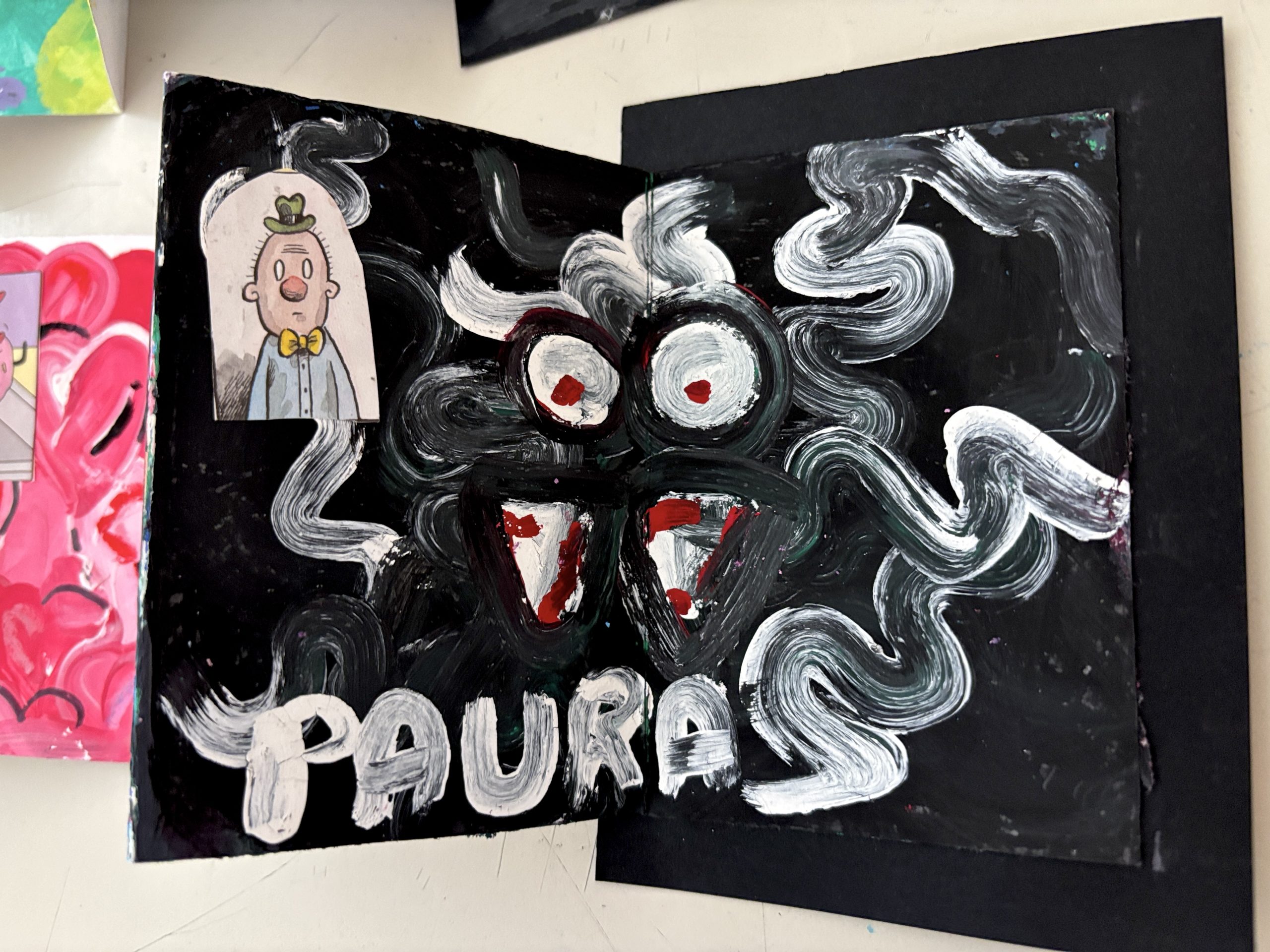
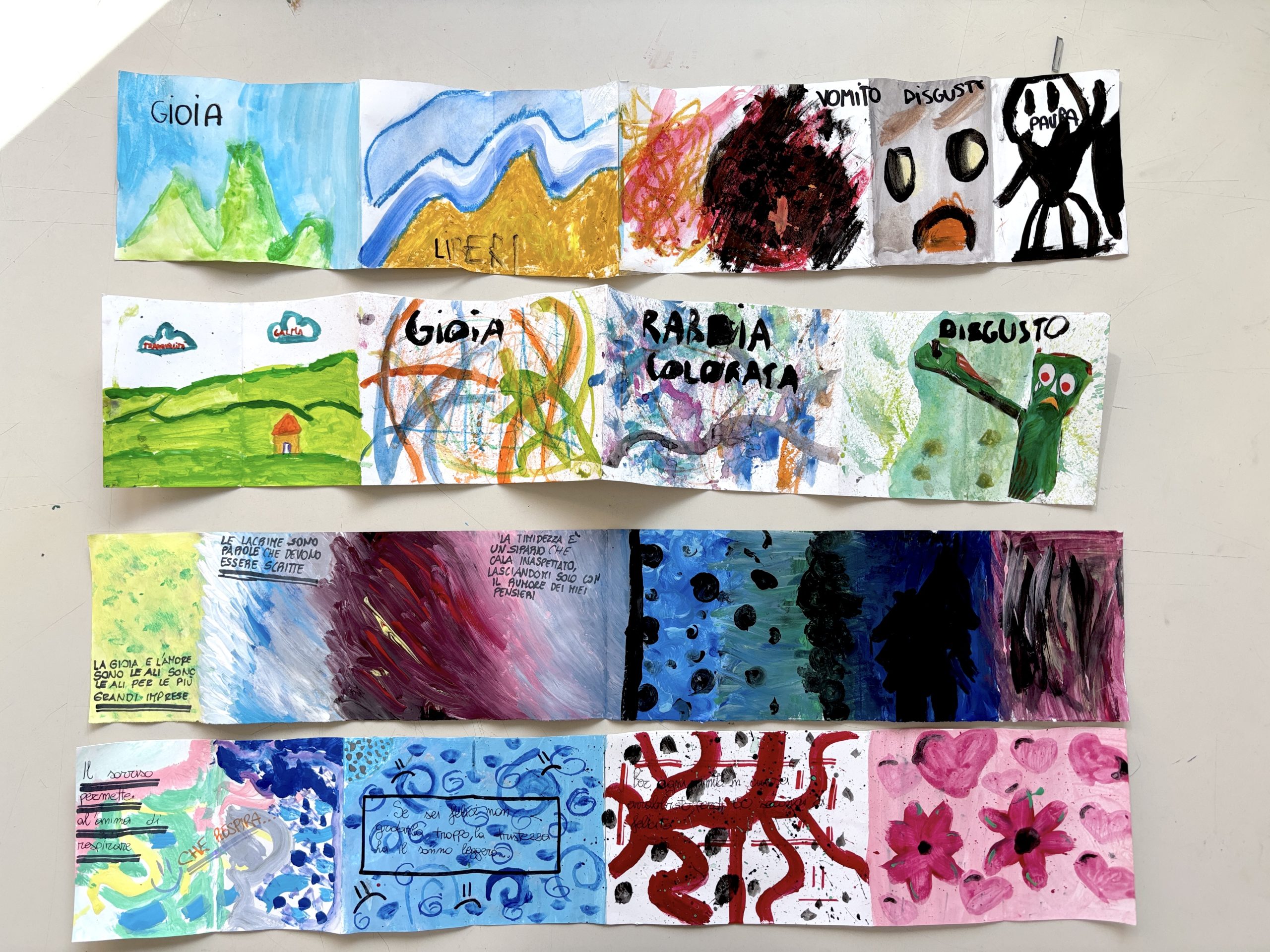
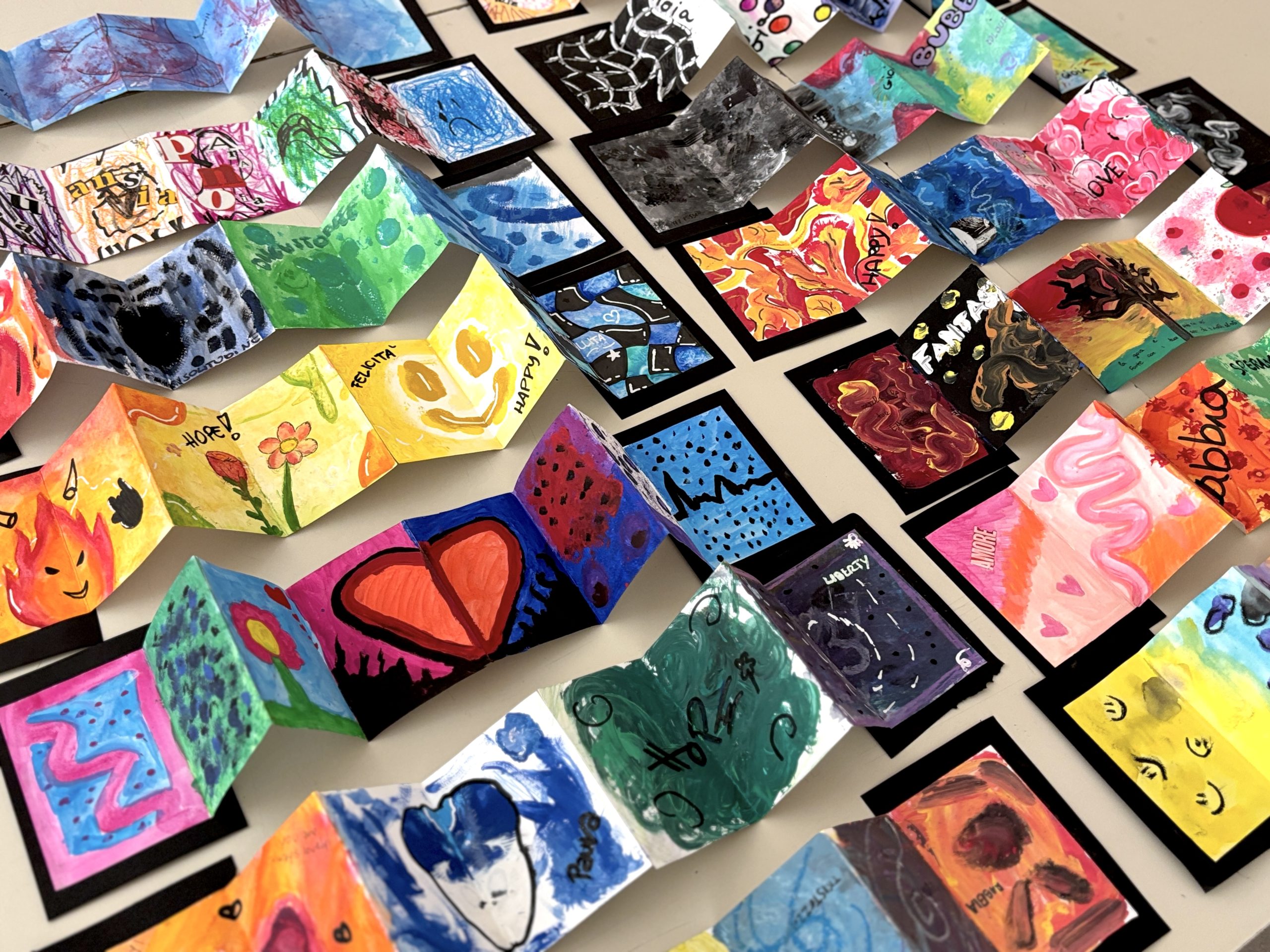
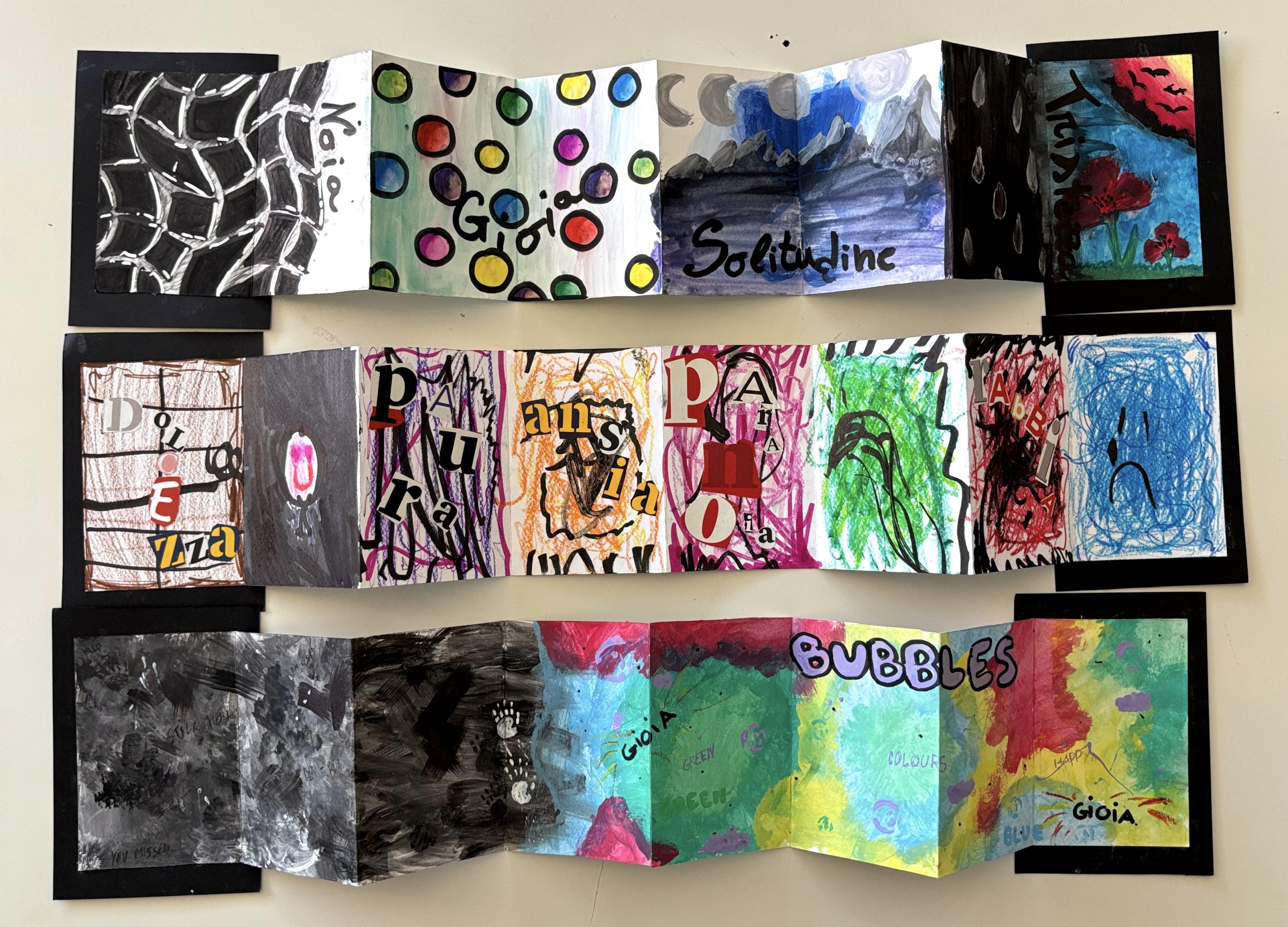
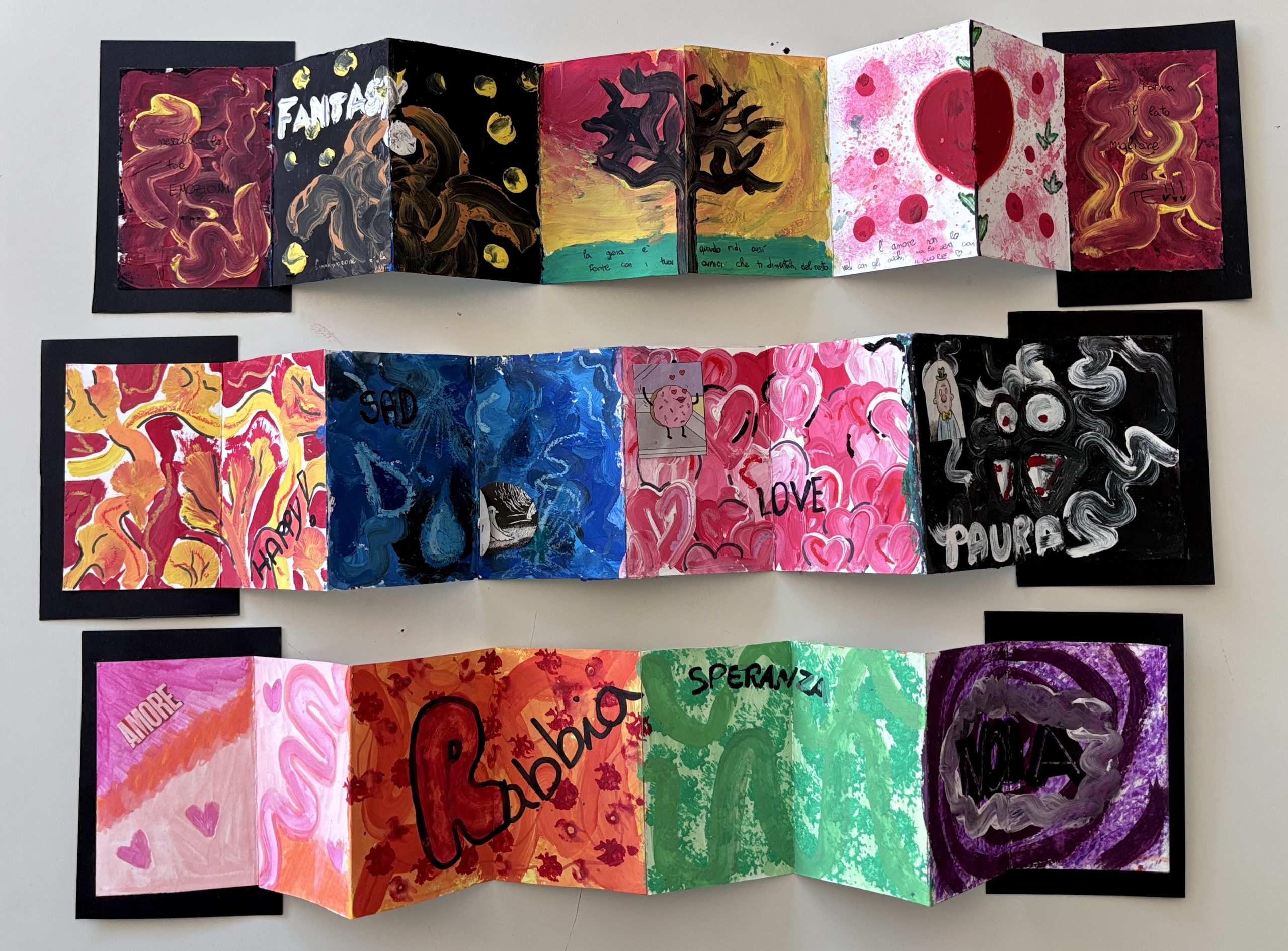
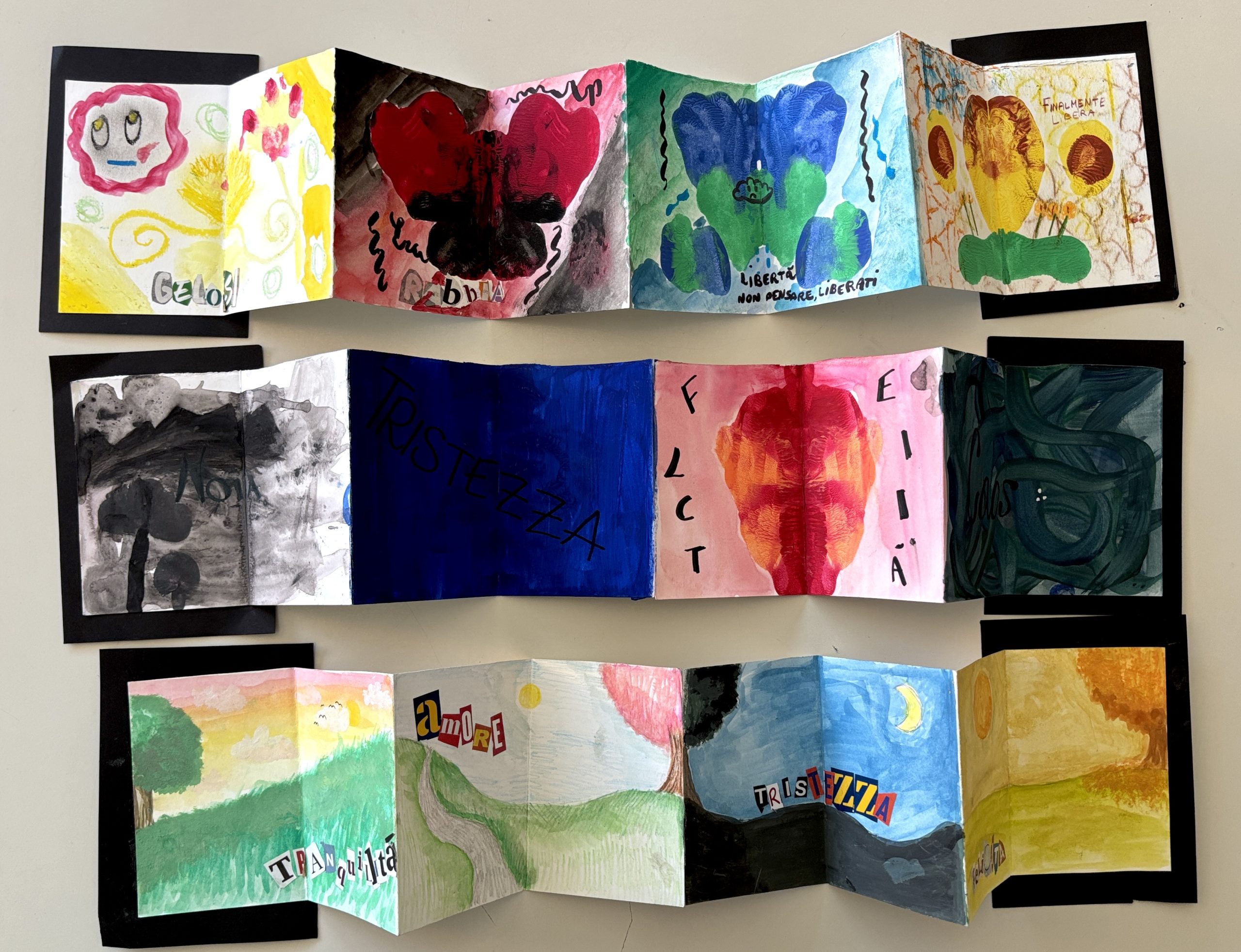
We began to let our emotions flow onto the booklet in a free and personal way, focusing on moods such as sadness, joy, anger, and fear. Without the fear of making mistakes, we used mixed media techniques, layering watercolors, oil pastels, and markers. Some of us dedicated each panel to a different emotion, while others created a continuous flow of color that travels across the entire rectangular space.
Step 3: Words, Symbols, and Details
To enrich our work, we added lettering, meaningful phrases, collage, and doodles. The goal was to create a true visual diary where words and symbols helped us give a name to what we were feeling. We aimed for maximum variety in our mark-making: using jagged lines for anger, broad splashes of color for joy, or empty spaces for sadness, emphasizing the unique originality of every interpretation.
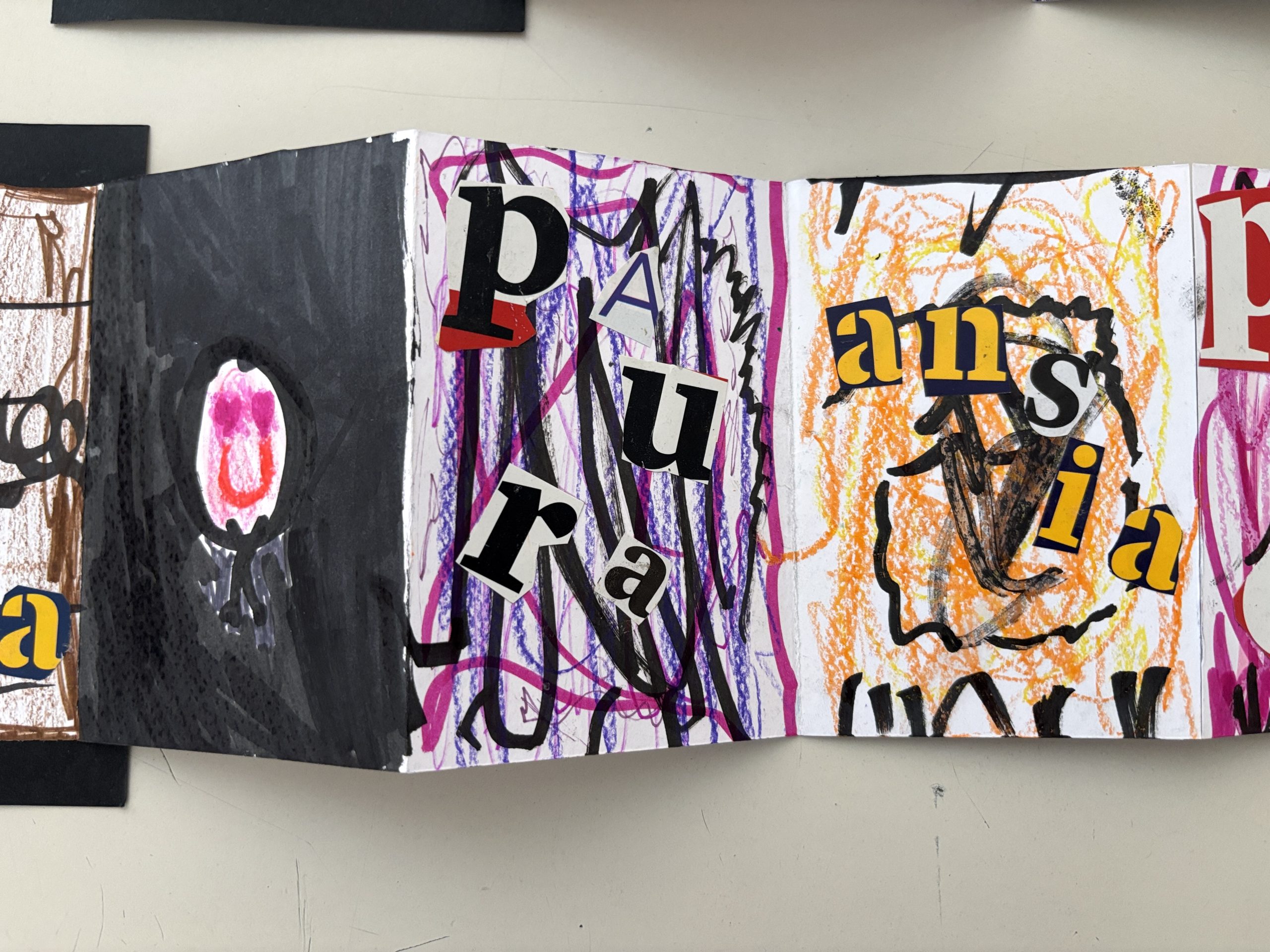
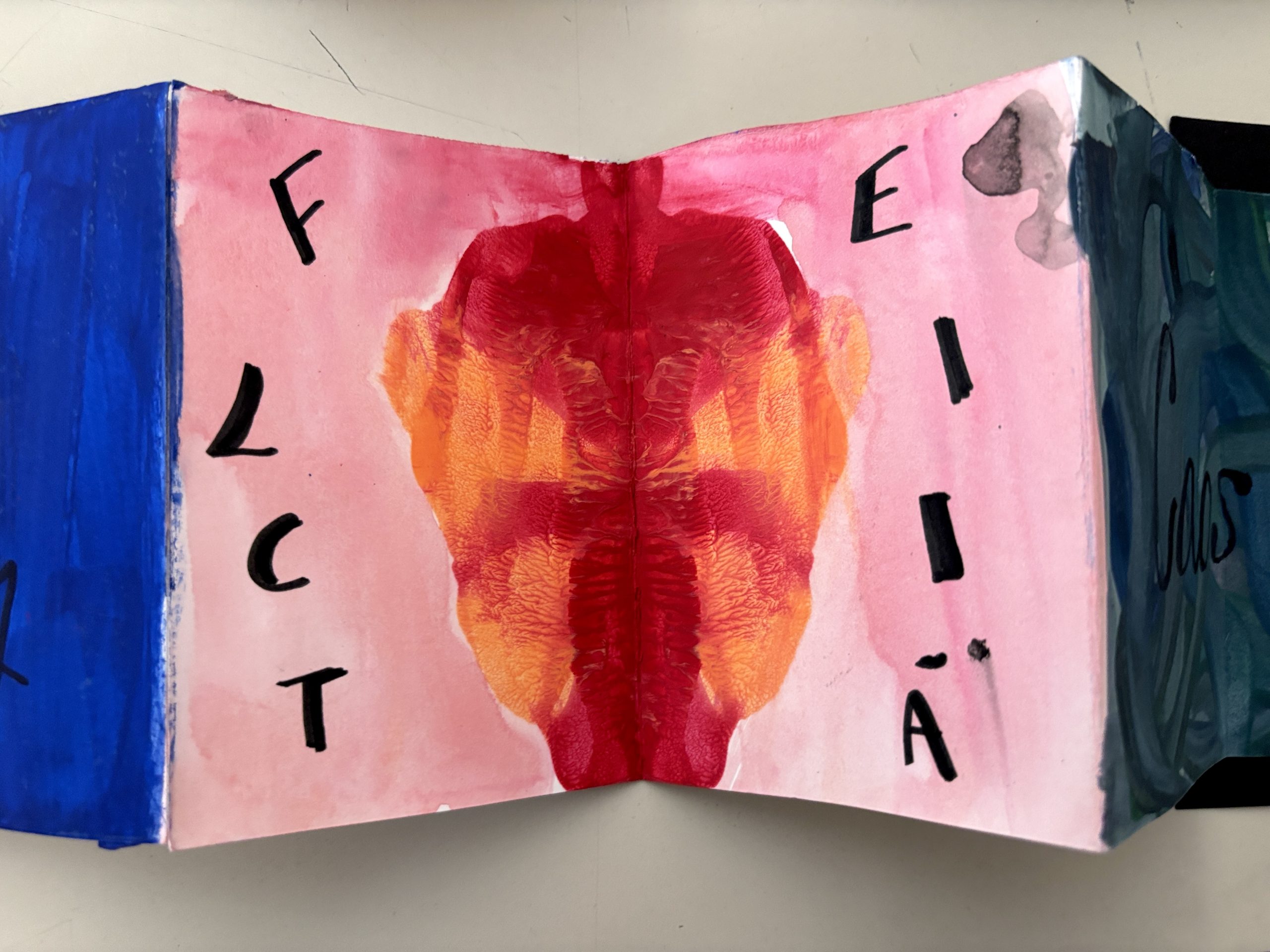
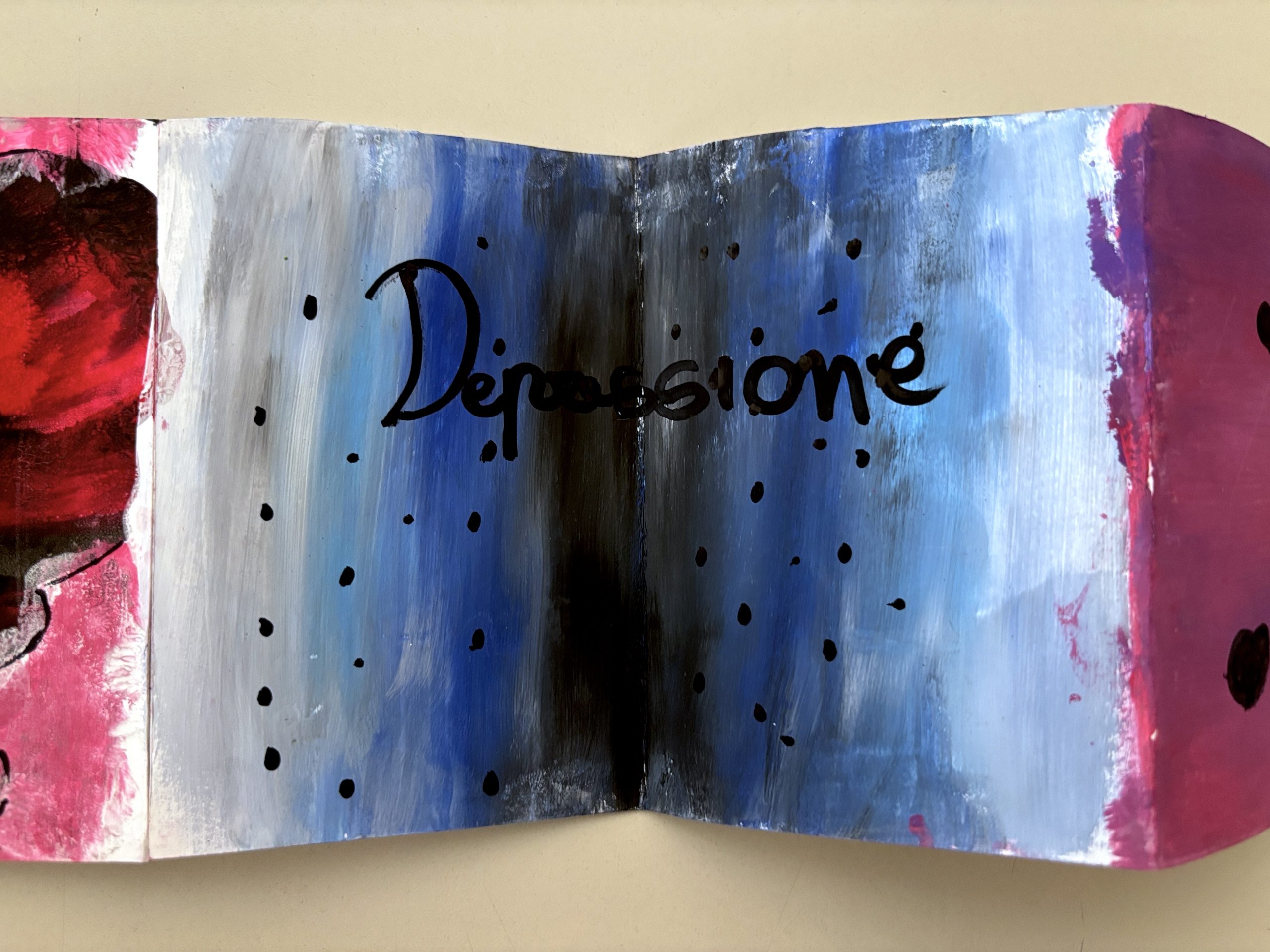
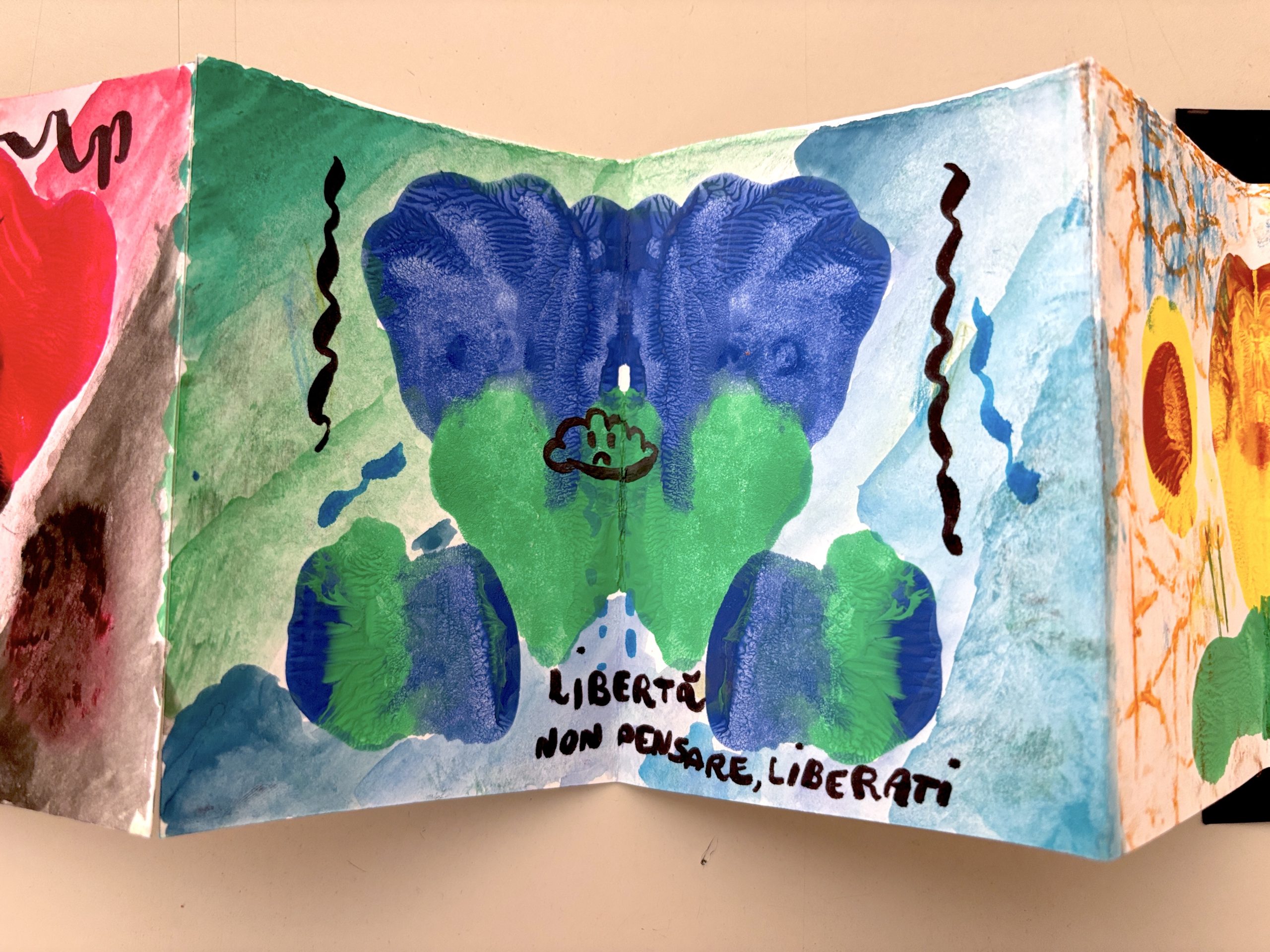
Step 4: The Cover and Final Touches
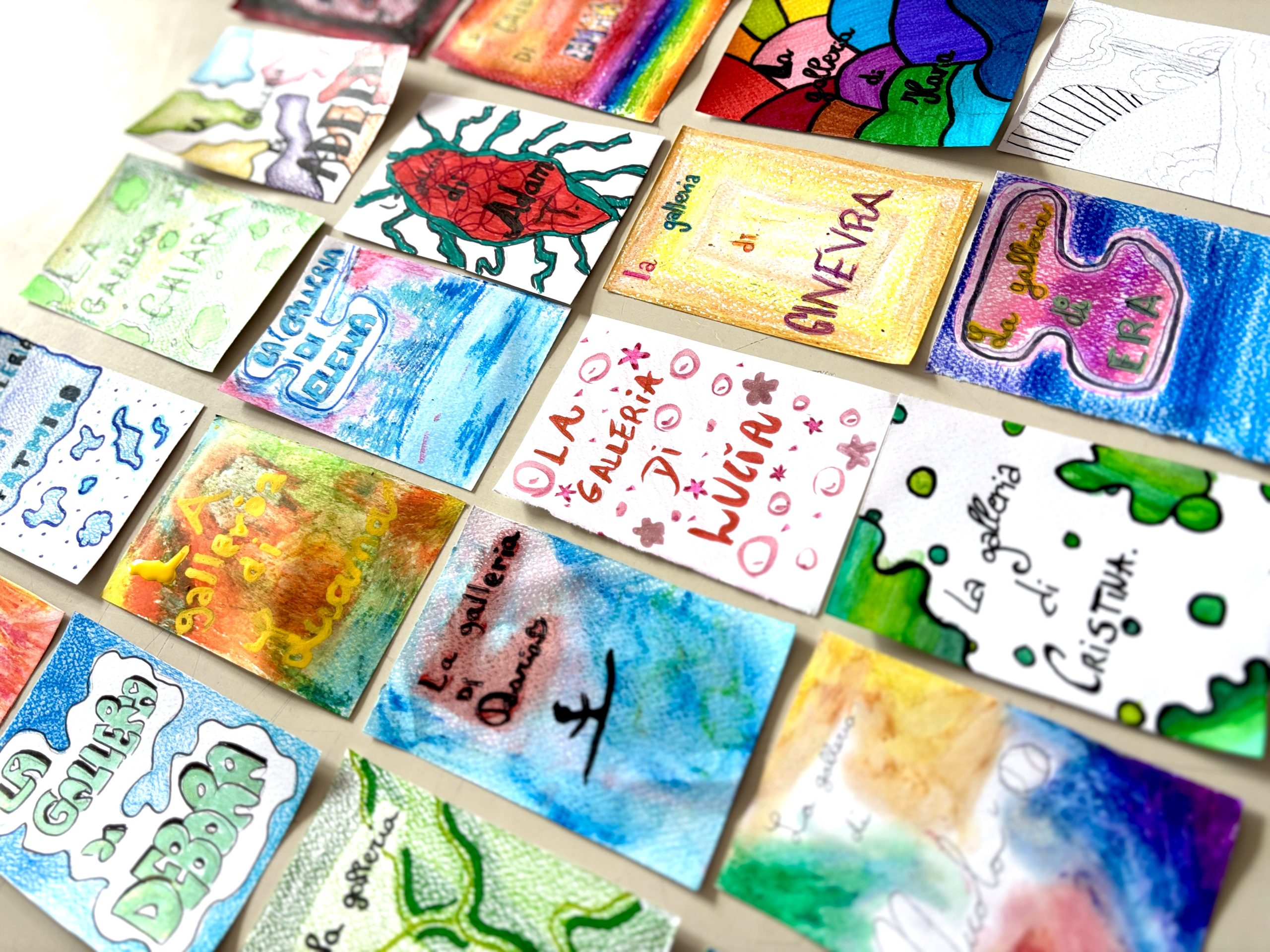
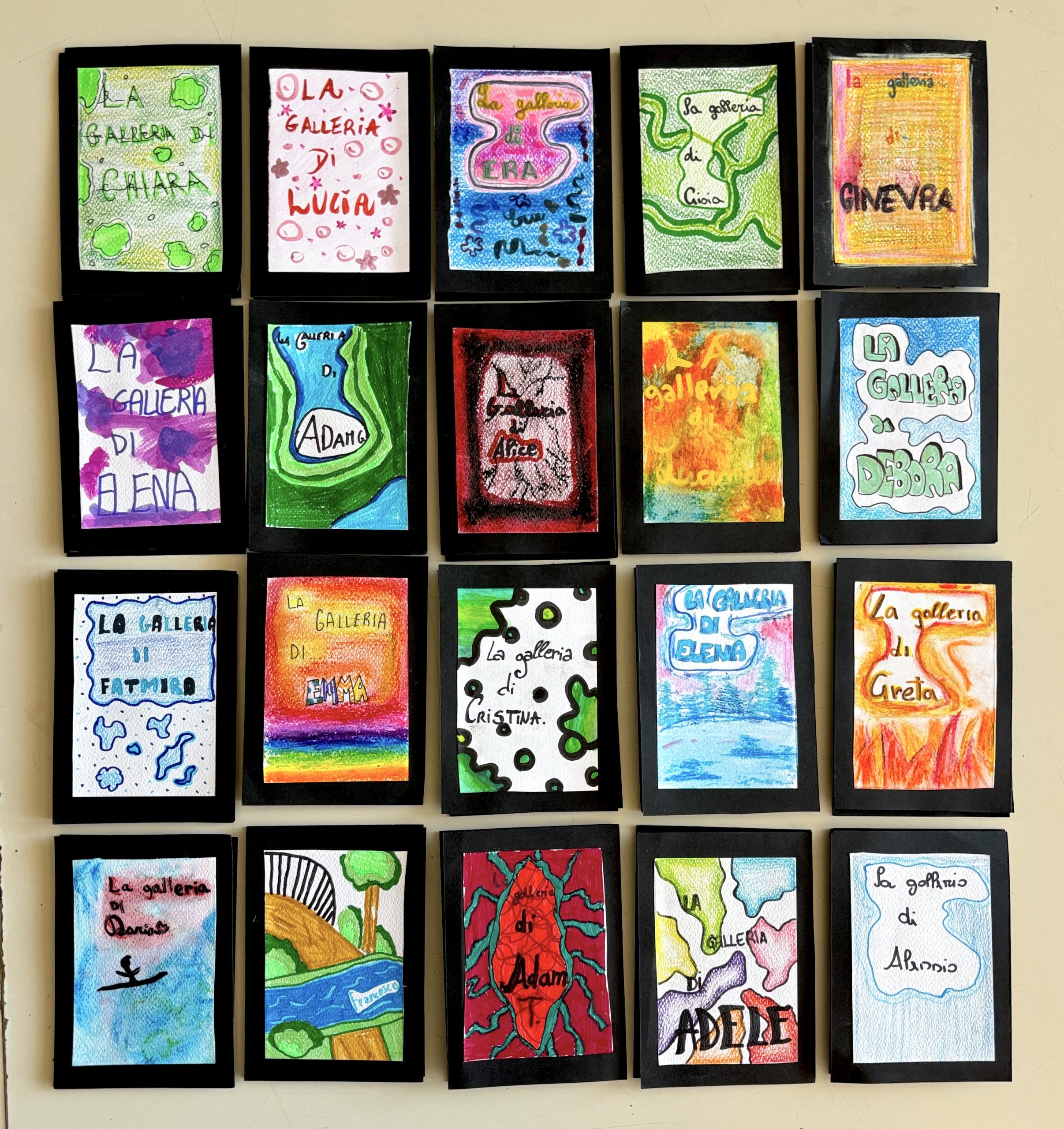
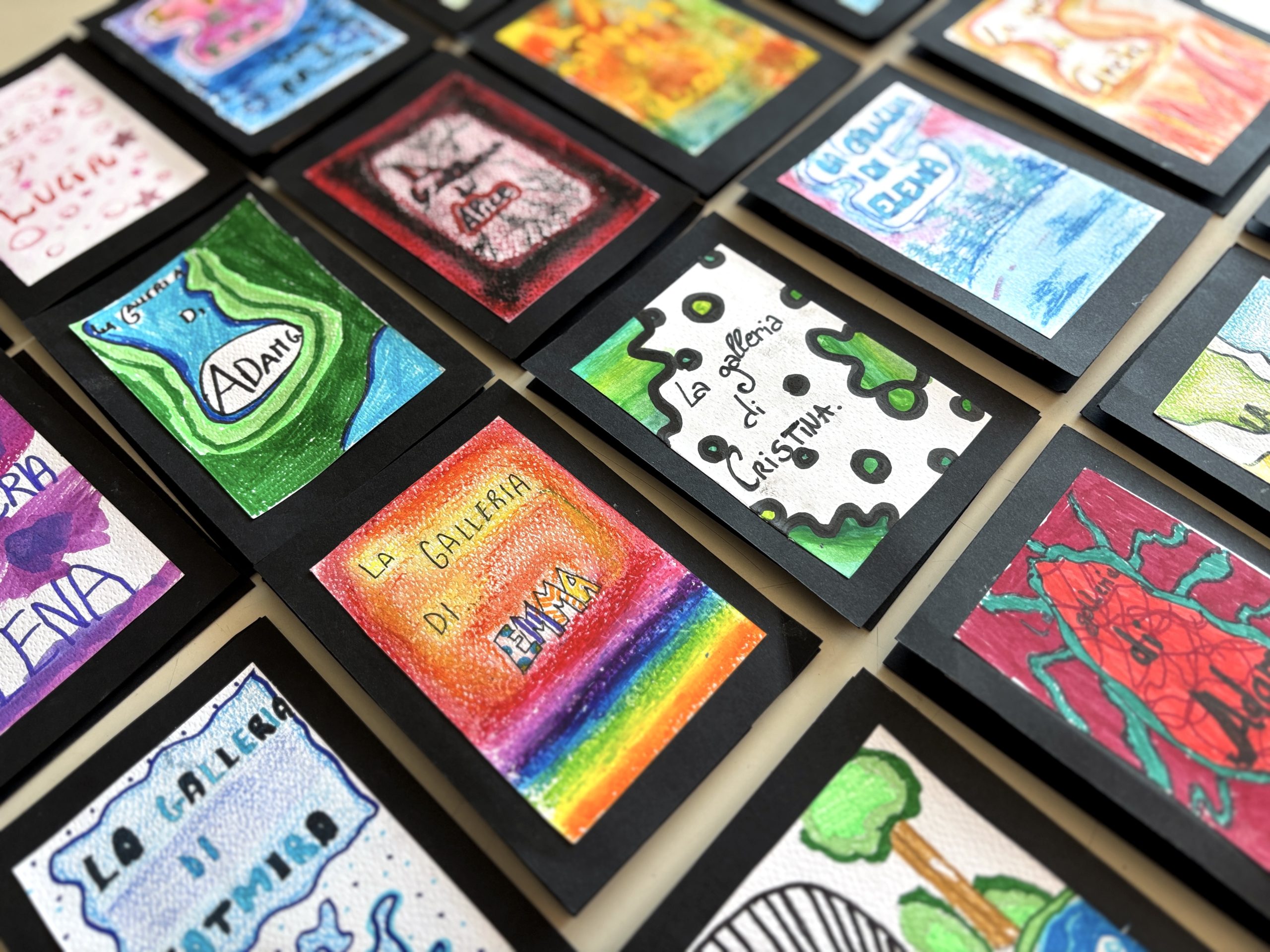
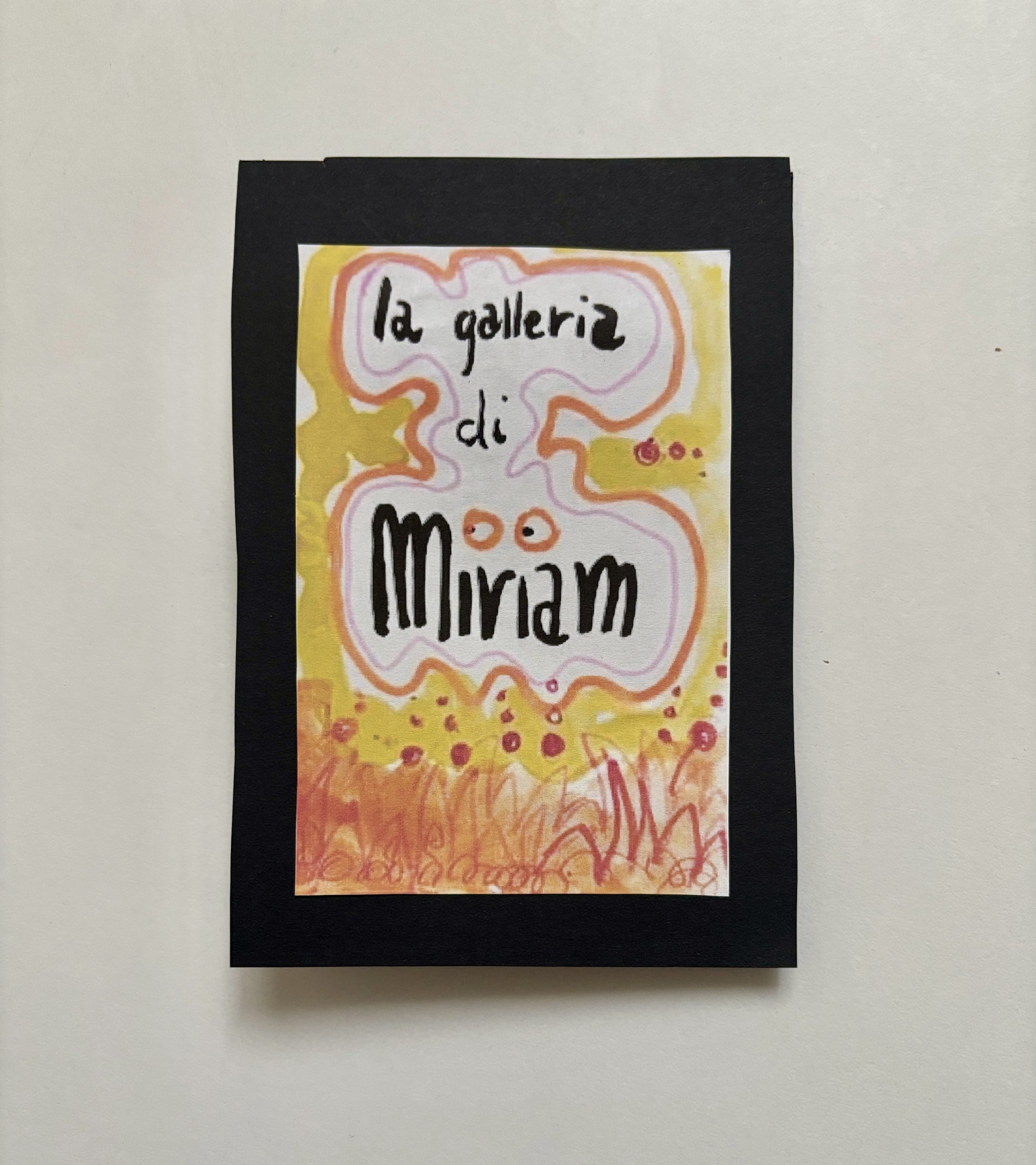
Finally, we created the cover by cutting out two black cardstock rectangles (13 x 9.5 cm) to glue onto the ends of the booklet. On the front, we applied a decorated label with the title “The Gallery of…”, personalized with our own names.
The result is a small “treasure chest” that holds our inner world—a piece that can be displayed wide open or kept folded shut.
Conclusion: A Portable Art Gallery
The booklets we created showcase an incredible variety of emotions and personal interpretations. With skill and passion, we managed to transform simple sheets of paper into a true portable art gallery: each leporello reveals our inner world through the clever use of color, line, shape, and word, fully achieving the goal of giving a voice to our feelings.
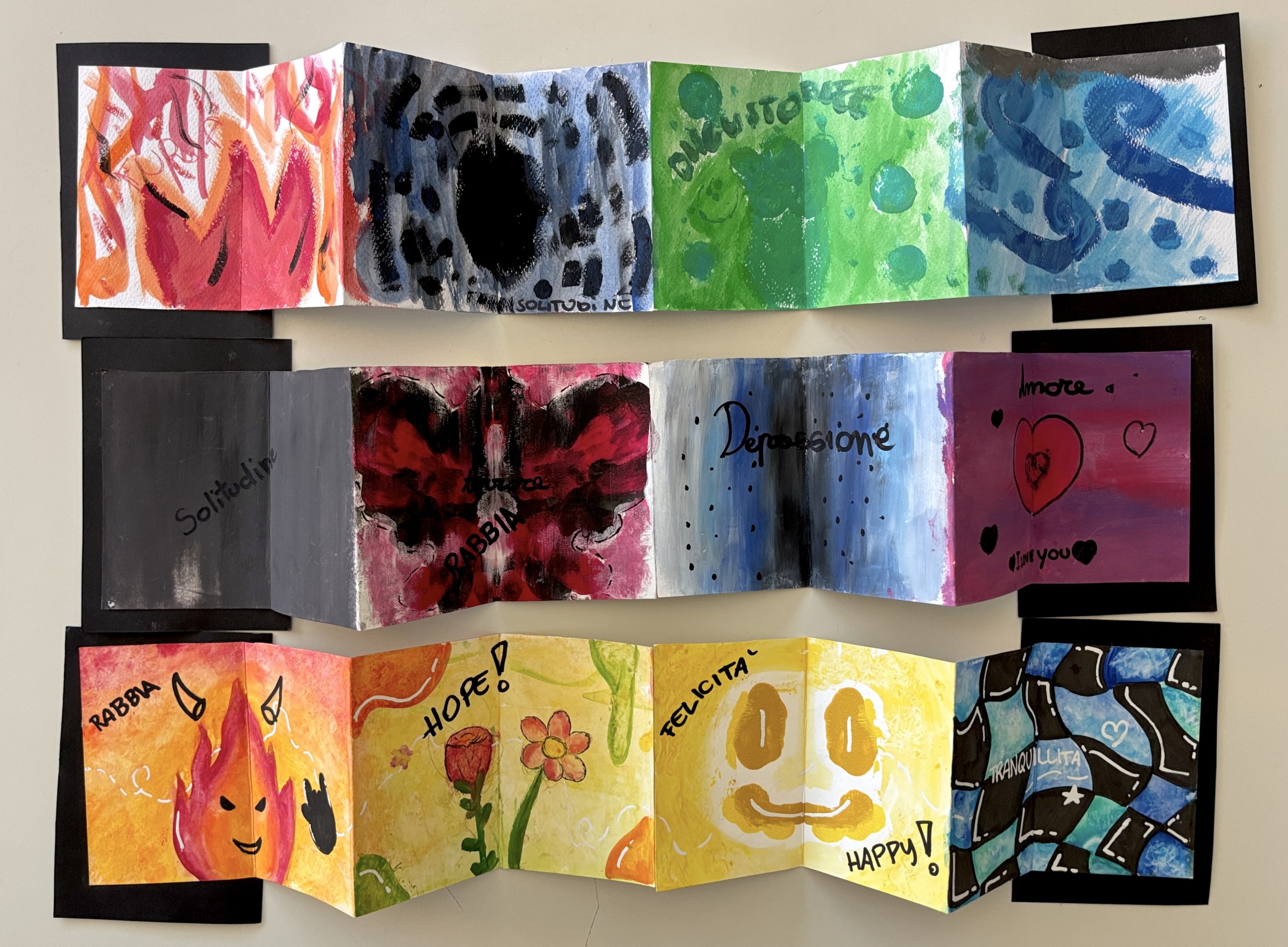
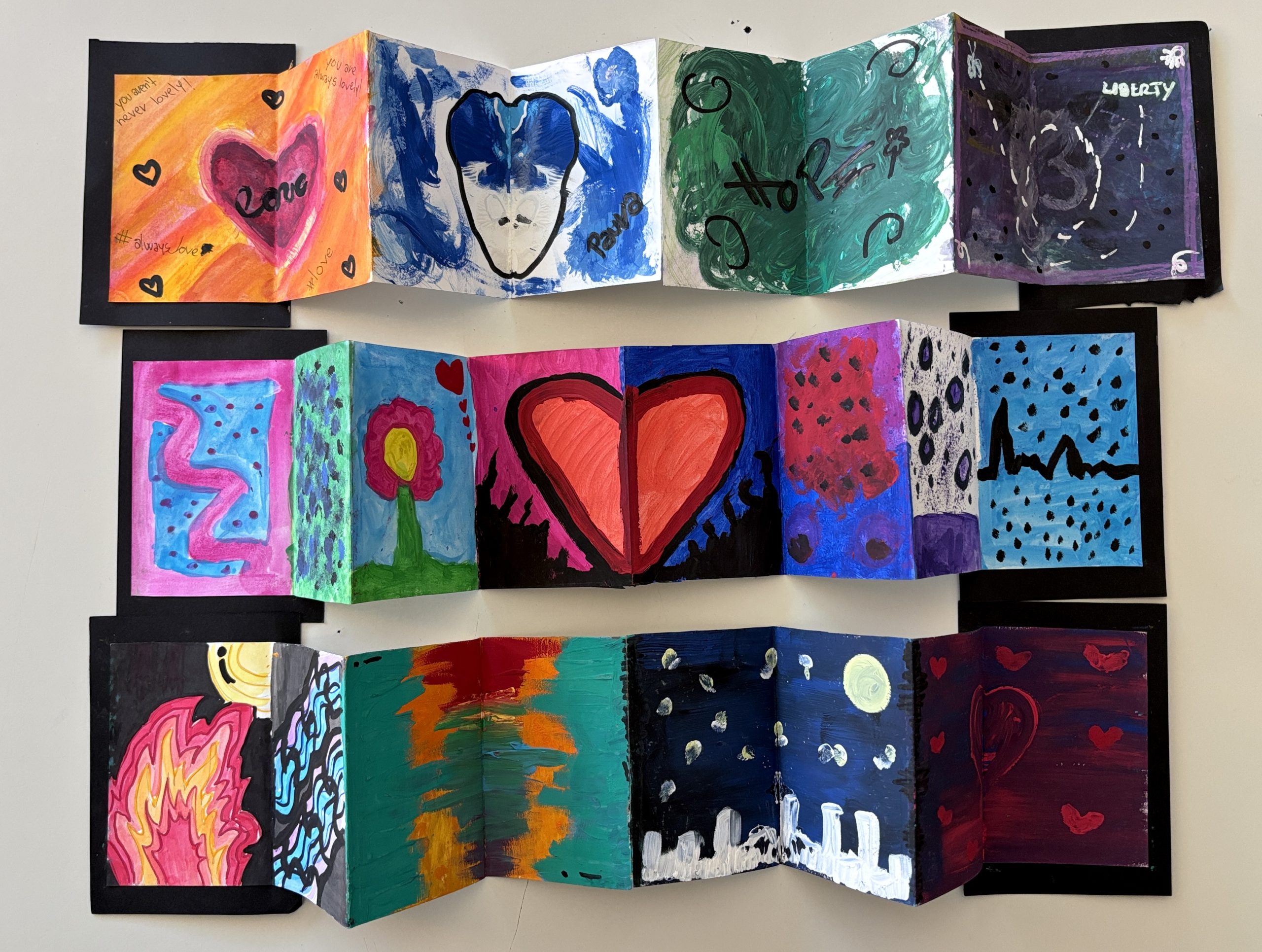
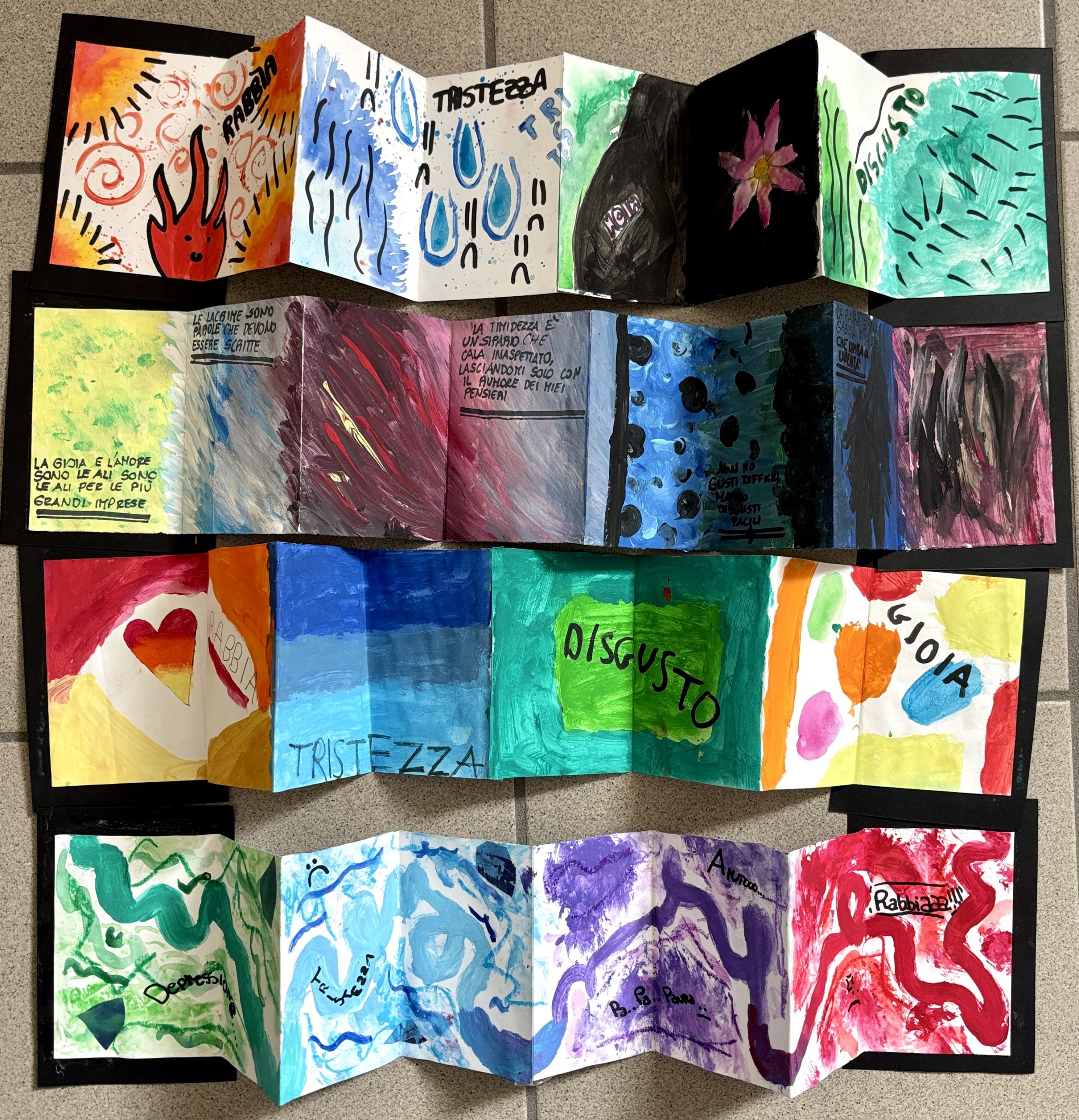
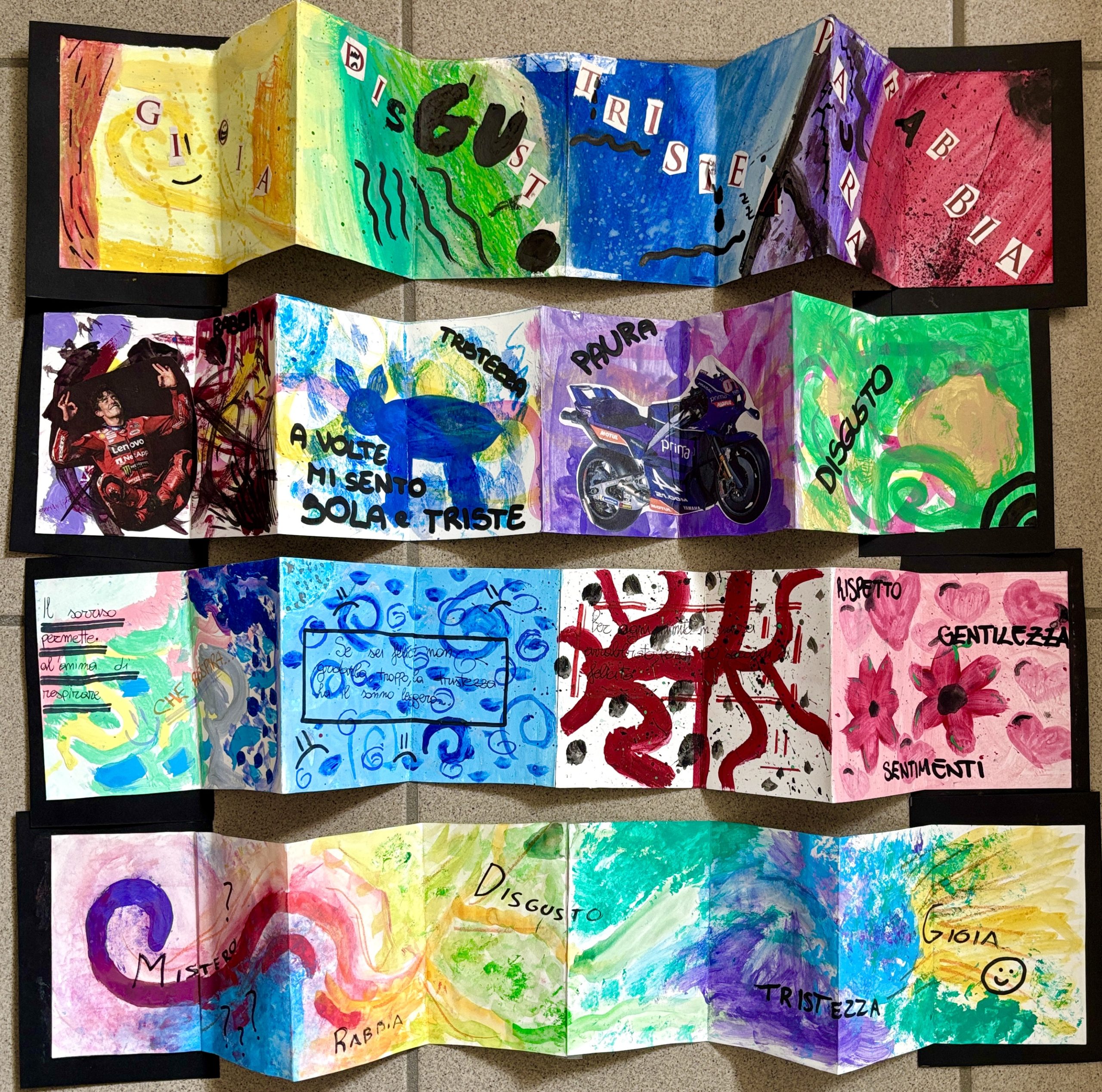
To conclude the project, we created short videos to show the movement of the leporello as it opens and closes, just like a portable art gallery: