Steal Like an Artist: Copying the Post-Impressionist Masters
In this workshop, we challenged ourselves by copying the Great Masters, a fundamental artistic practice to master techniques, marks, and brushstrokes. We drew inspiration from the famous book “Steal Like an Artist,” written in 2012 by the American artist Austin Kleon. In this essay, Kleon argues that no work is completely original and that creativity comes from reworking and remixing the influences of others.
By copying the greats of the past, we understood that imitation is not just a simple exercise, but a way to connect with an author’s sensitivity and make their techniques our own. As I had already experienced with the activity titled “Copying as a Tool for Knowledge” (which you can find HERE), this project allowed 8th-grade students to develop skills in color management and cooperative work. It guided them toward a deep understanding of the Post-Impressionist style and contributed, as a “reality task” for Civic Education, to the beautification of our school spaces.
Materials needed:
- Enlarged photocopies of the chosen paintings (using Poster Razor)
- Large sheets of carbon paper
- Colored cardstock (as a base for the painting) 50×70 cm
- Brushes of various sizes
- Tempera or acrylic paints
- Oil pastels
- Black or brown cardstock (for the frame) 50×70 cm
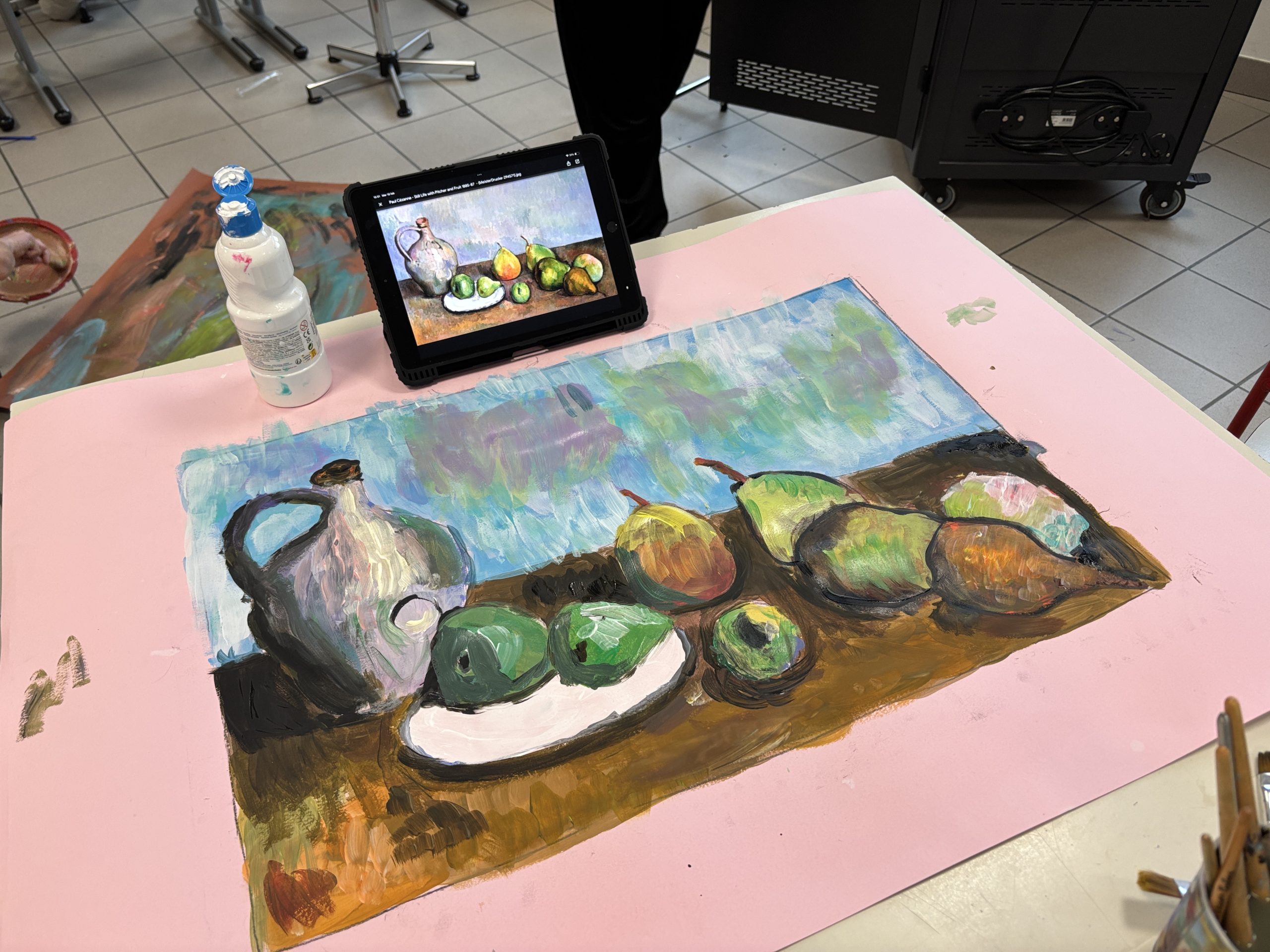
To begin, we divided into small groups of three or four students and chose an iconic work by the Great Masters of Post-Impressionism, such as Gauguin, Van Gogh, and Cézanne. We used the website Poster Razor to enlarge the paintings, printing and assembling the photocopies so that the longer side reached 70 cm. We then transferred the main lines of the composition onto the final support using carbon paper.
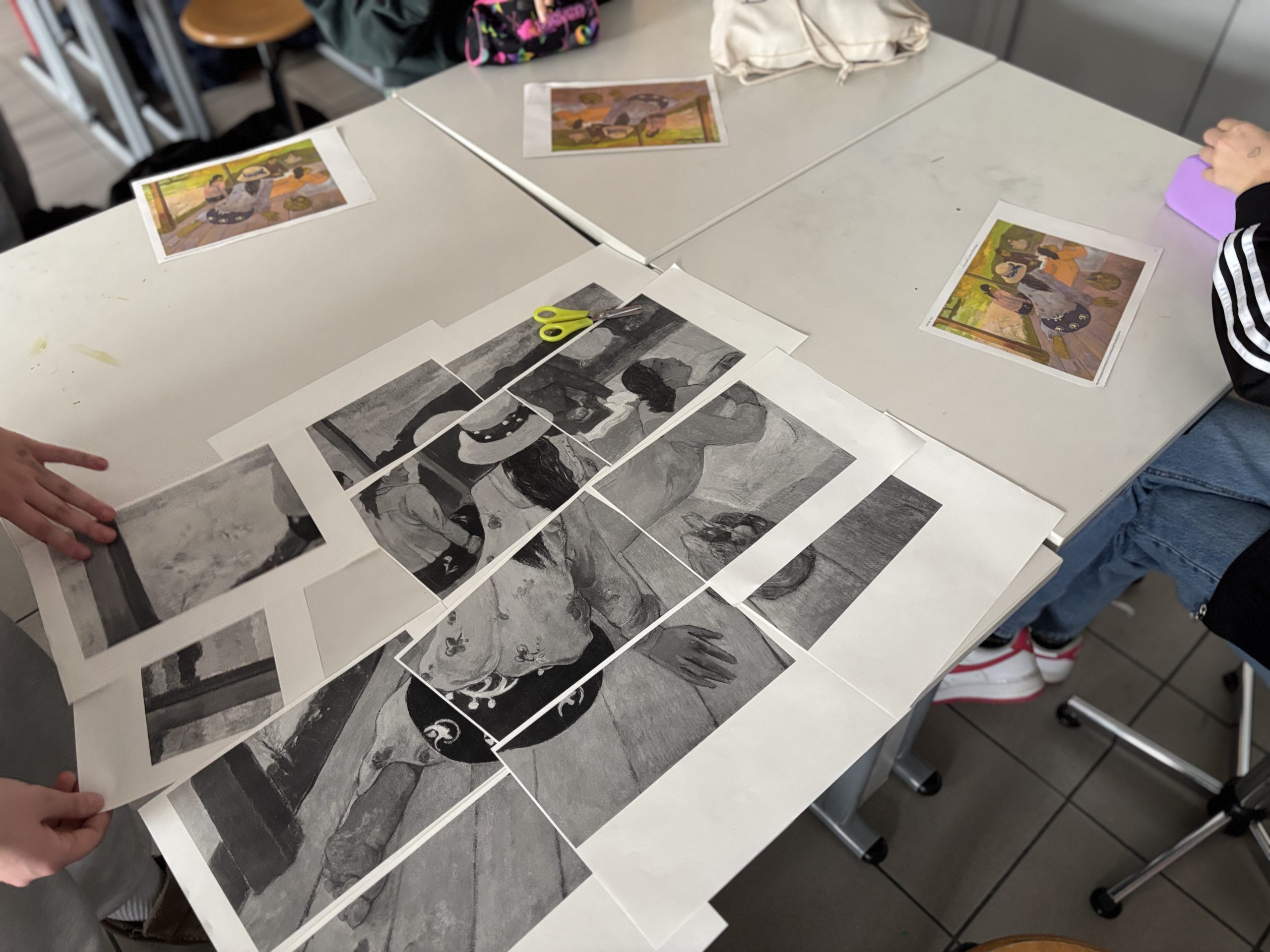
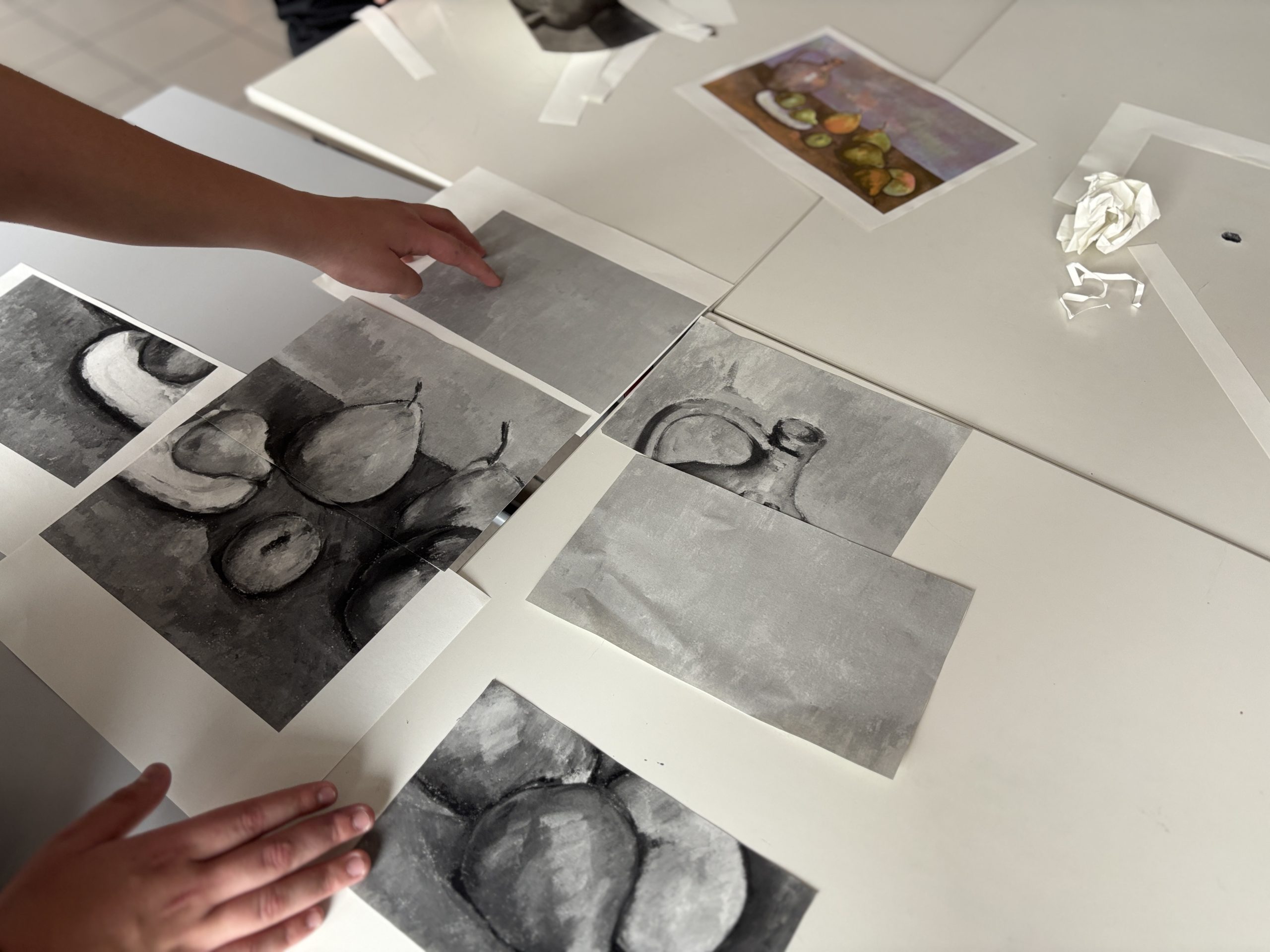
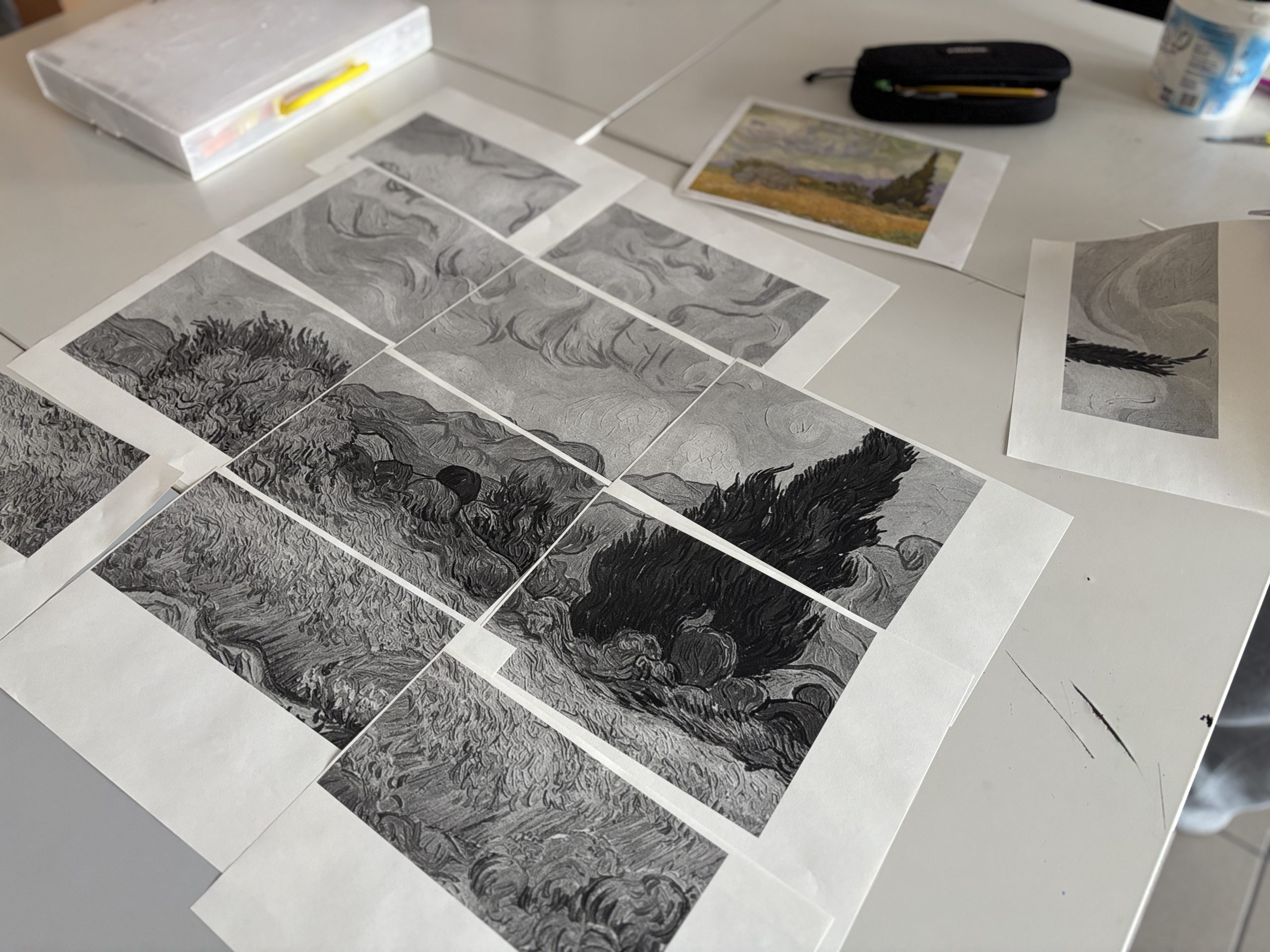
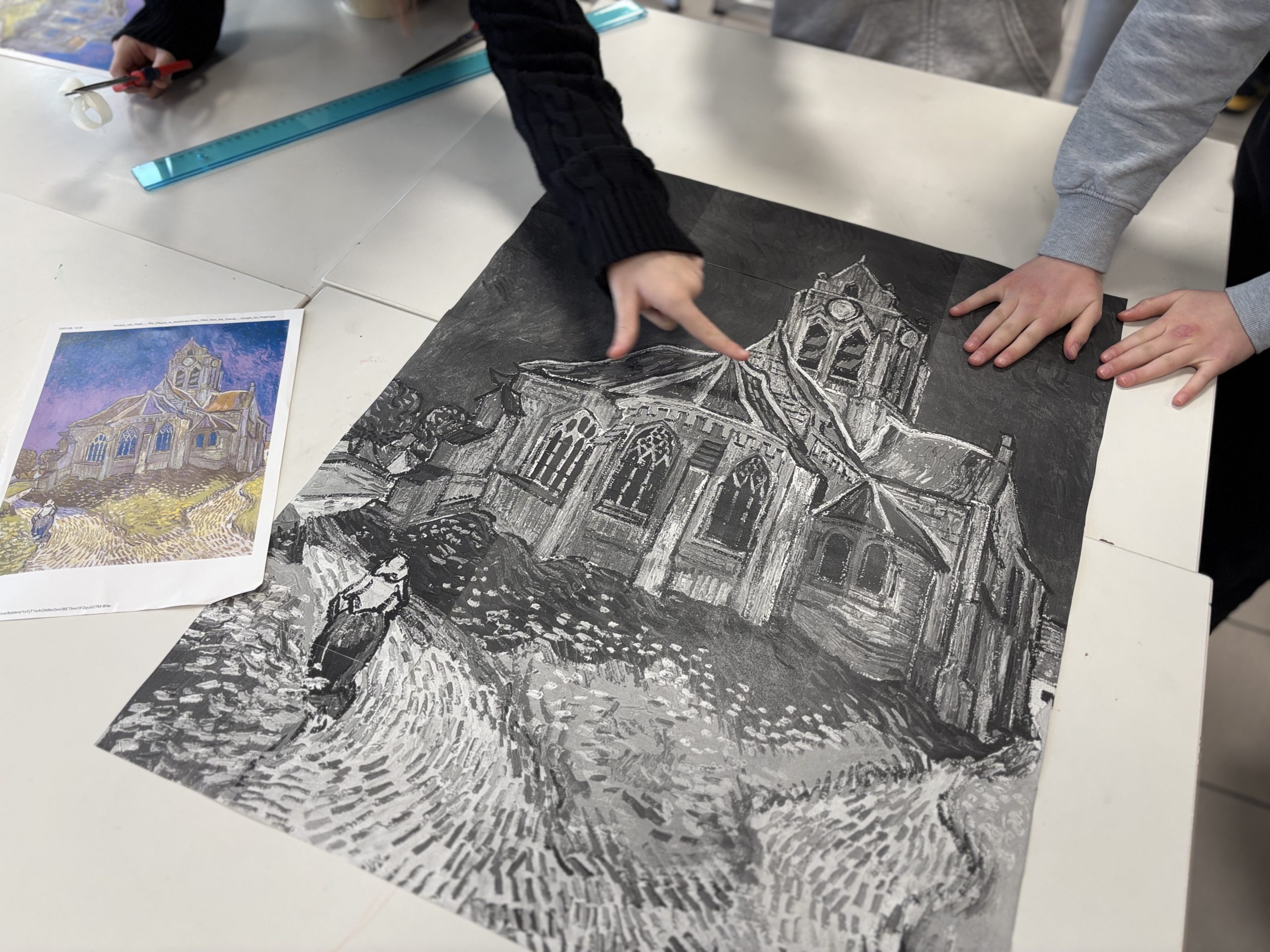
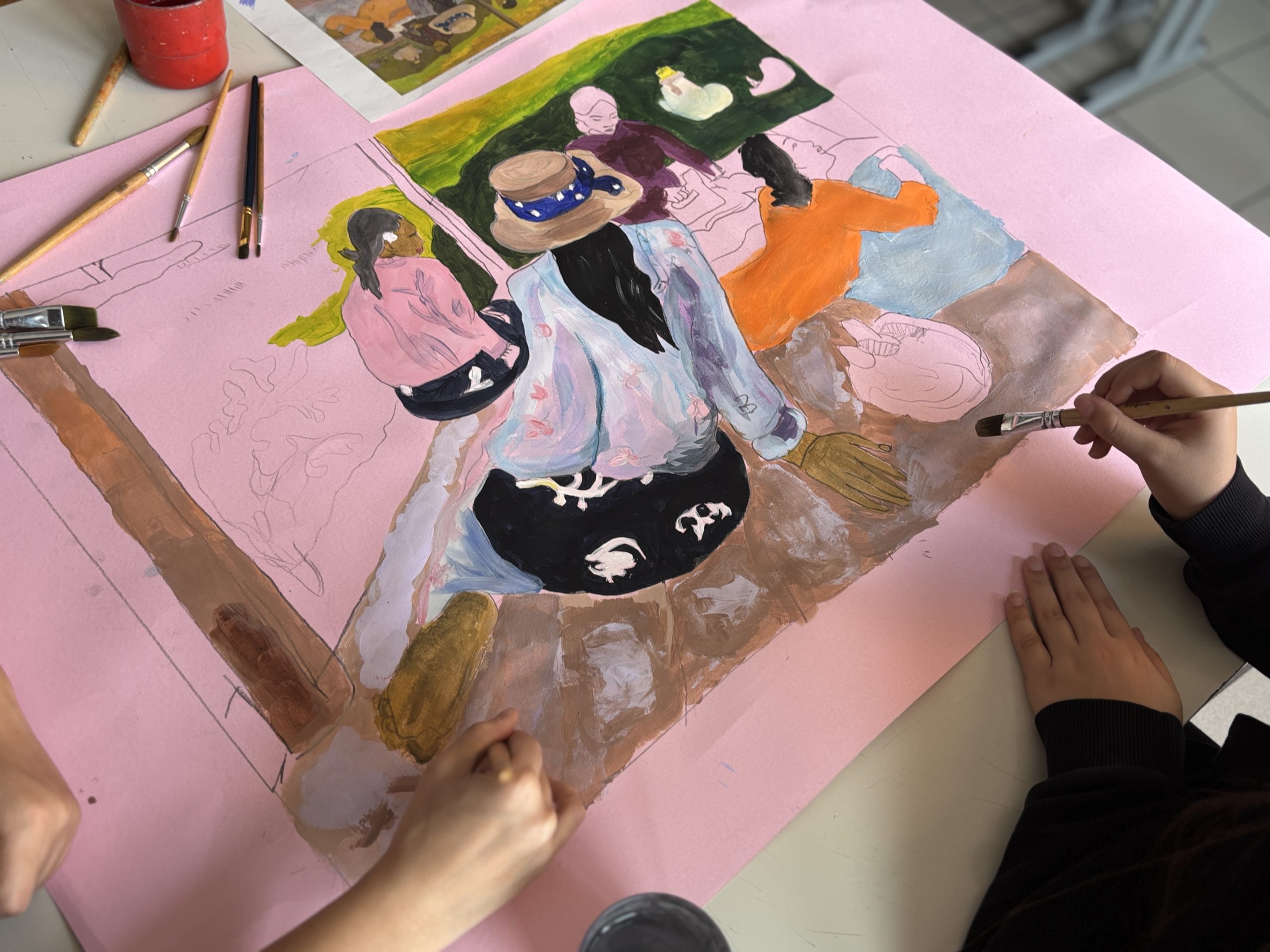
Instead of the classic white sheet, we chose a colored cardstock as a base: this technique, often used by professional painters, allows you to avoid starting from a “blank vacuum” and chromatically influences the subsequent steps. To draw over the photocopy and impress the mark onto the cardstock below, we used colored pencils; this way, we could easily see which lines had already been traced and which remained.
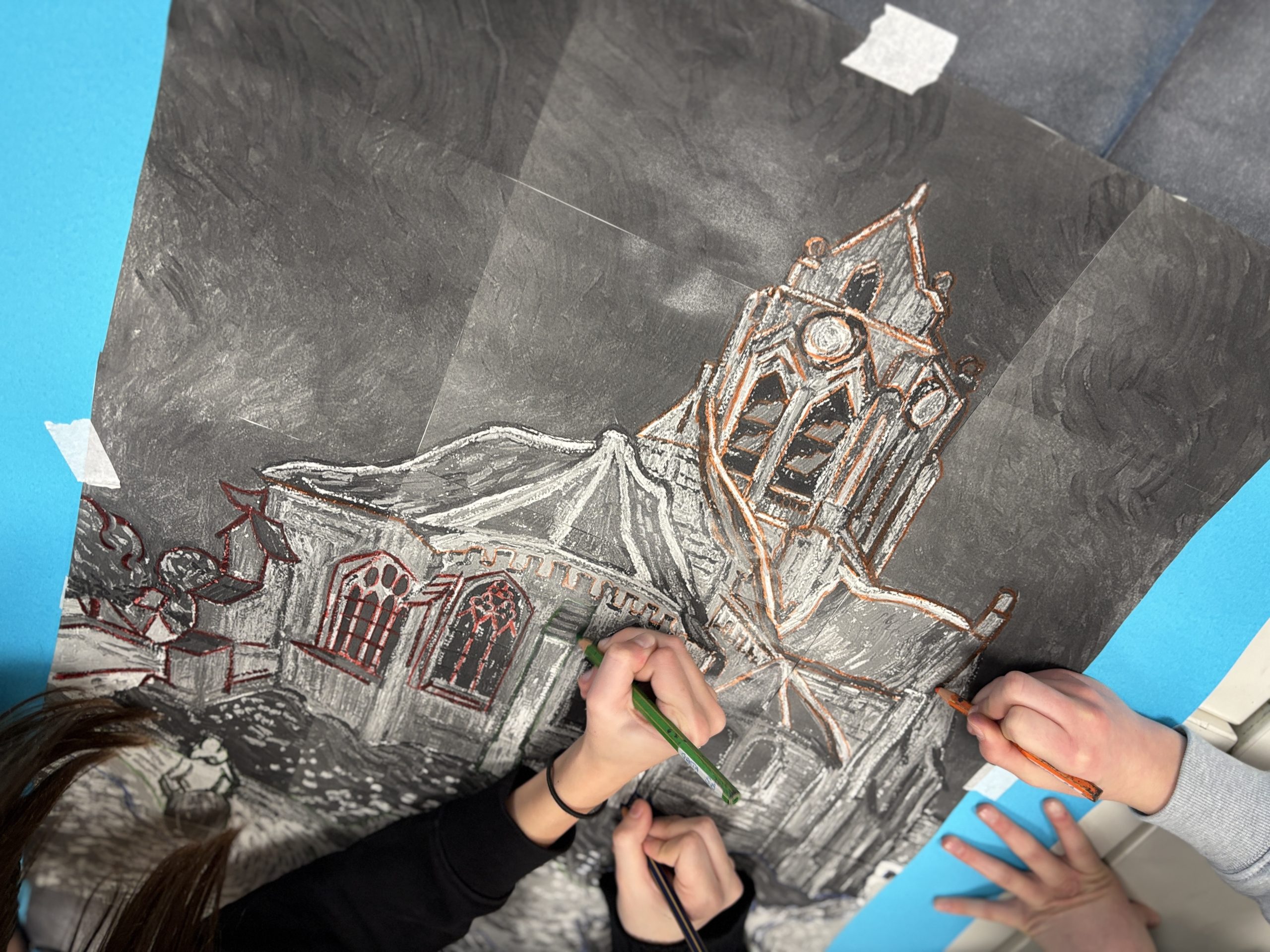
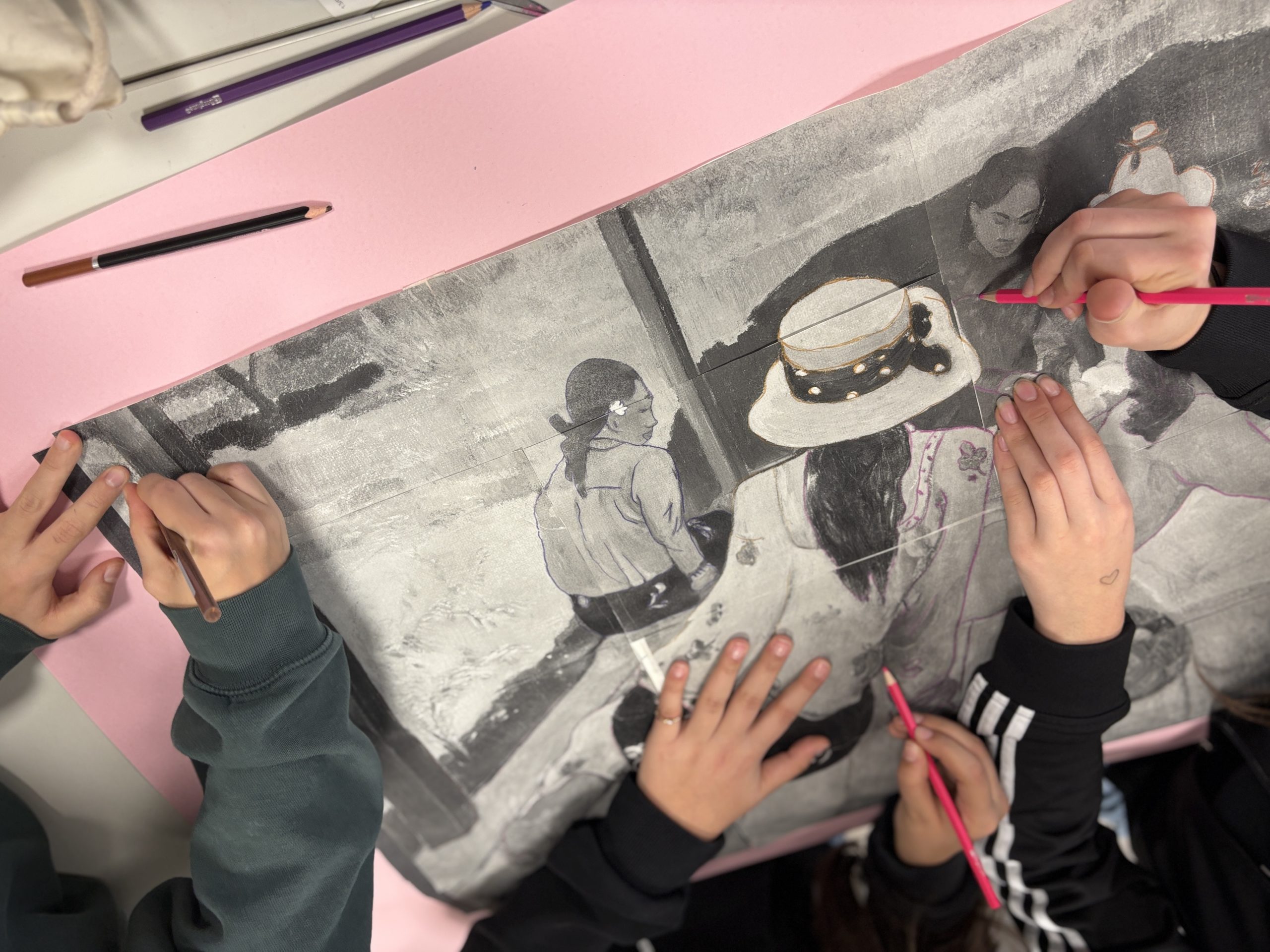
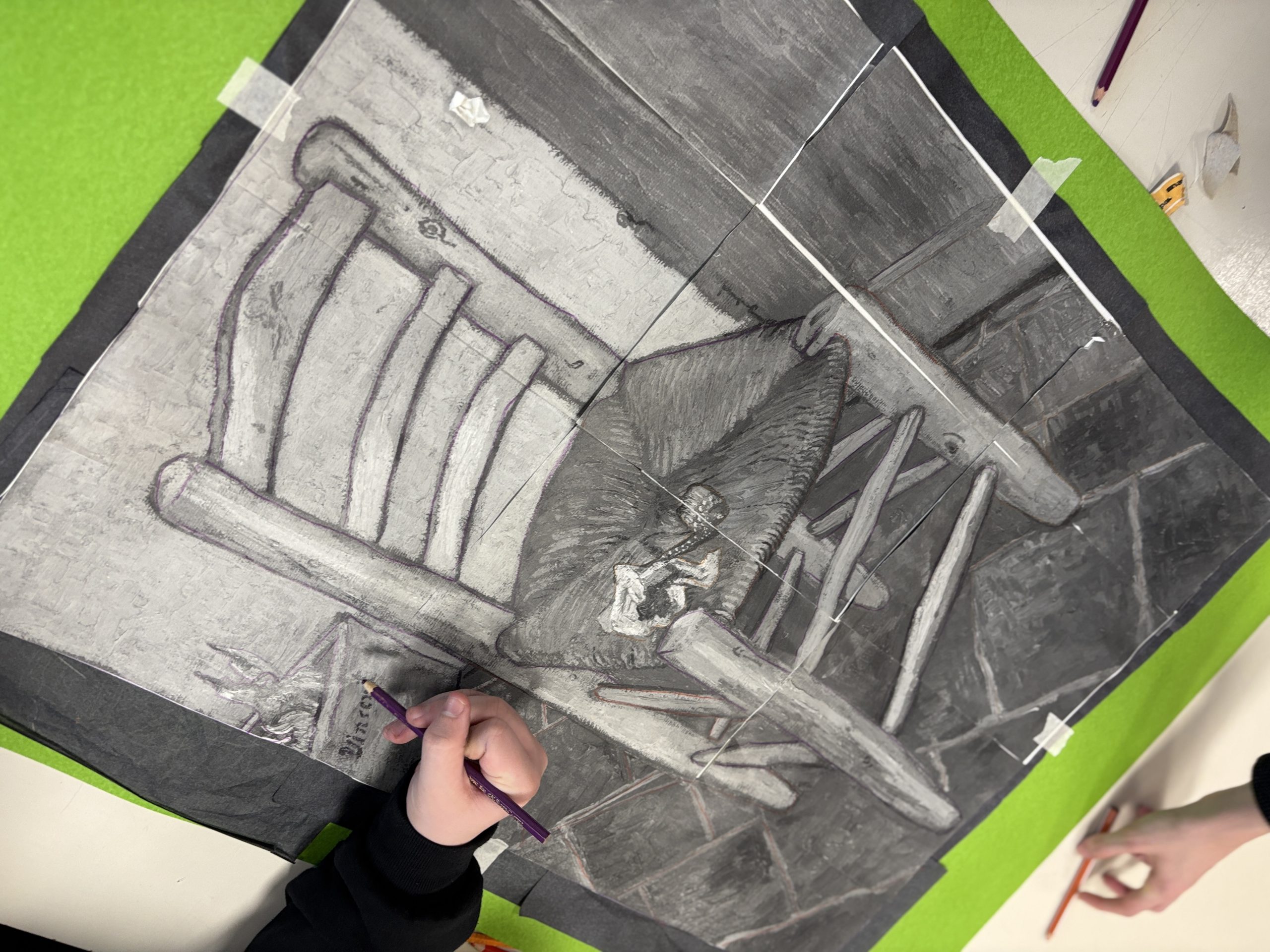
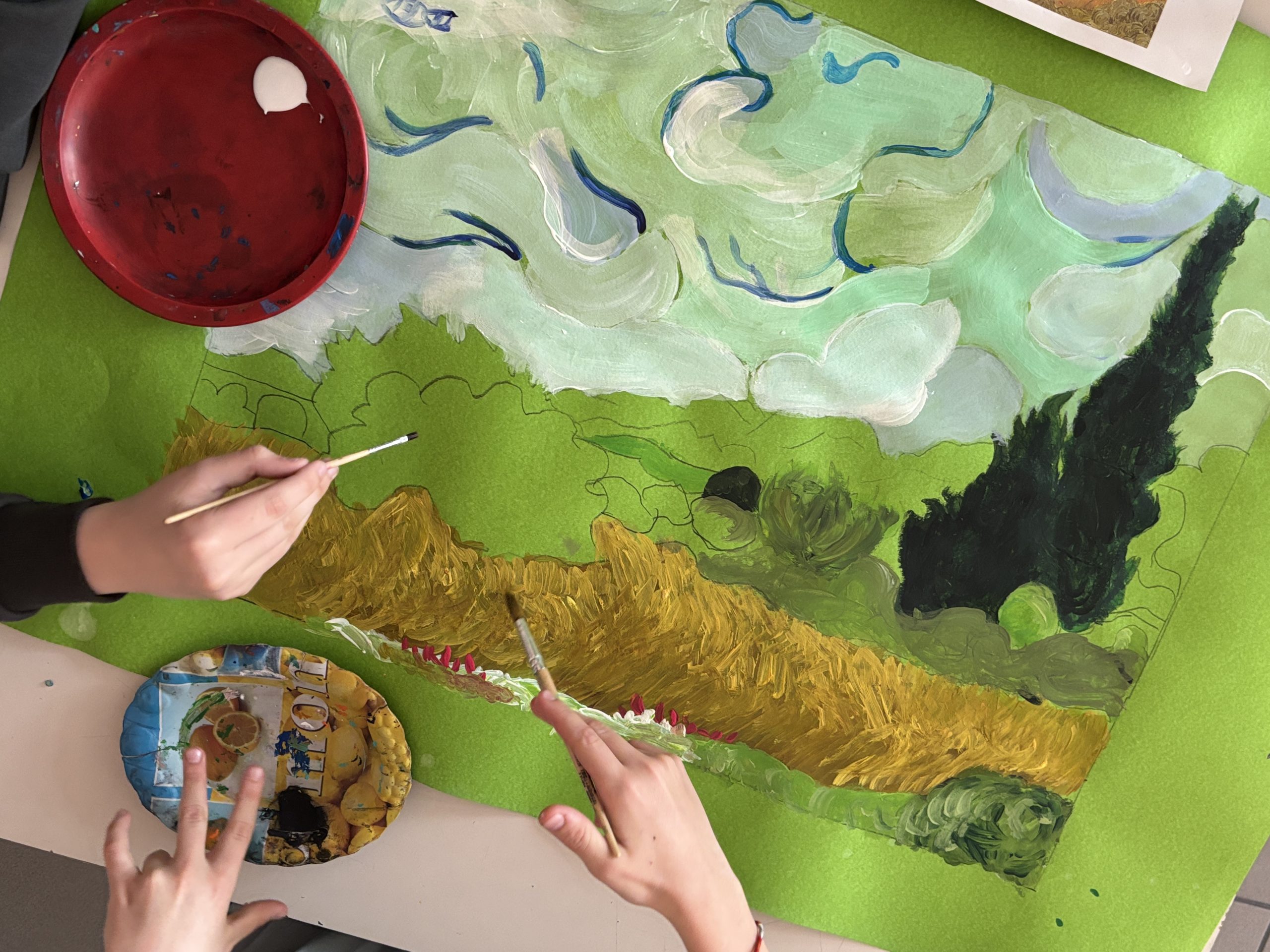
Once the outlines were traced, we divided the tasks to create the tempera mixtures. The challenge was to obtain shades as faithful as possible to the original. Each group member focused on a specific area of the painting (the sky, the figures, the floor, or the fields), carefully studying the direction and thickness of the brushstrokes typical of the chosen artist.
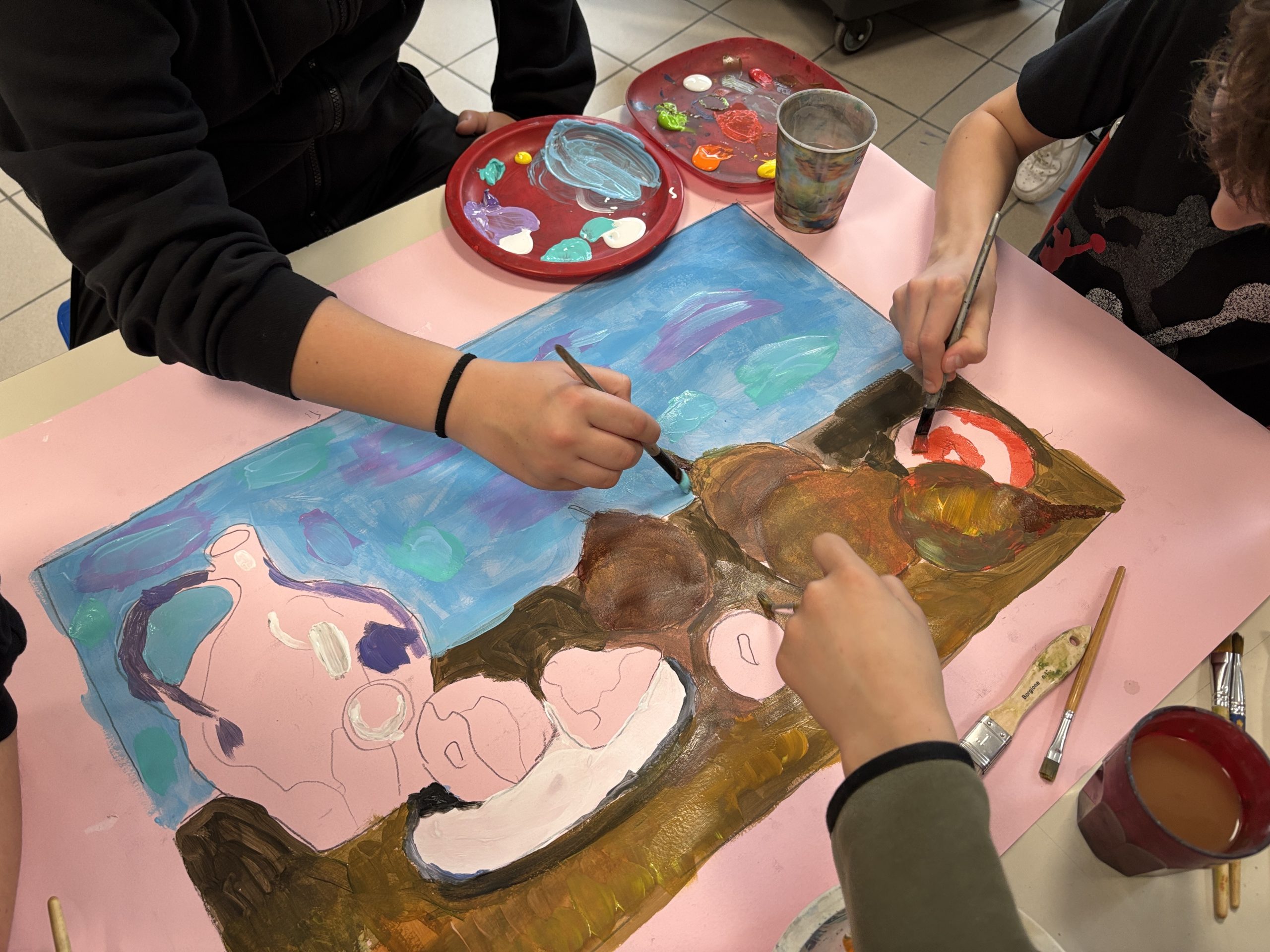
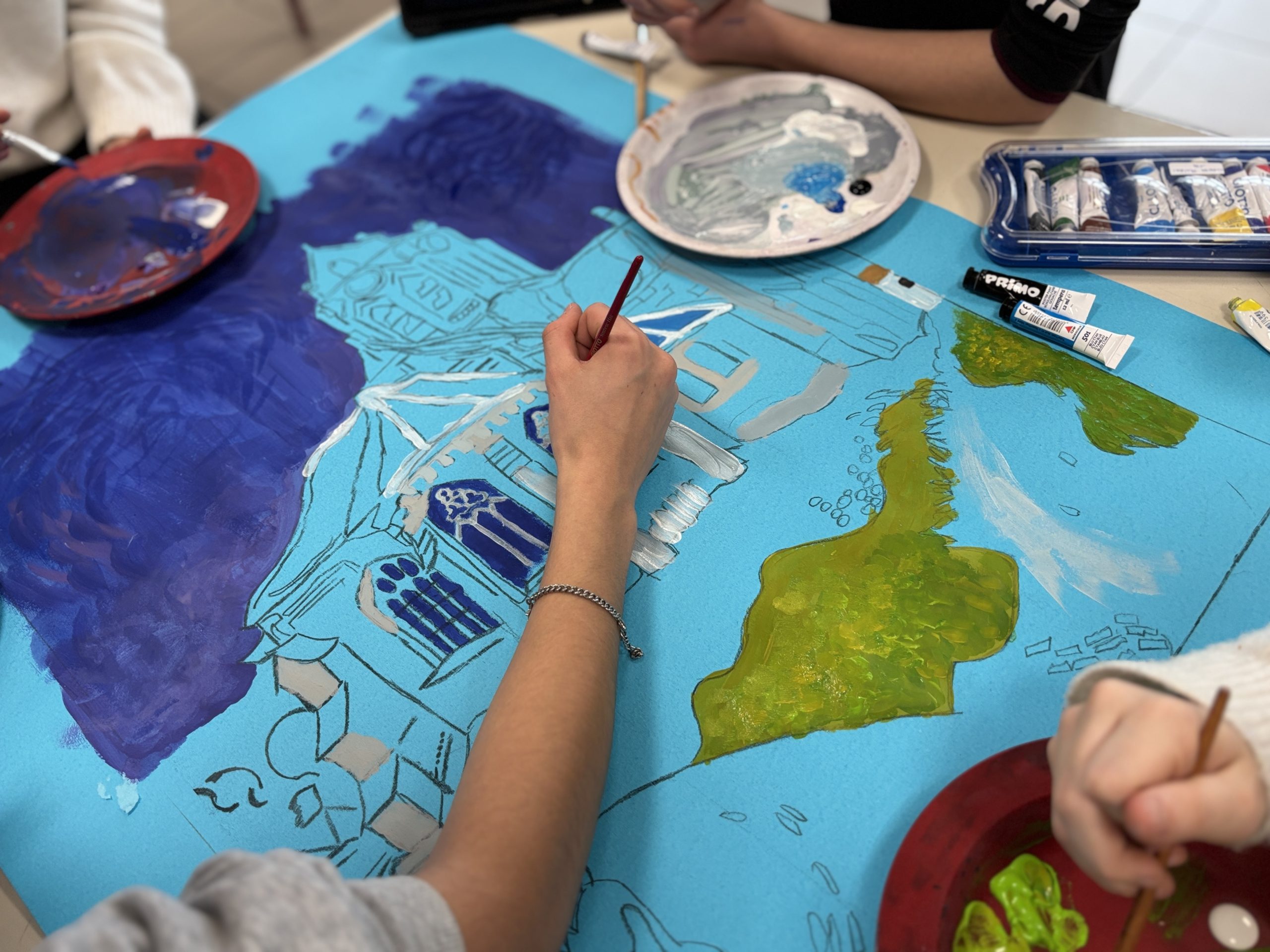
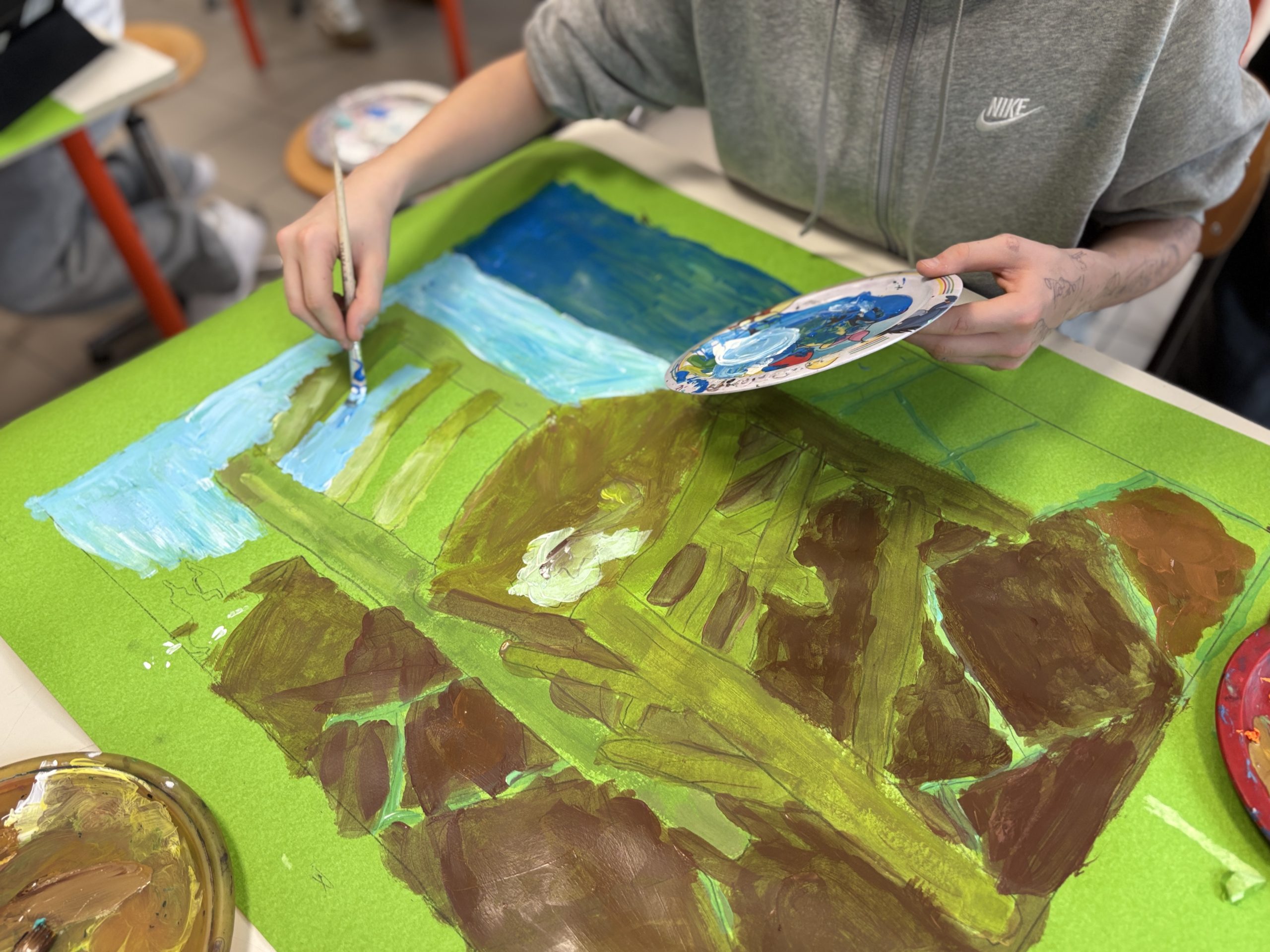
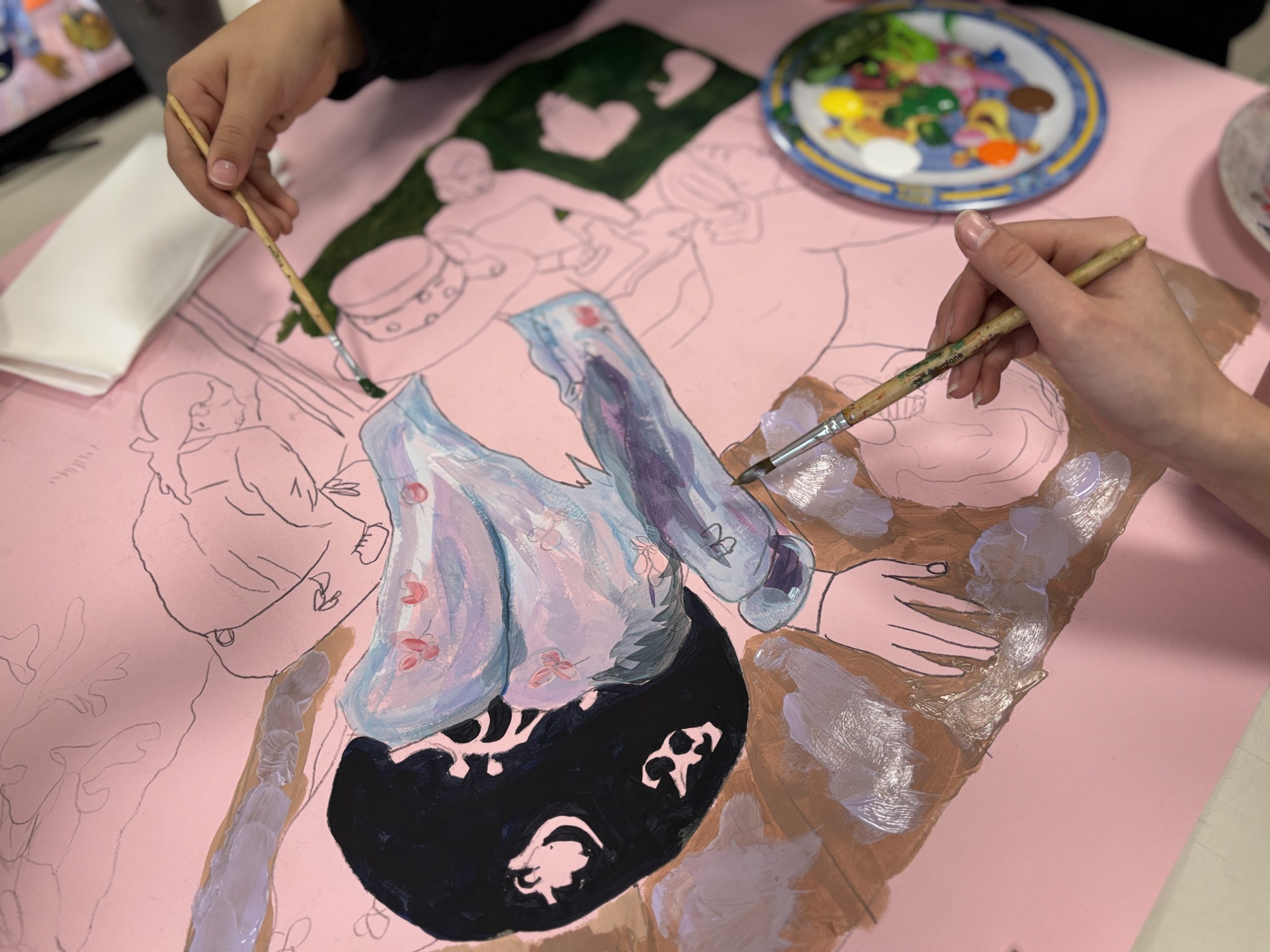
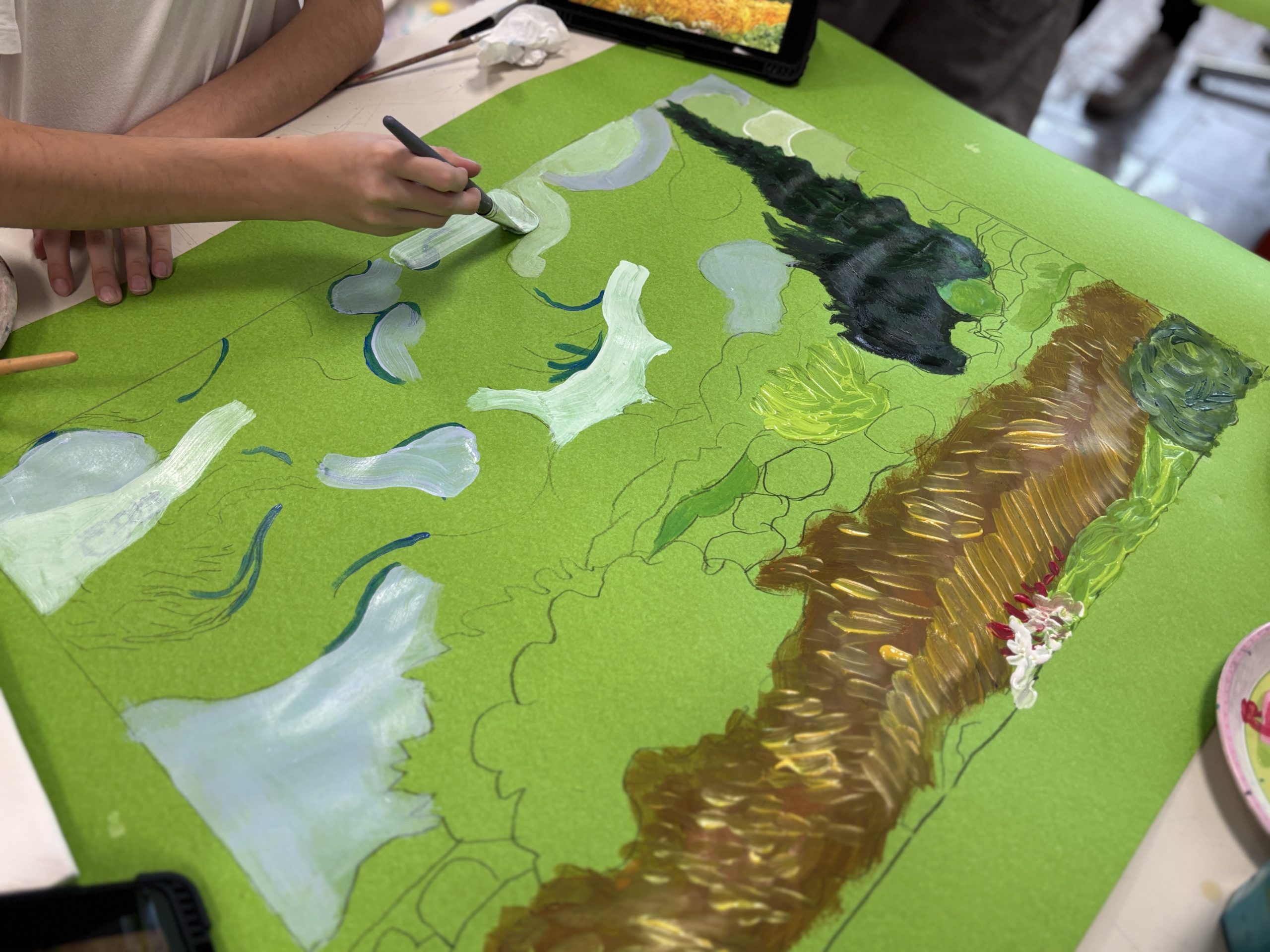
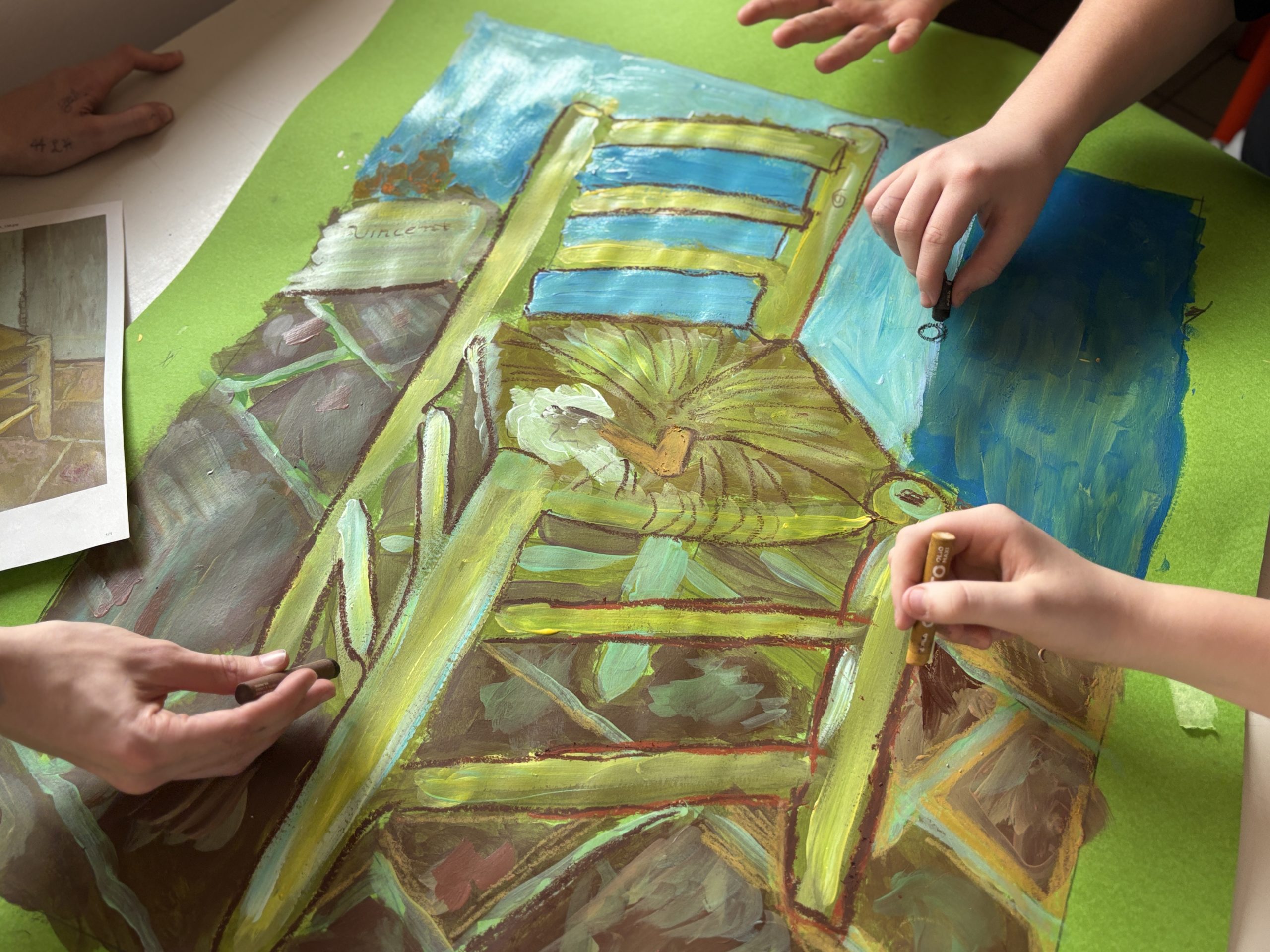
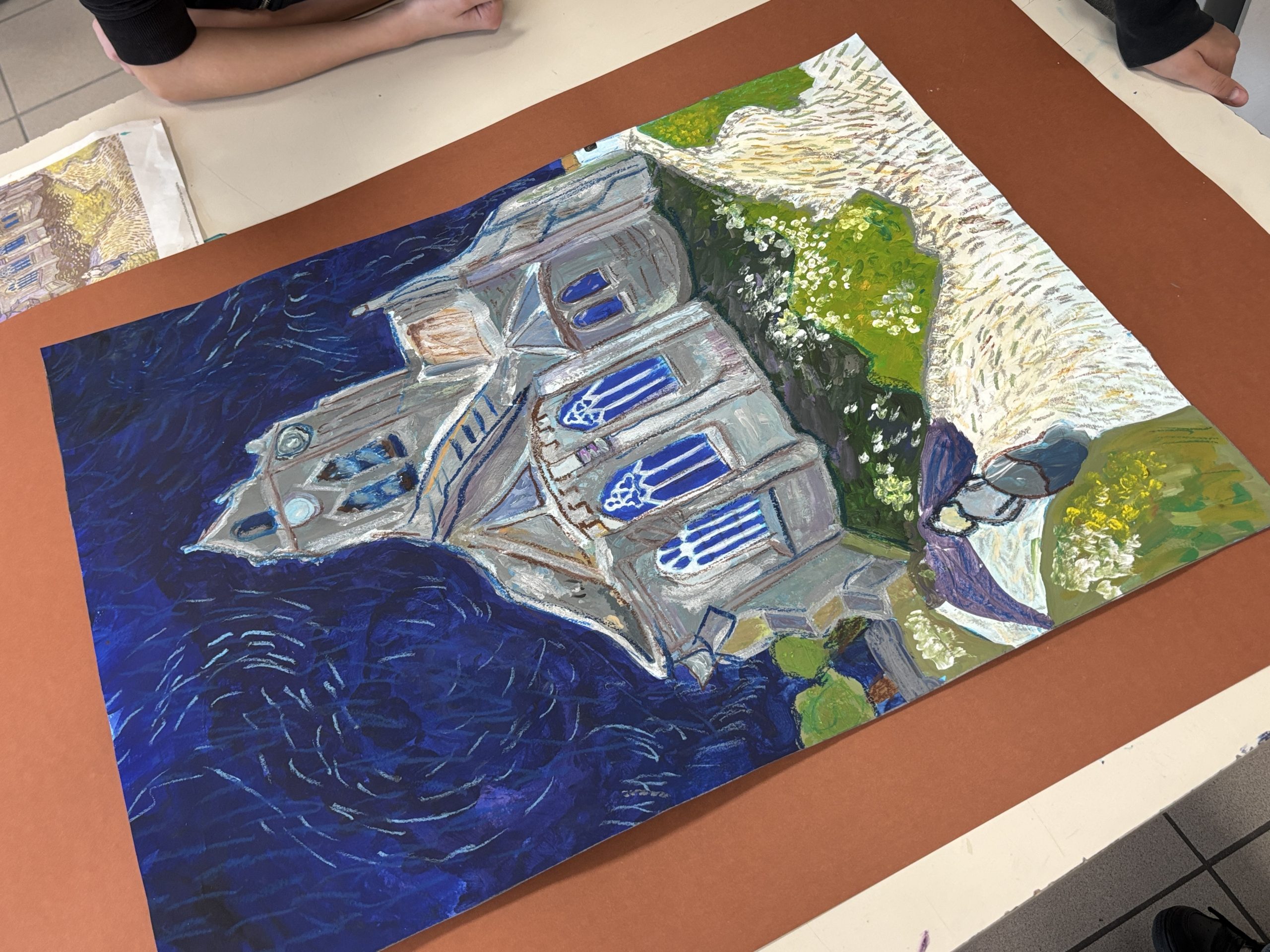
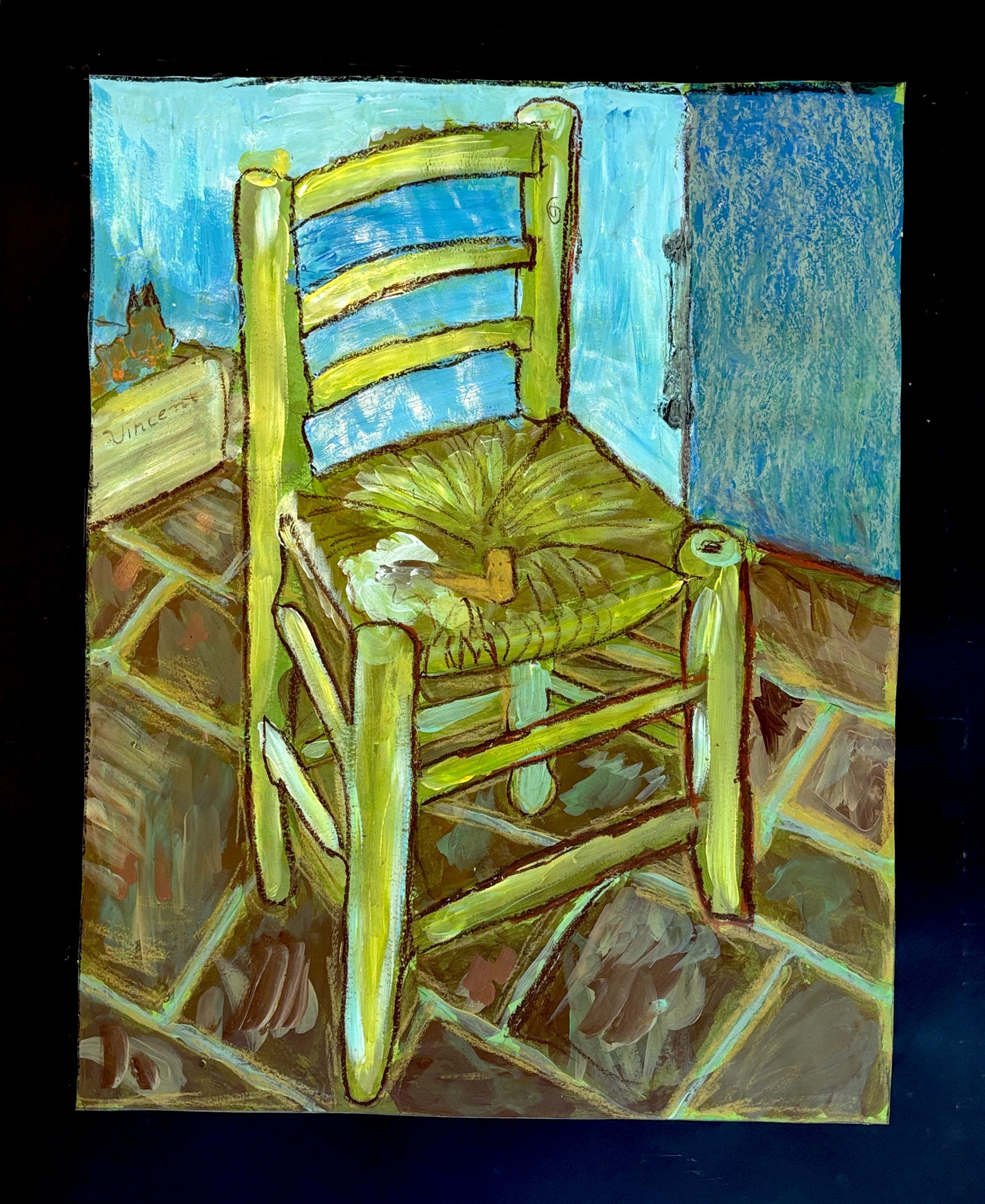
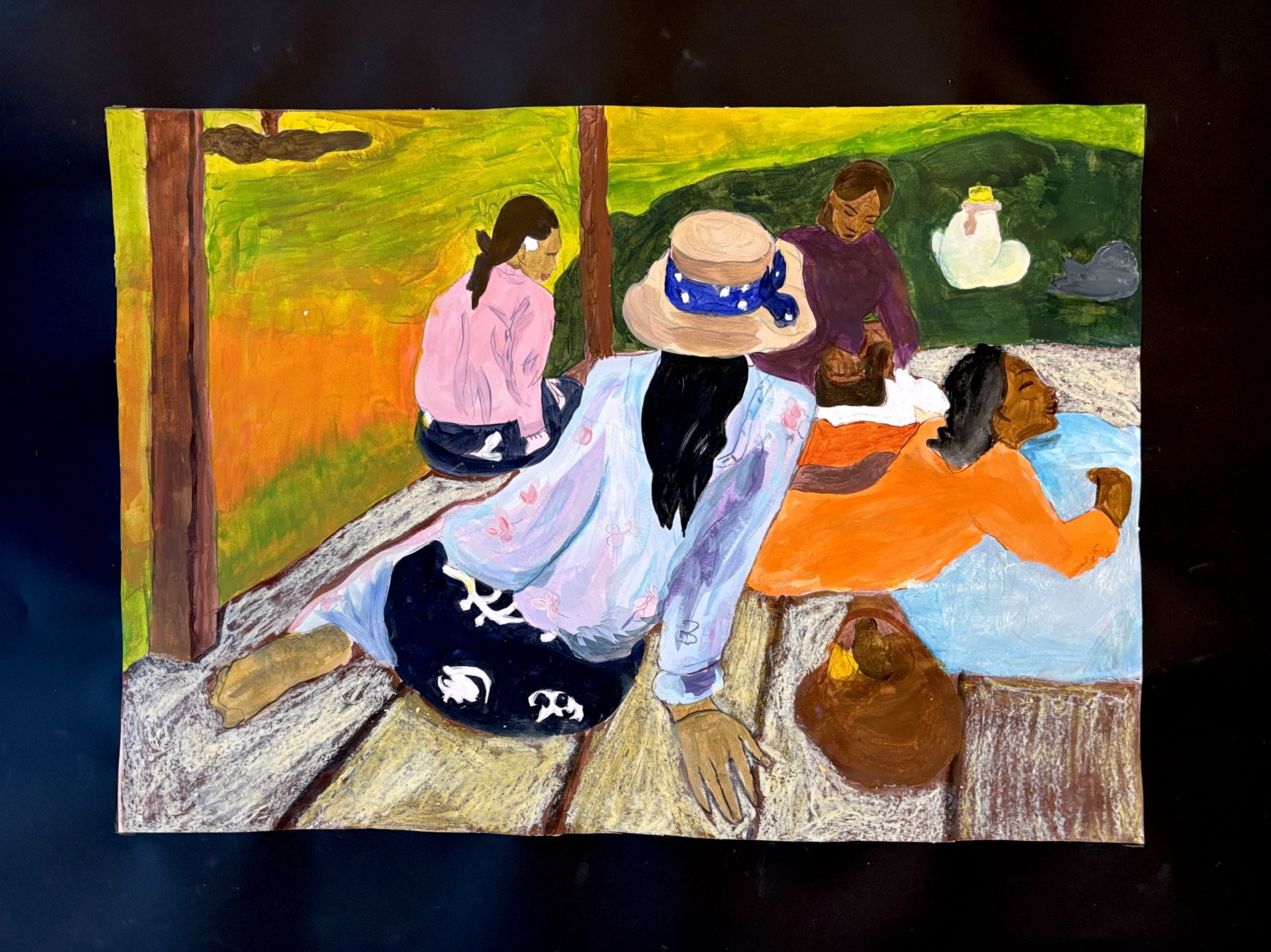
To achieve the textured and vibrant effect—typical, for example, of Van Gogh’s chair—we finished some parts of the painting with oil pastels. This final touch emphasized the marks and gave chromatic depth to the tempera layers, making the work richer and more structured.
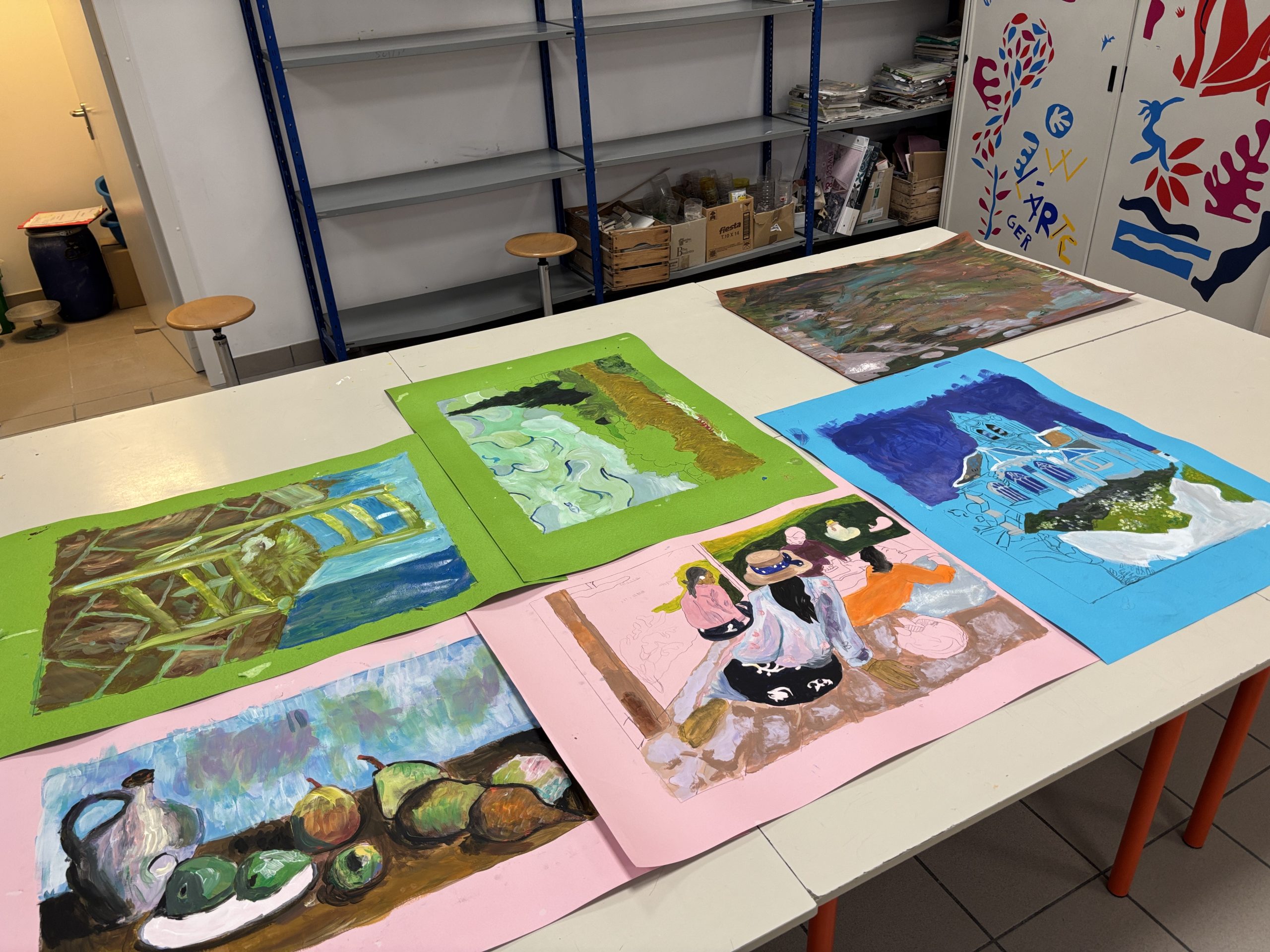
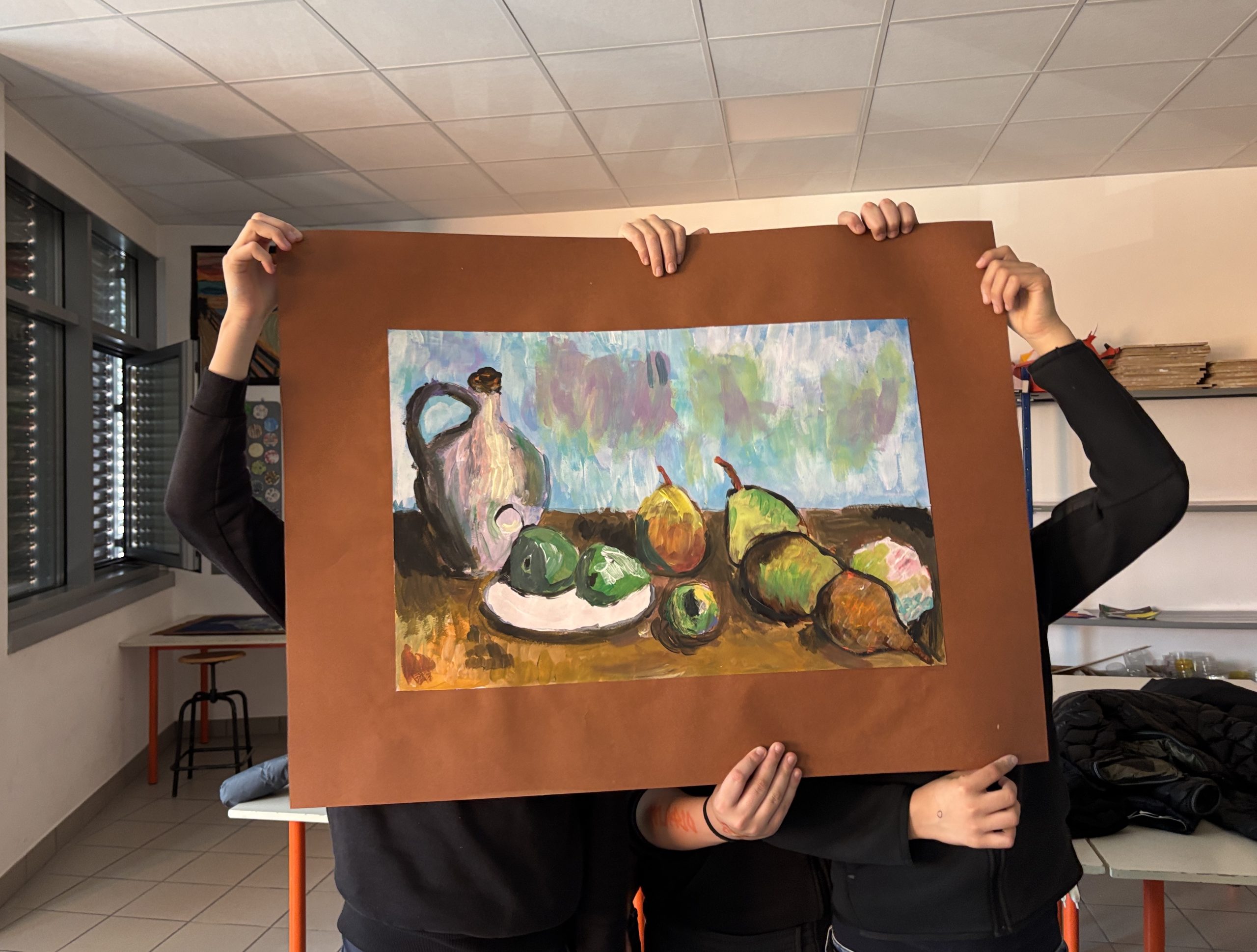
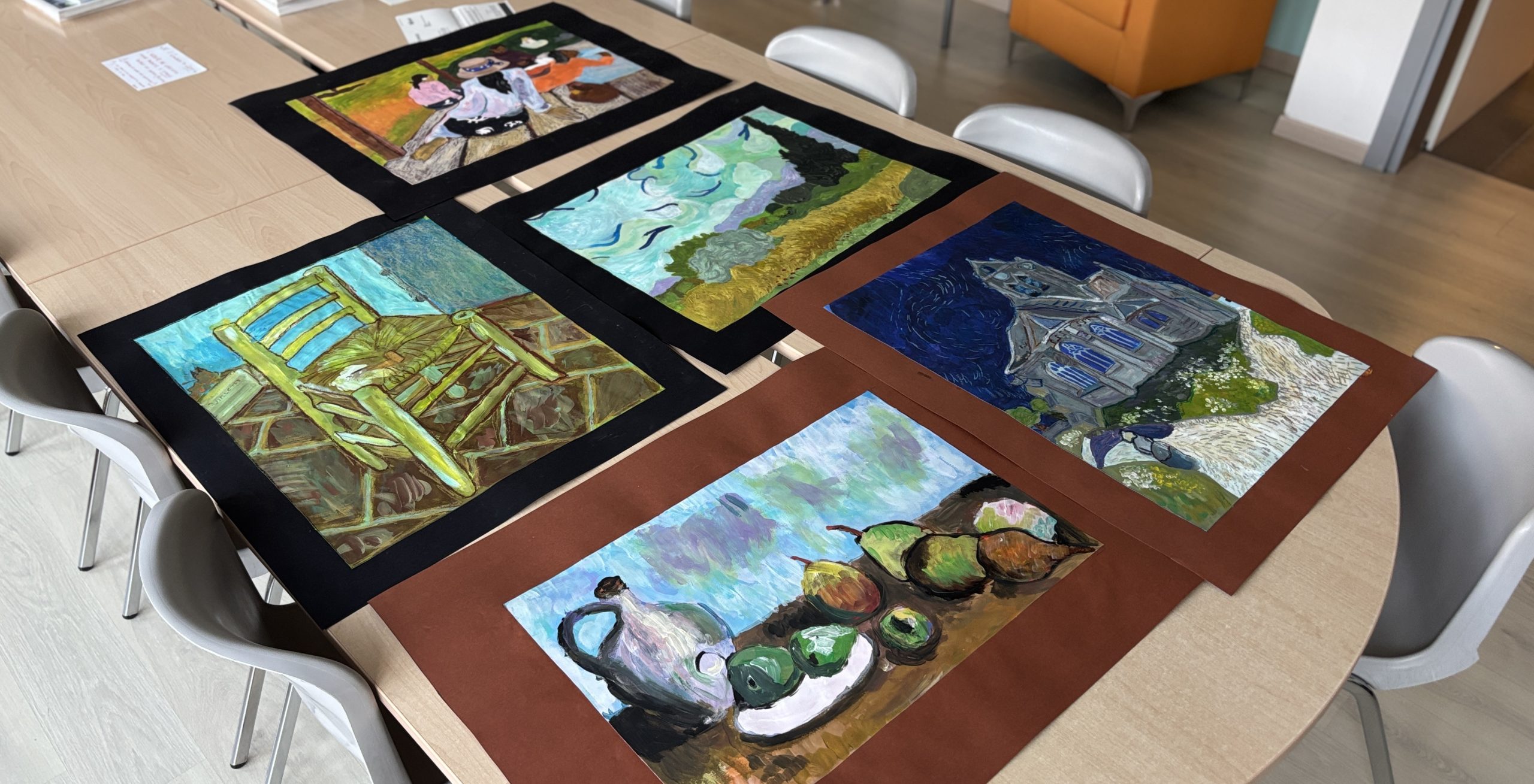
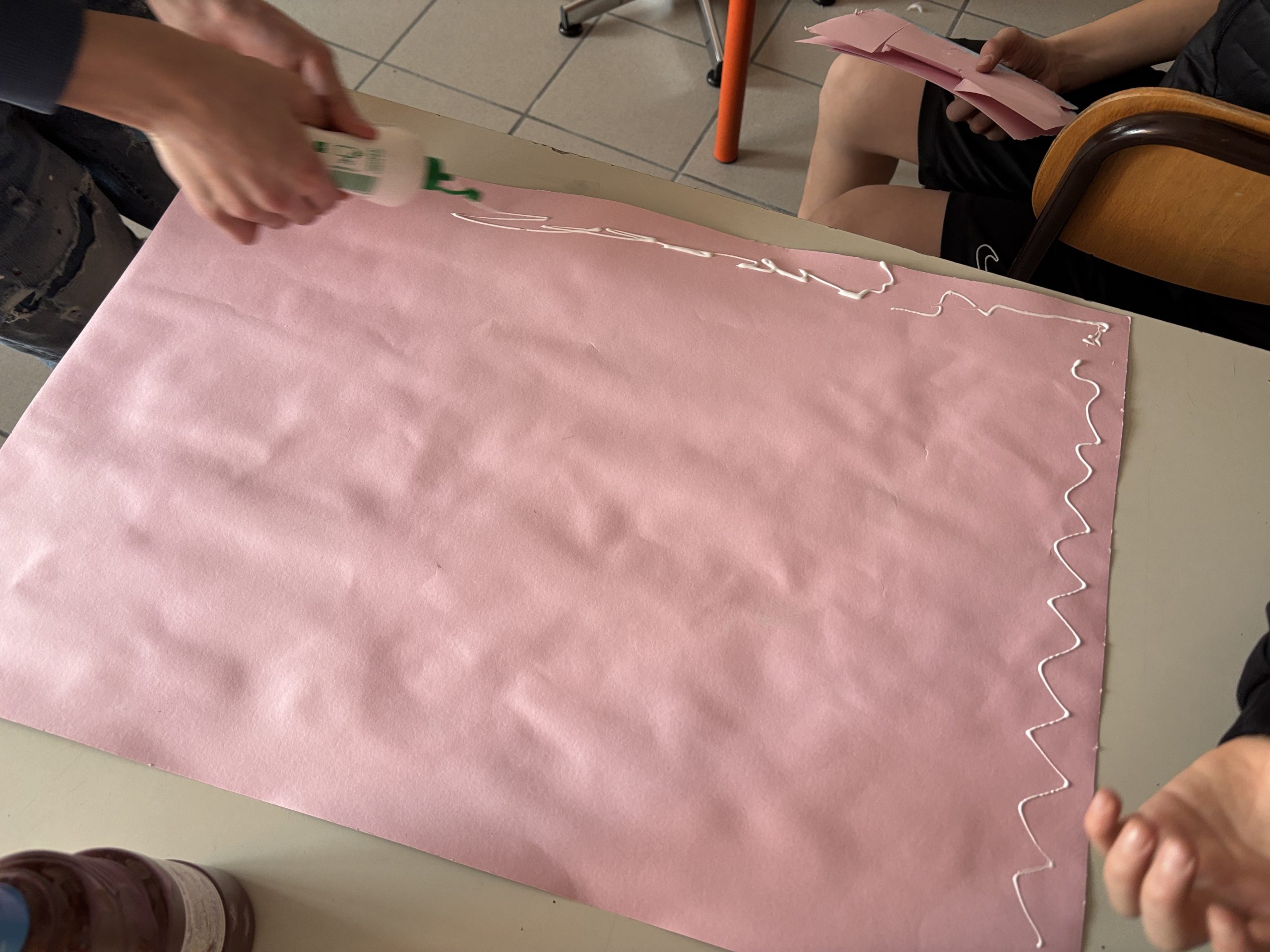
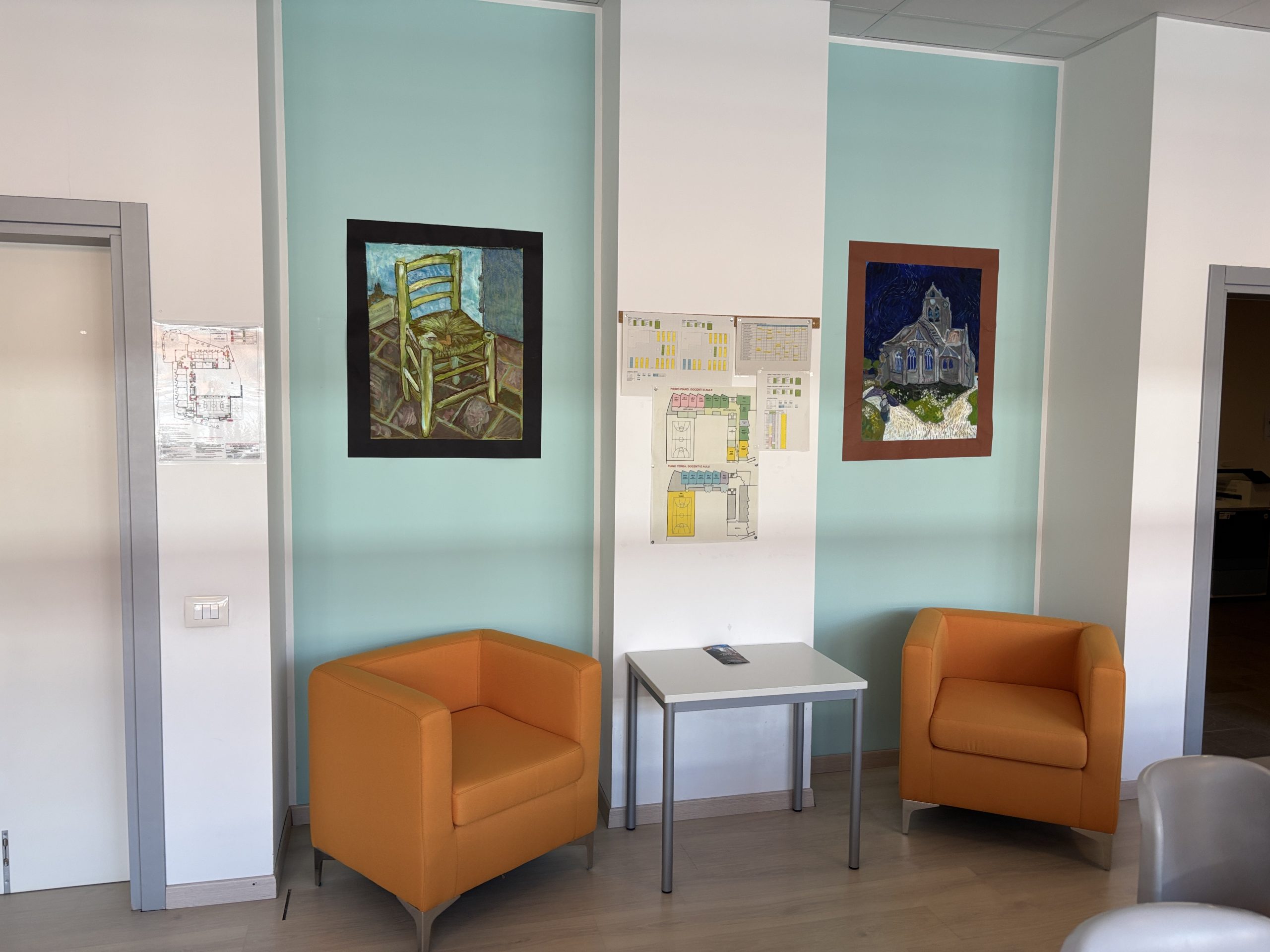
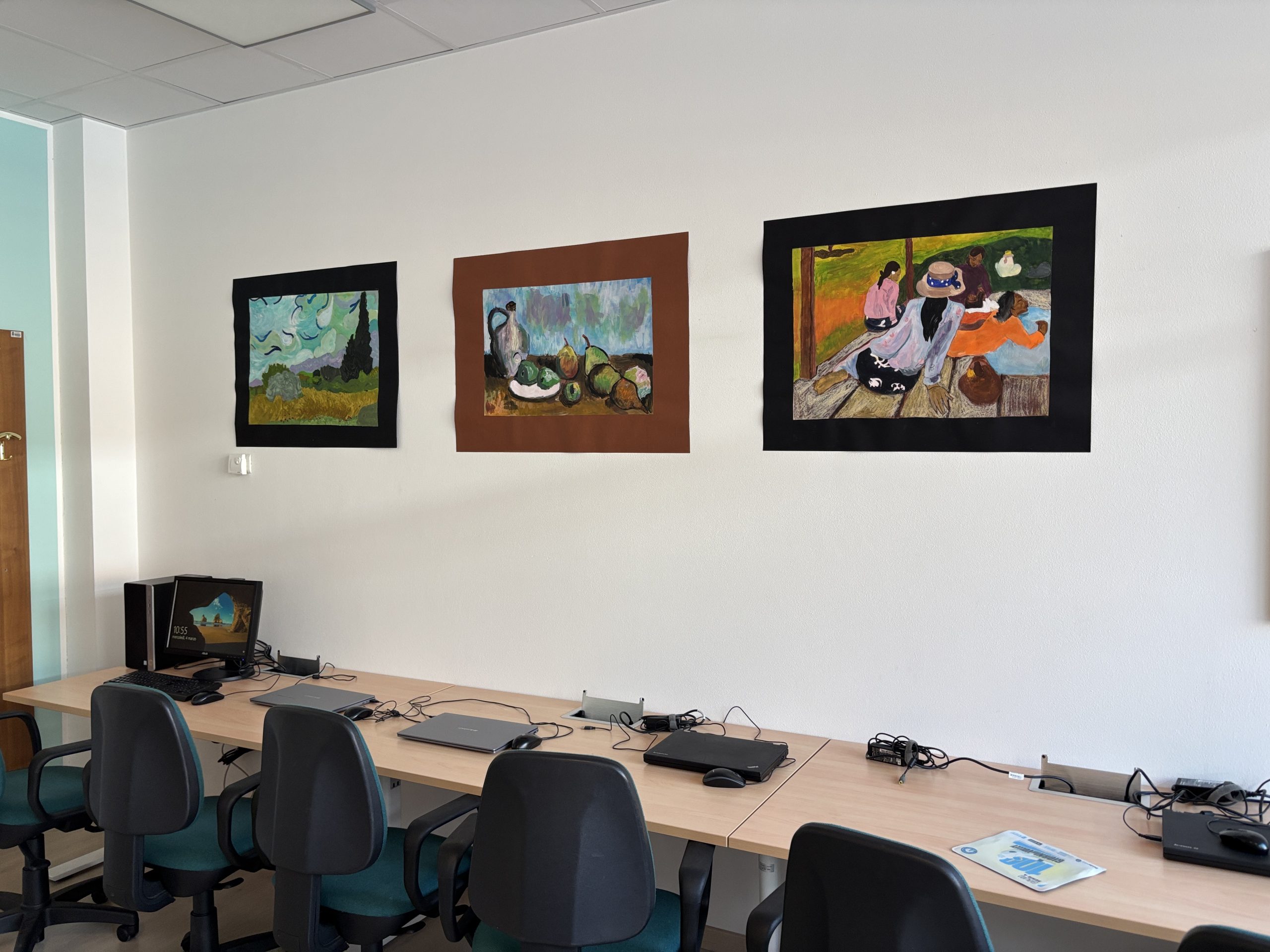
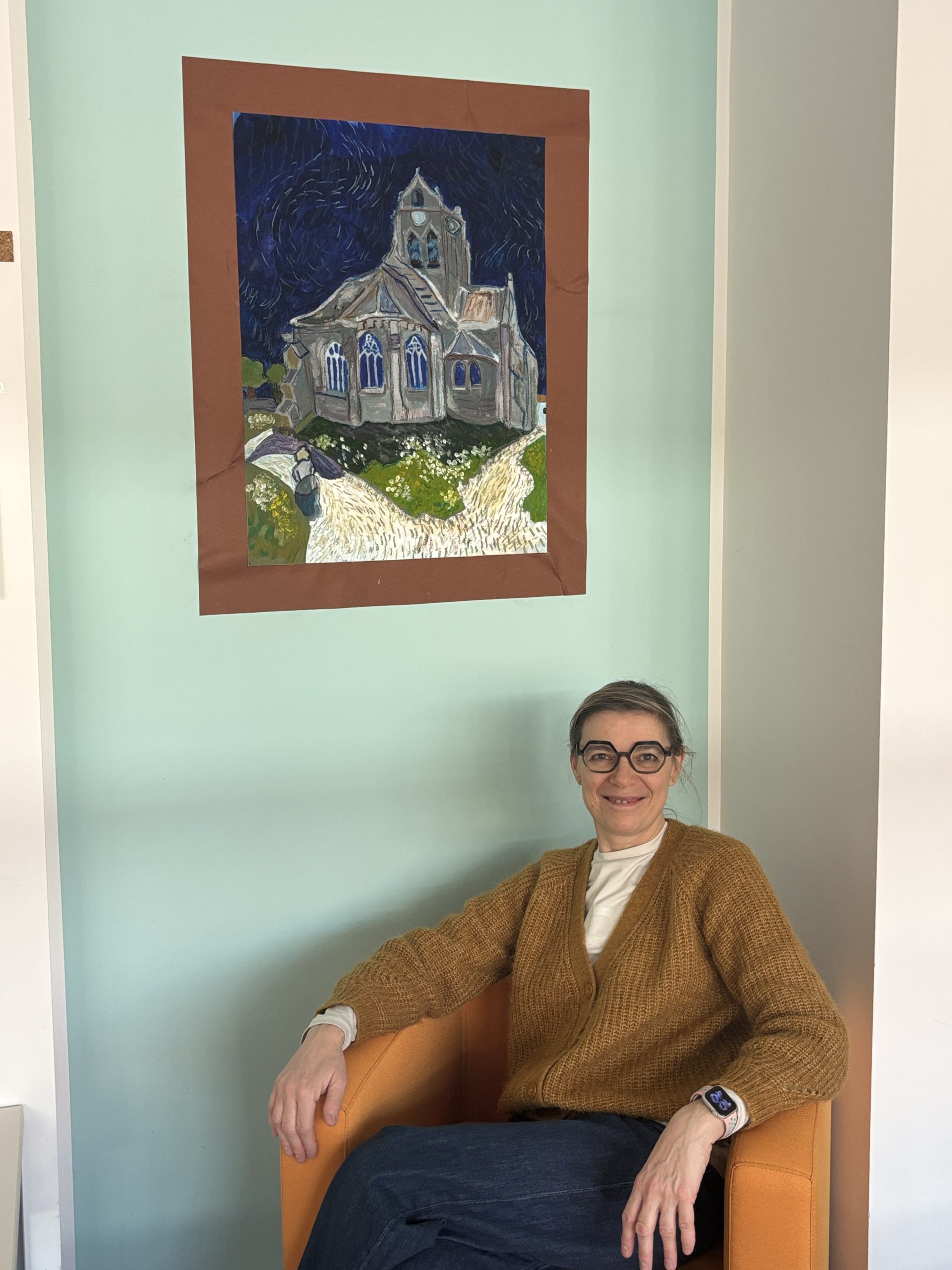
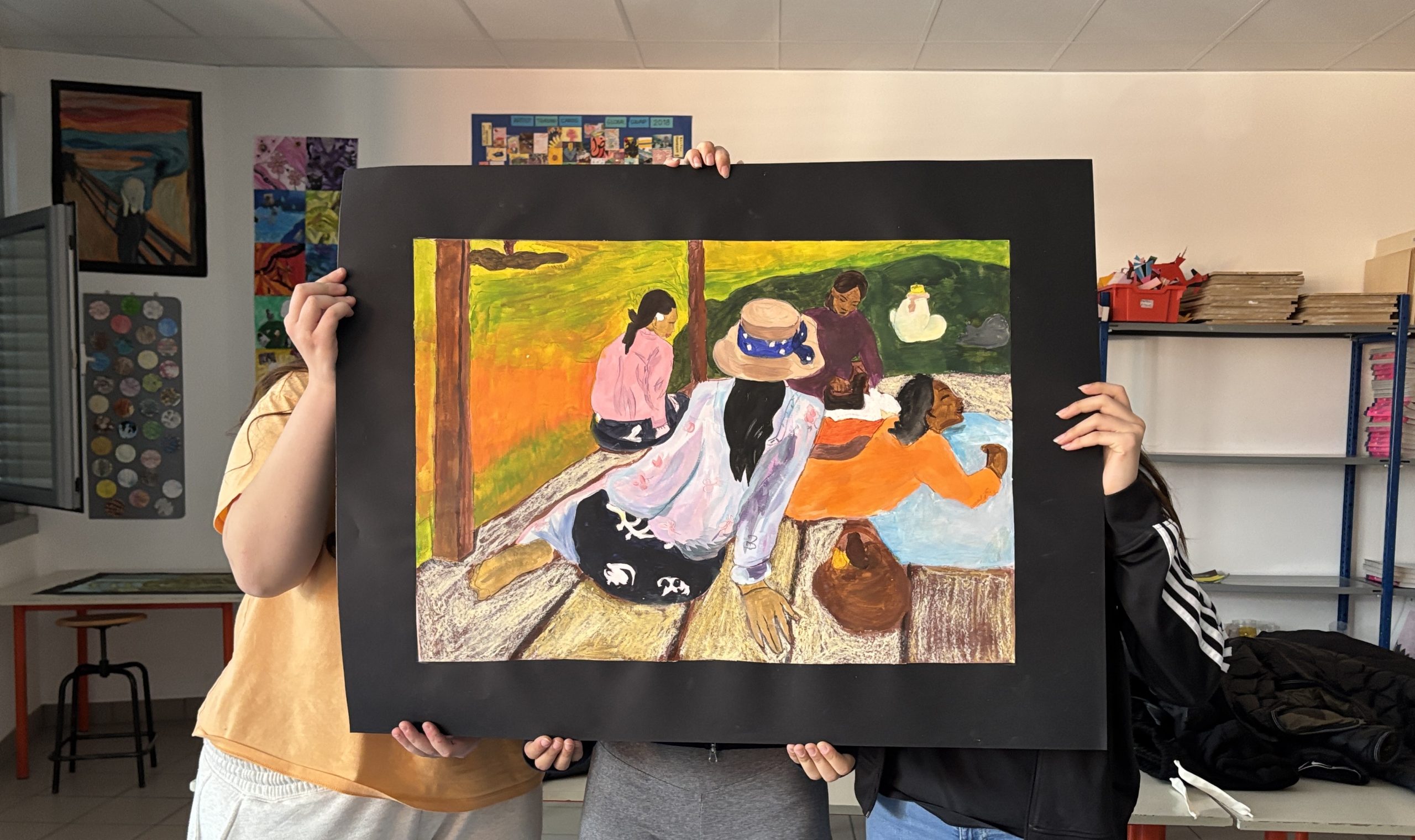
After about six hours of work, we trimmed our paintings and glued them onto black or brown cardstock to create an elegant frame. These large paintings were designed for a special goal: decorating our new teachers’ lounge, transforming empty walls into a small permanent art gallery that brought great satisfaction to the whole class.
Vincent Van Gogh
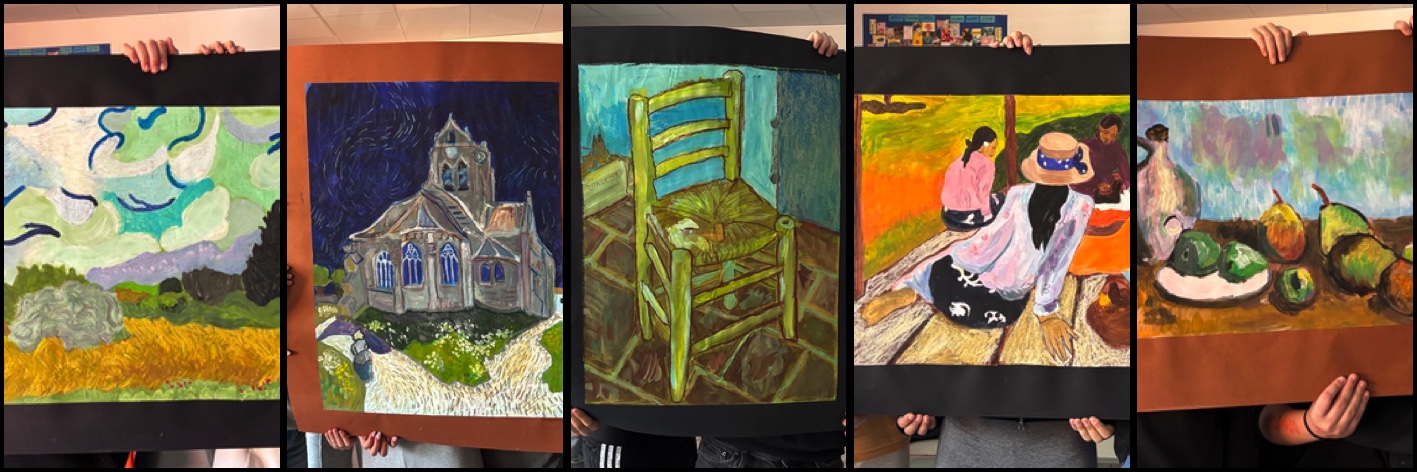
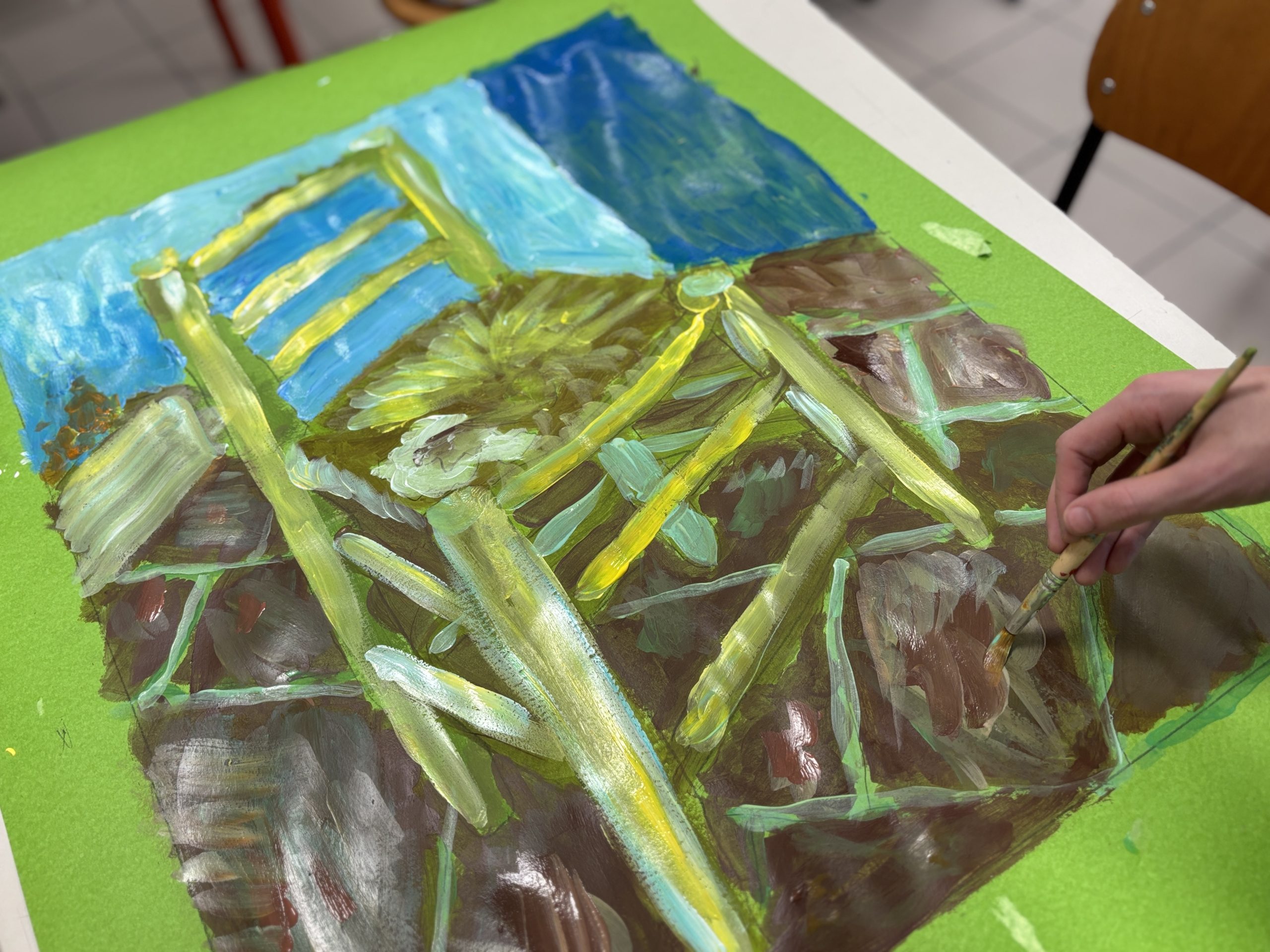
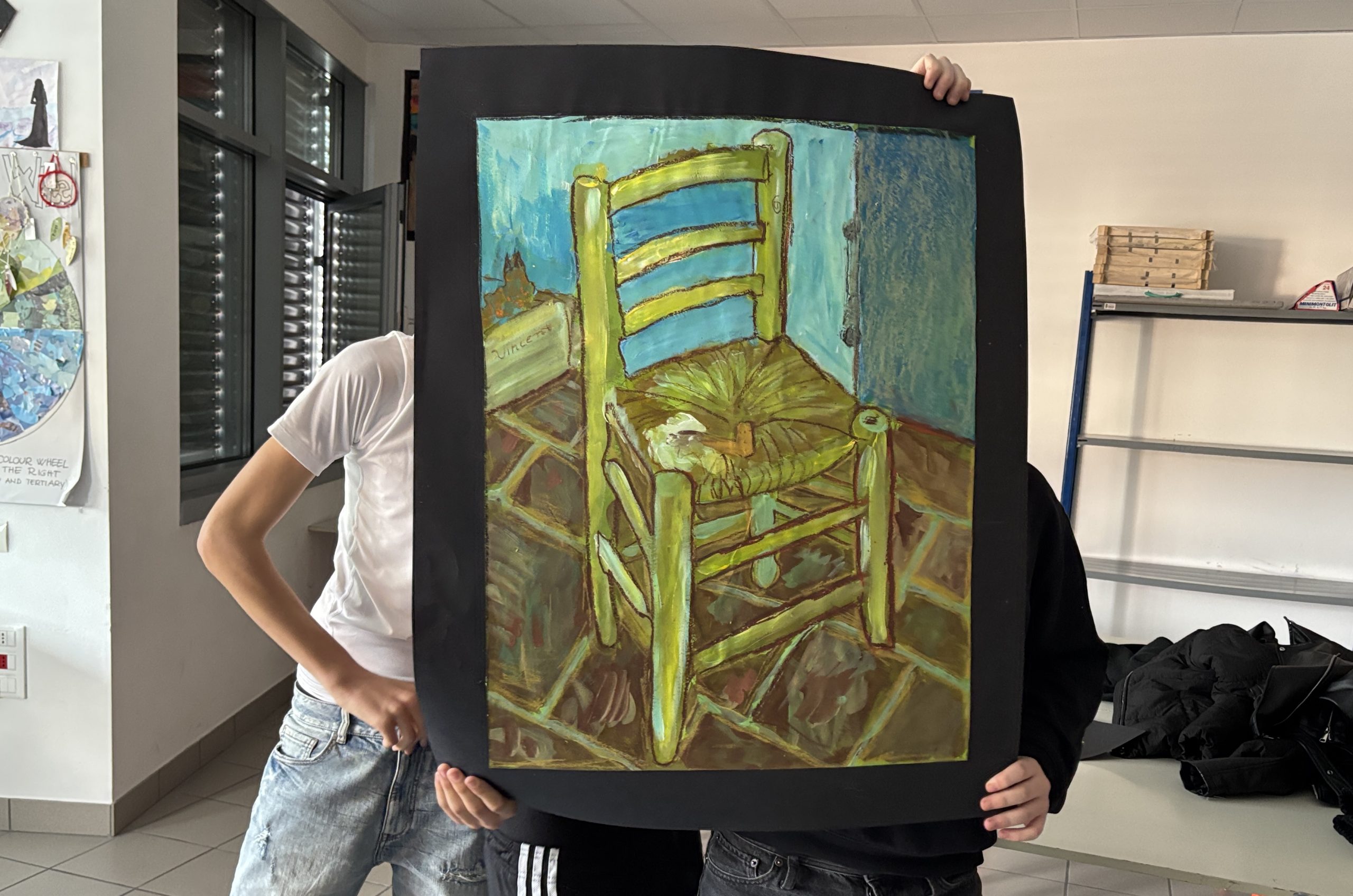
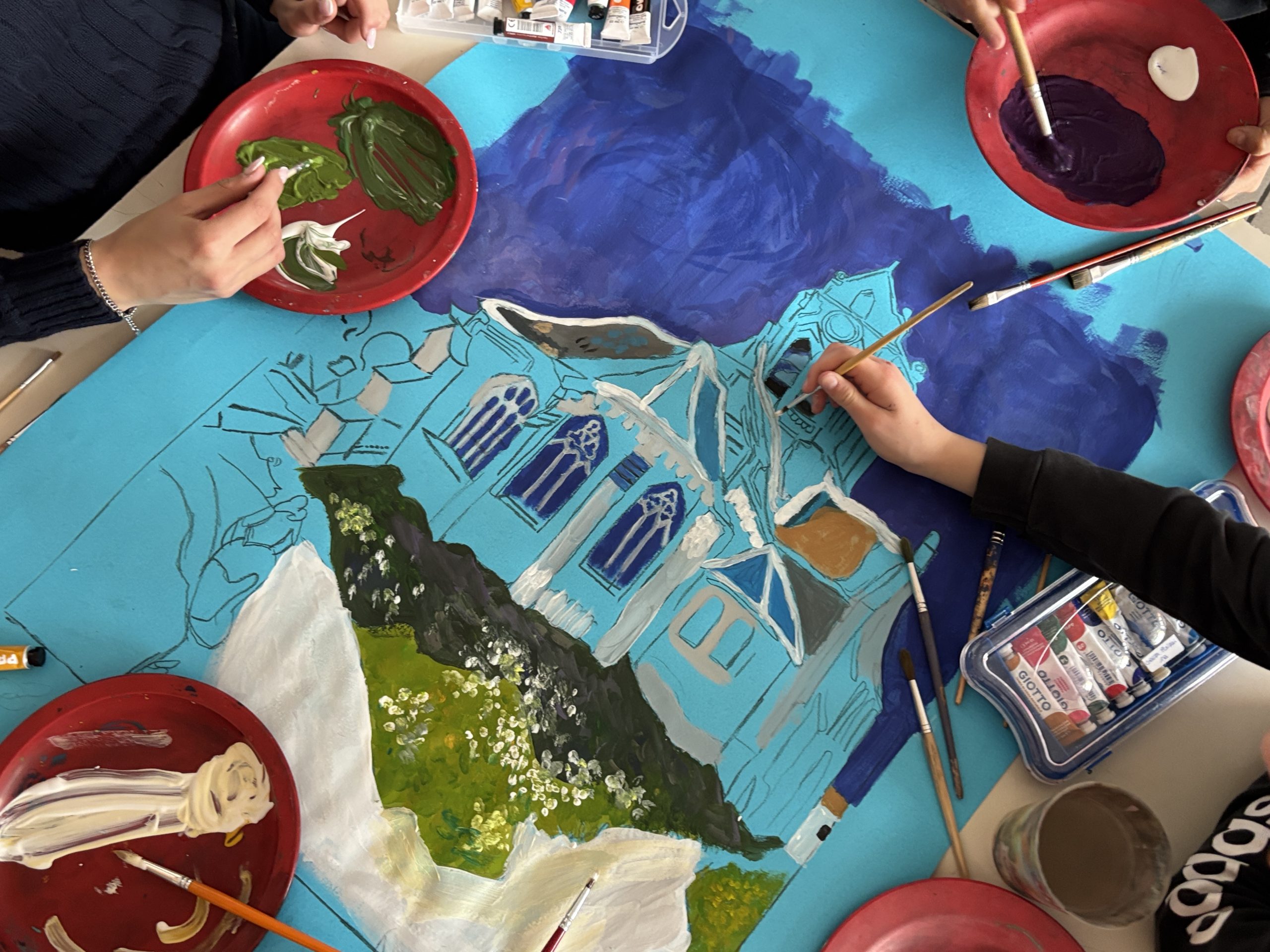
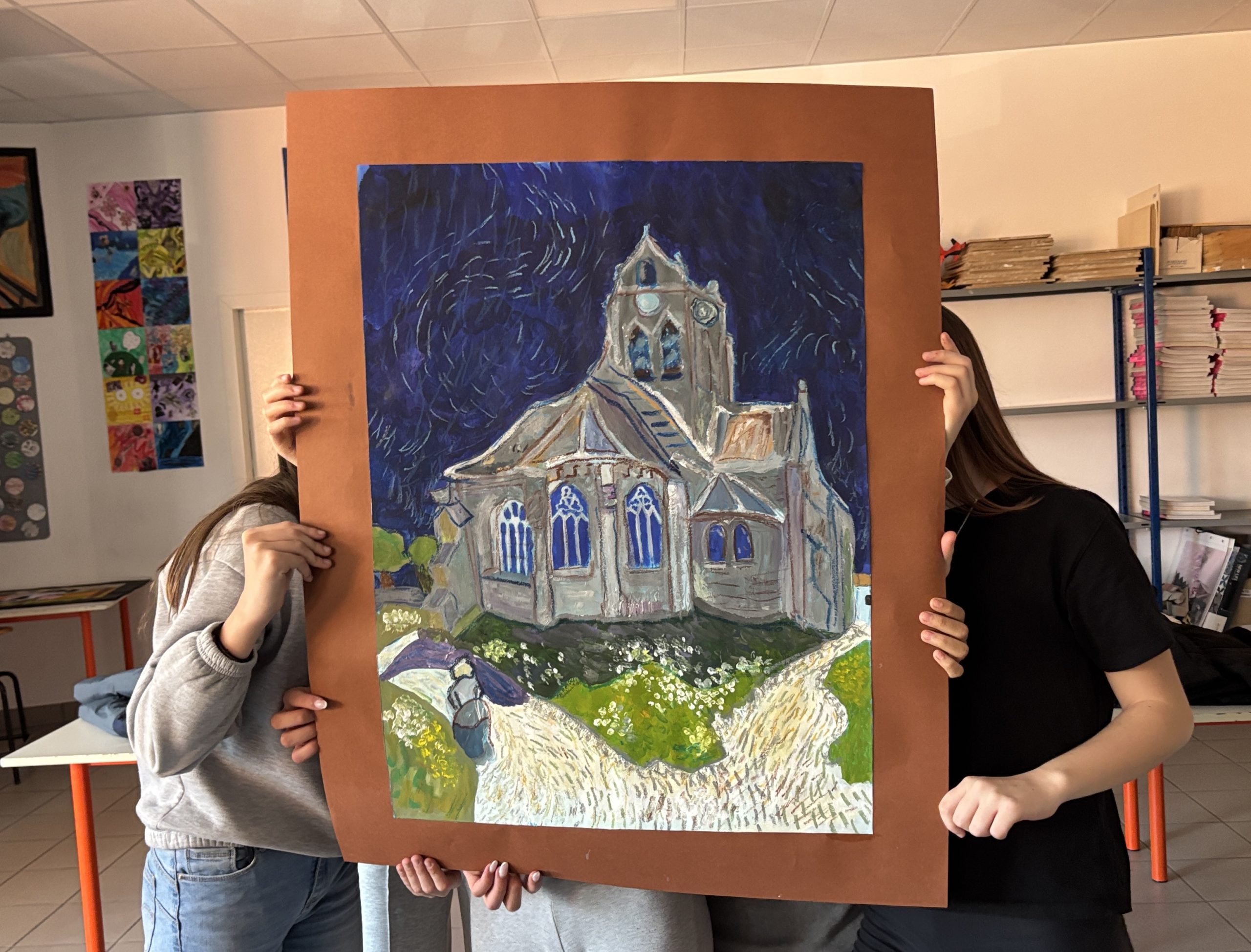
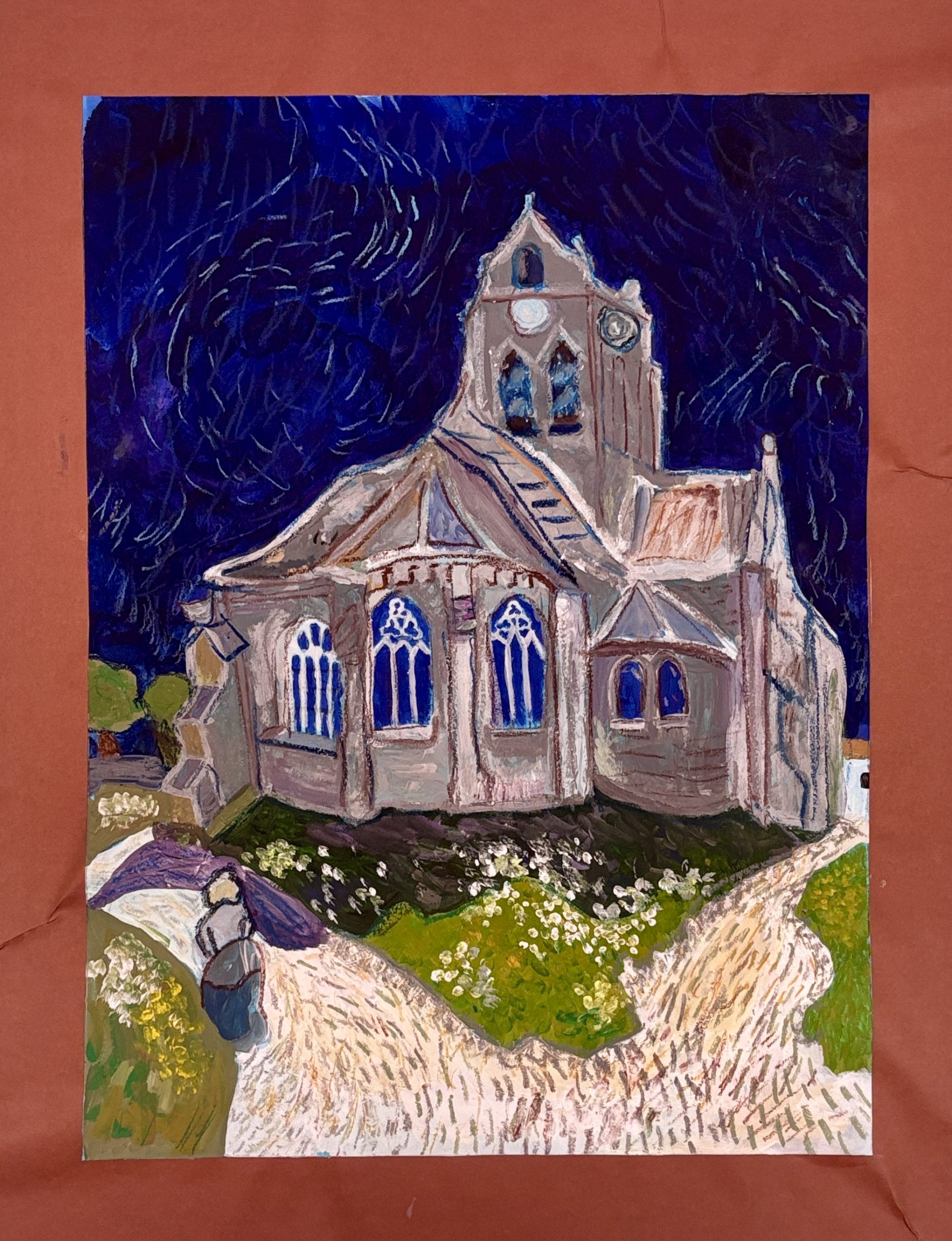
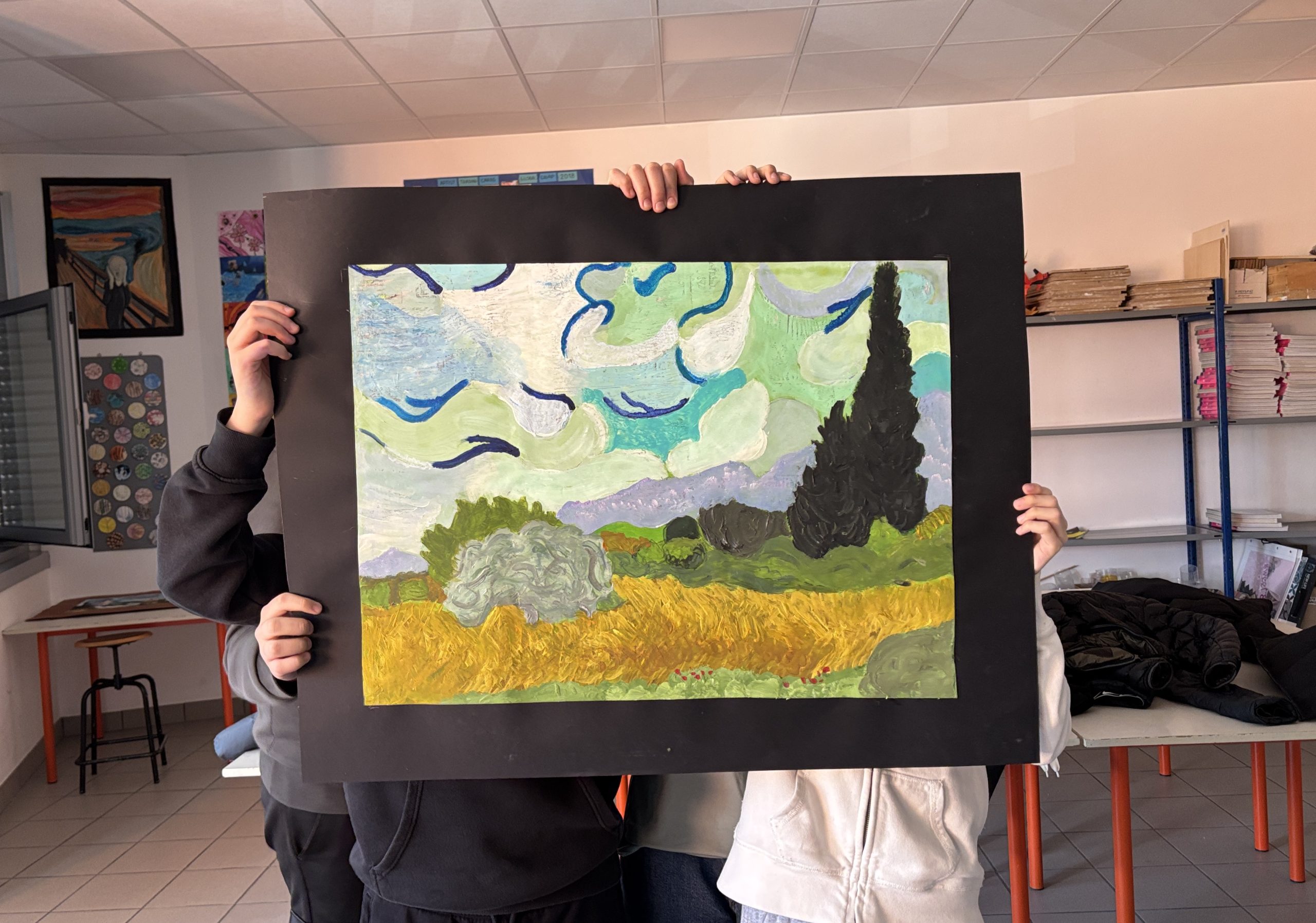
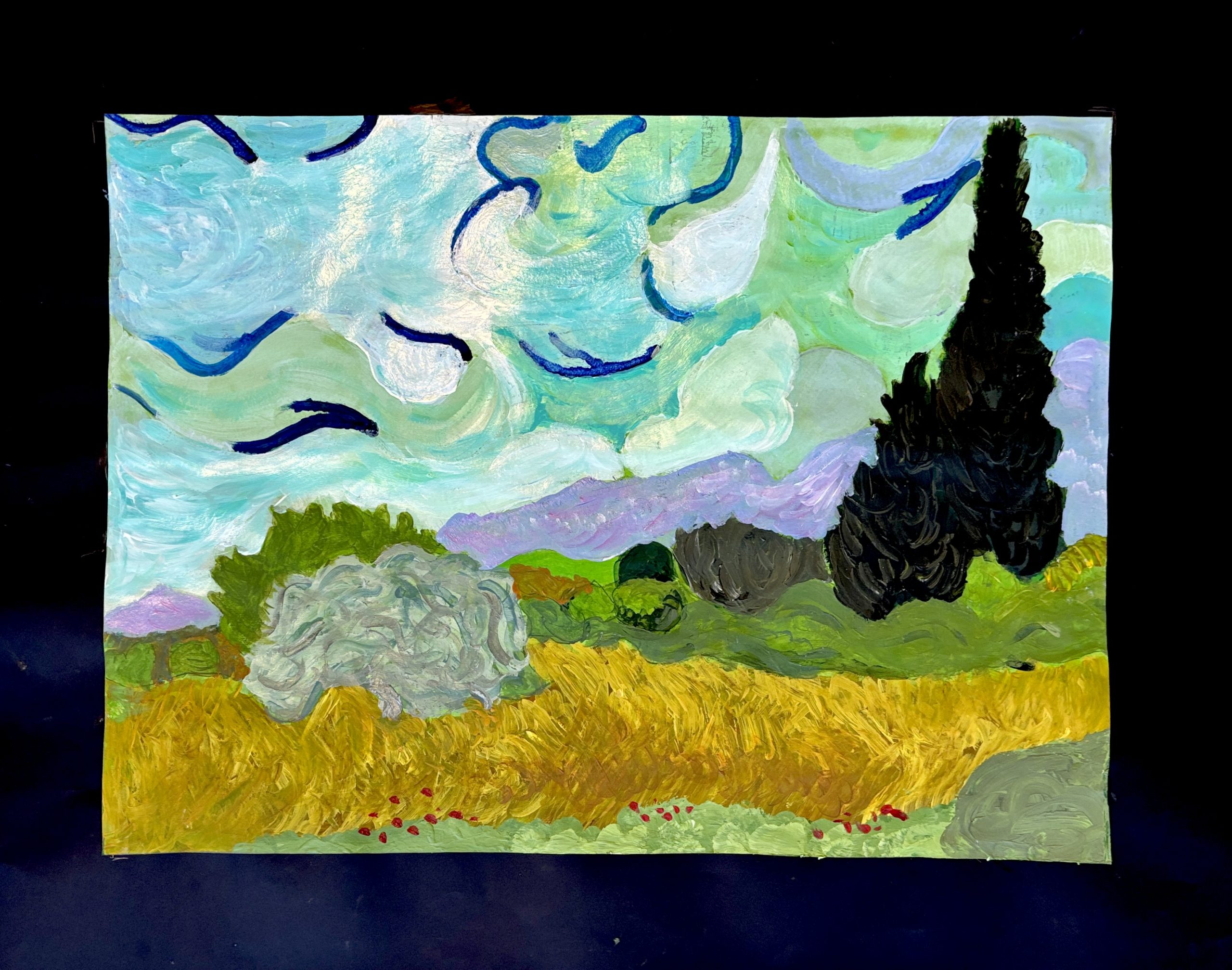
In this work, we tried to imitate his famous textured and vibrant brushstroke. Van Gogh did not apply color evenly but used short marks thick with paint that follow the flow of the shapes. To render the effect of his bold outlines and the strength of the color contrasts, we integrated the use of oil pastels, which helped us recreate the swirling energy typical of his works. We reproduced his famous “Van Gogh’s Chair” (1888), “The Church at Auvers” (1890), and “Wheatfield with Cypresses” (1889).
Paul Gauguin
To copy Gauguin, we focused on the technique of cloisonnism: flat and intense areas of color enclosed by sharp outlines. We worked hard on researching non-naturalistic and warm colors, trying to reproduce that exotic and symbolist atmosphere that characterizes his paintings. The challenge here was to apply the color evenly, giving importance to the line and the synthesis of forms. We reproduced his 1891-94 painting titled “The Siesta.”
Paul Cézanne
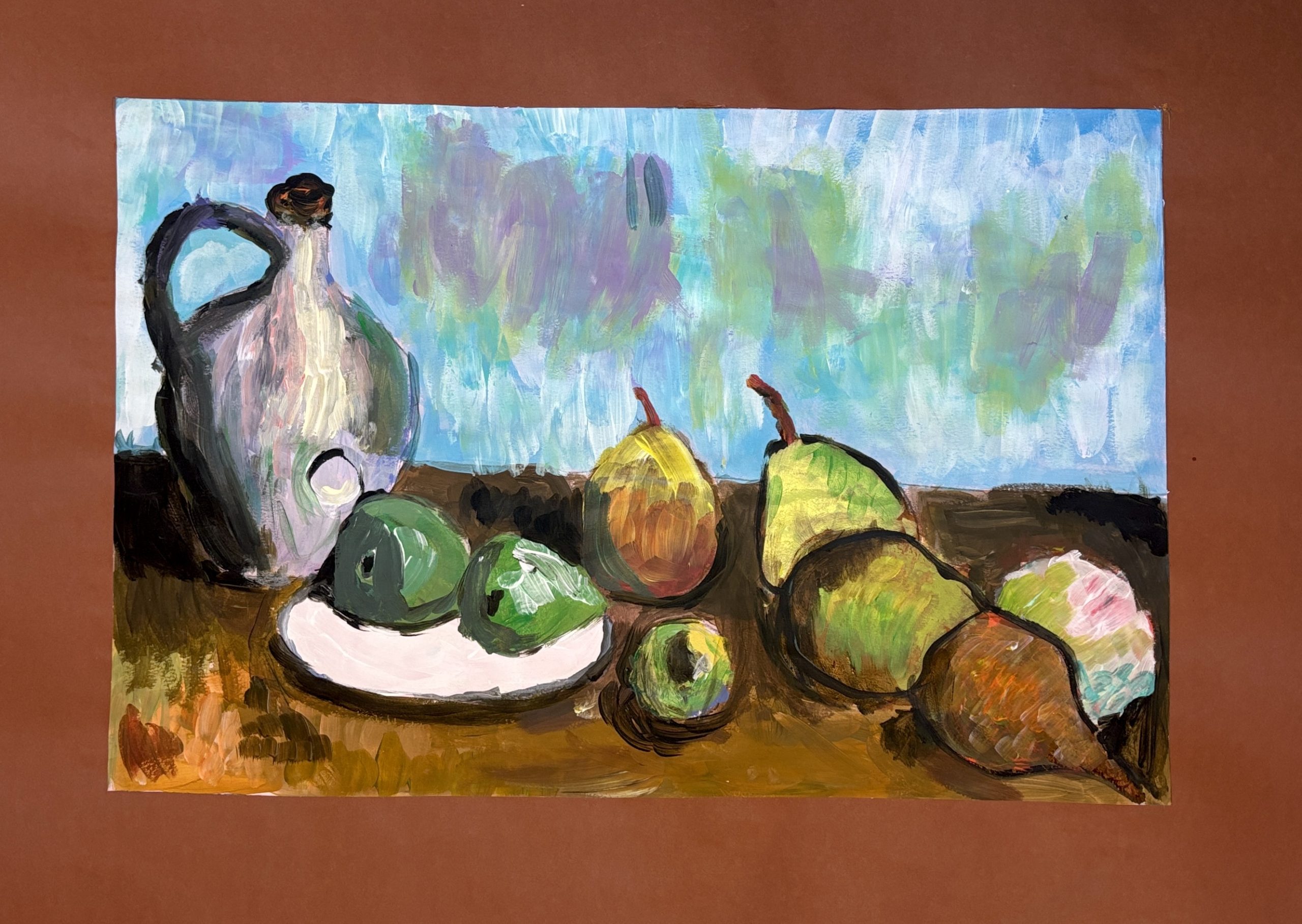
Working on Cézanne, we discovered a more “constructed” type of painting. We tried to imitate his way of defining volumes not through drawing, but through the overlapping of small patches of color. We used different shades to create the structure of objects and space, trying to understand how the artist managed to make the forms of nature solid and geometric using wide brushstrokes of color. We chose to reproduce his “Still Life with Soup Tureen and Fruit” (1894).