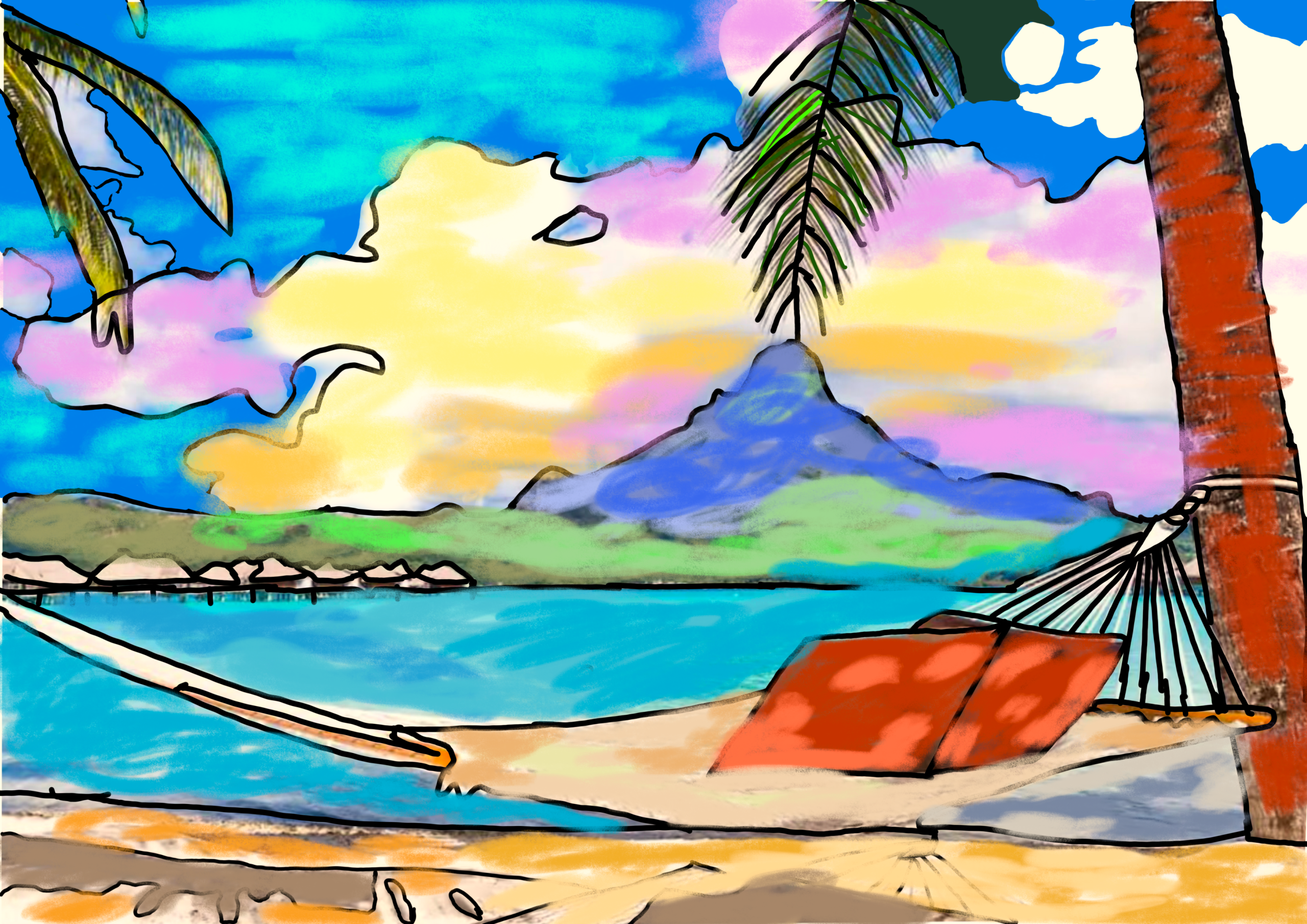
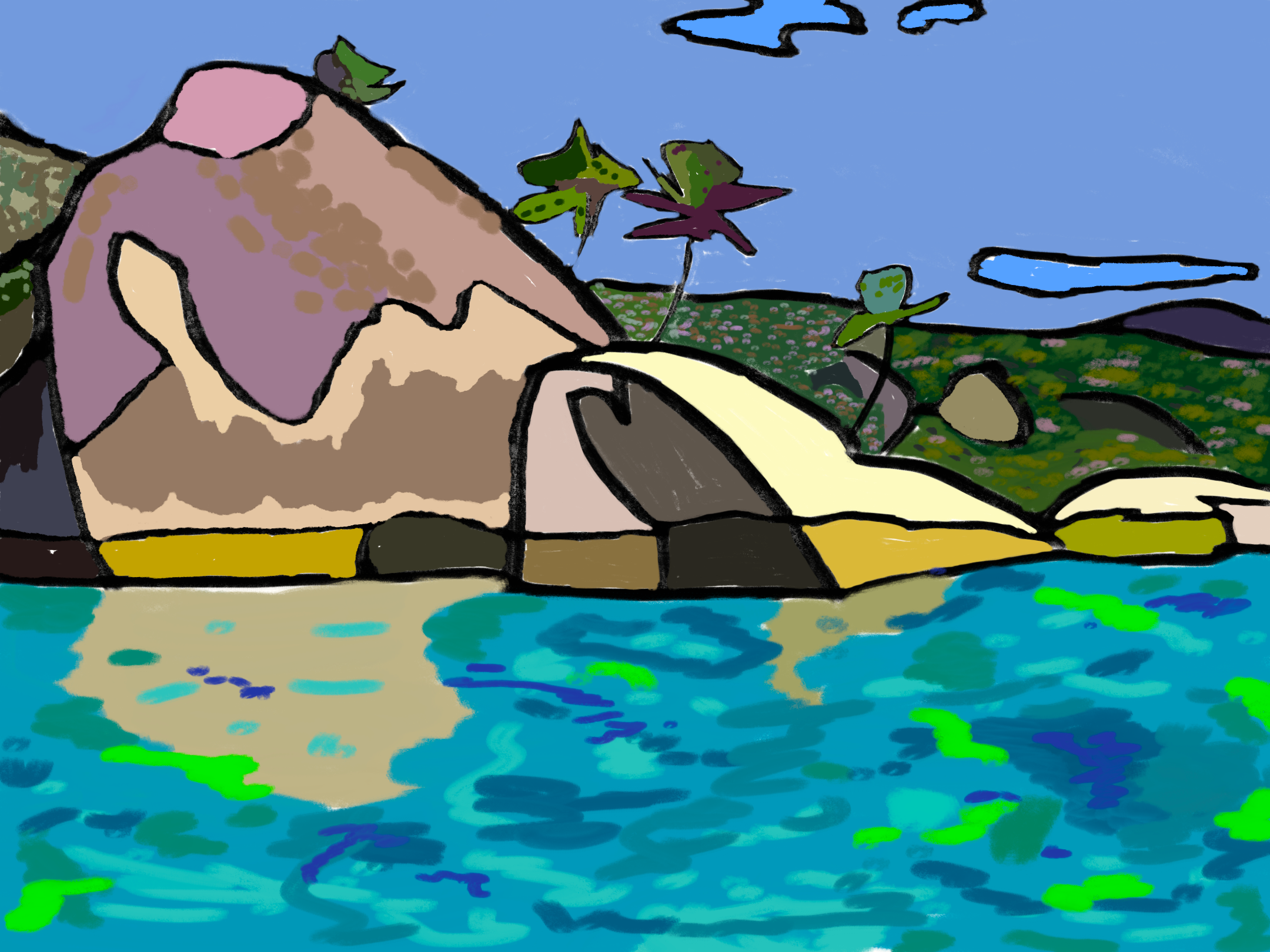
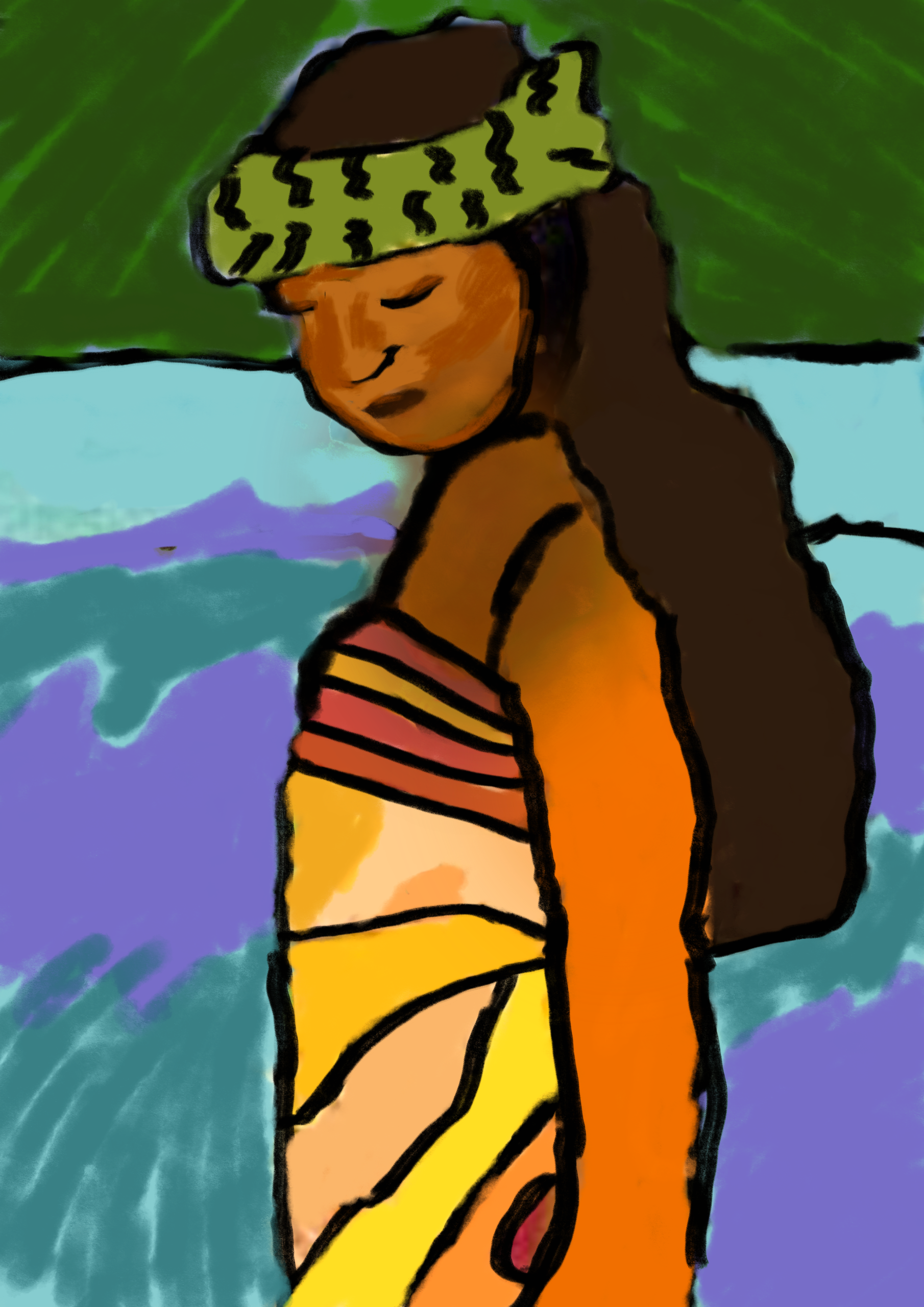
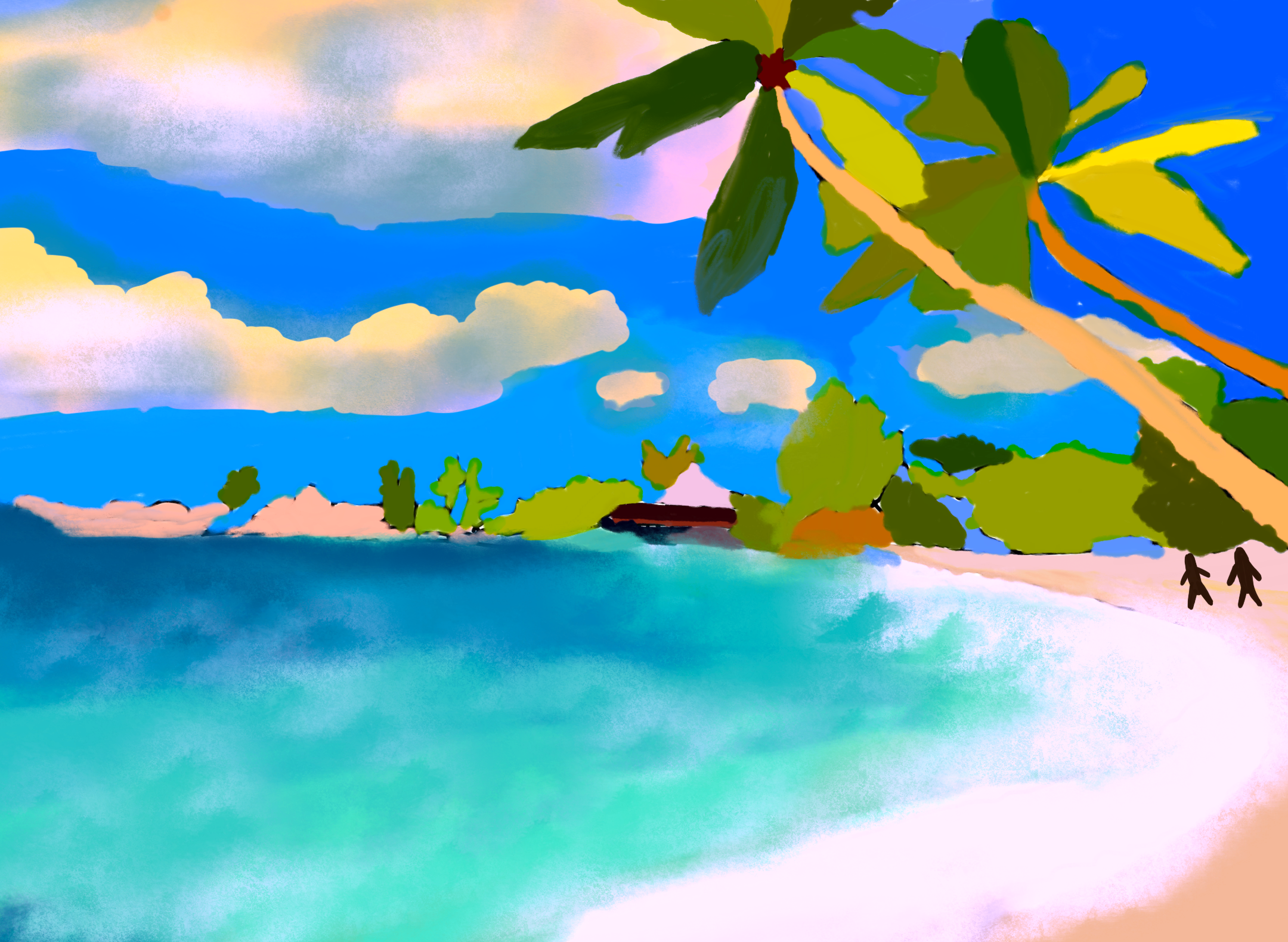
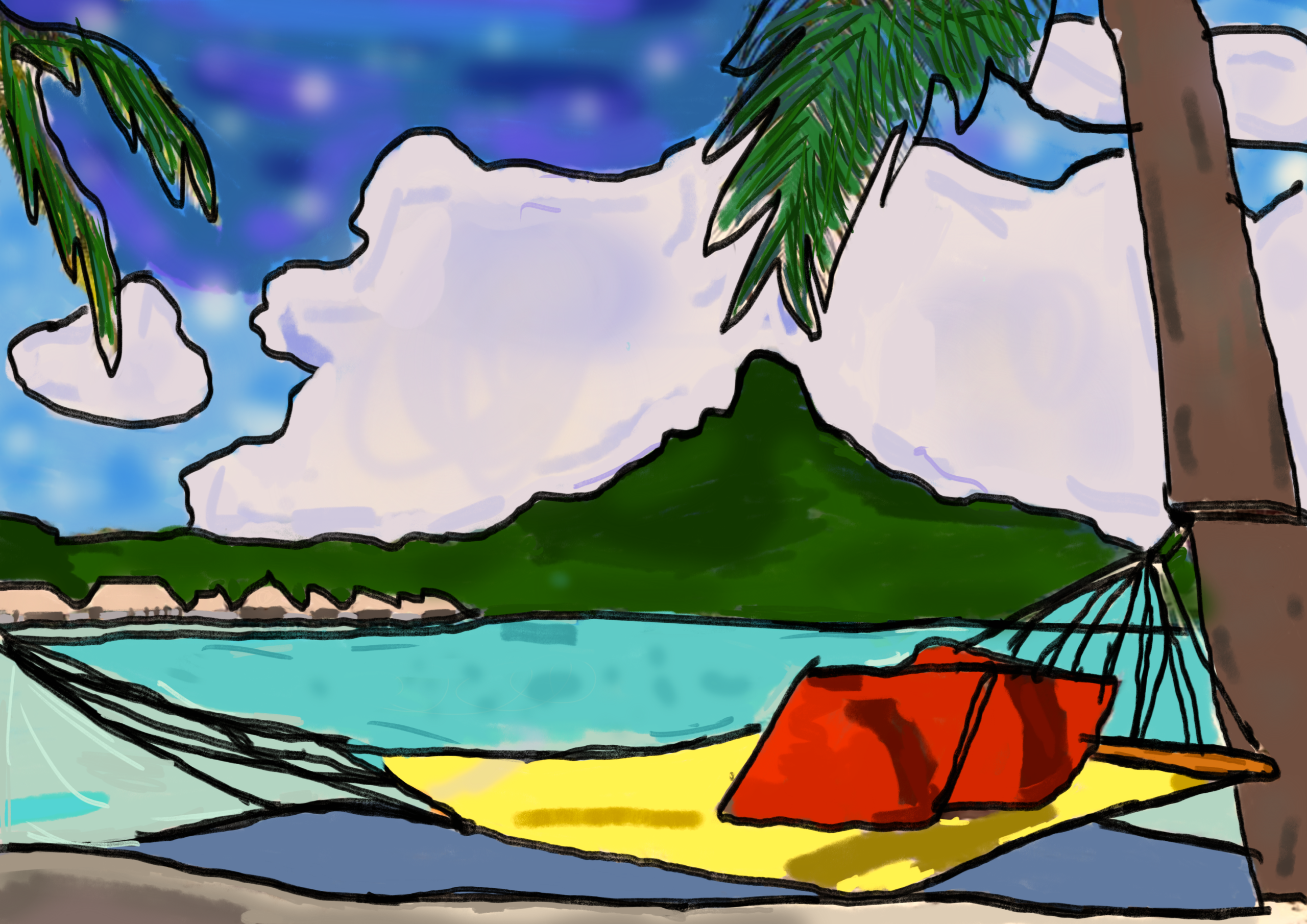
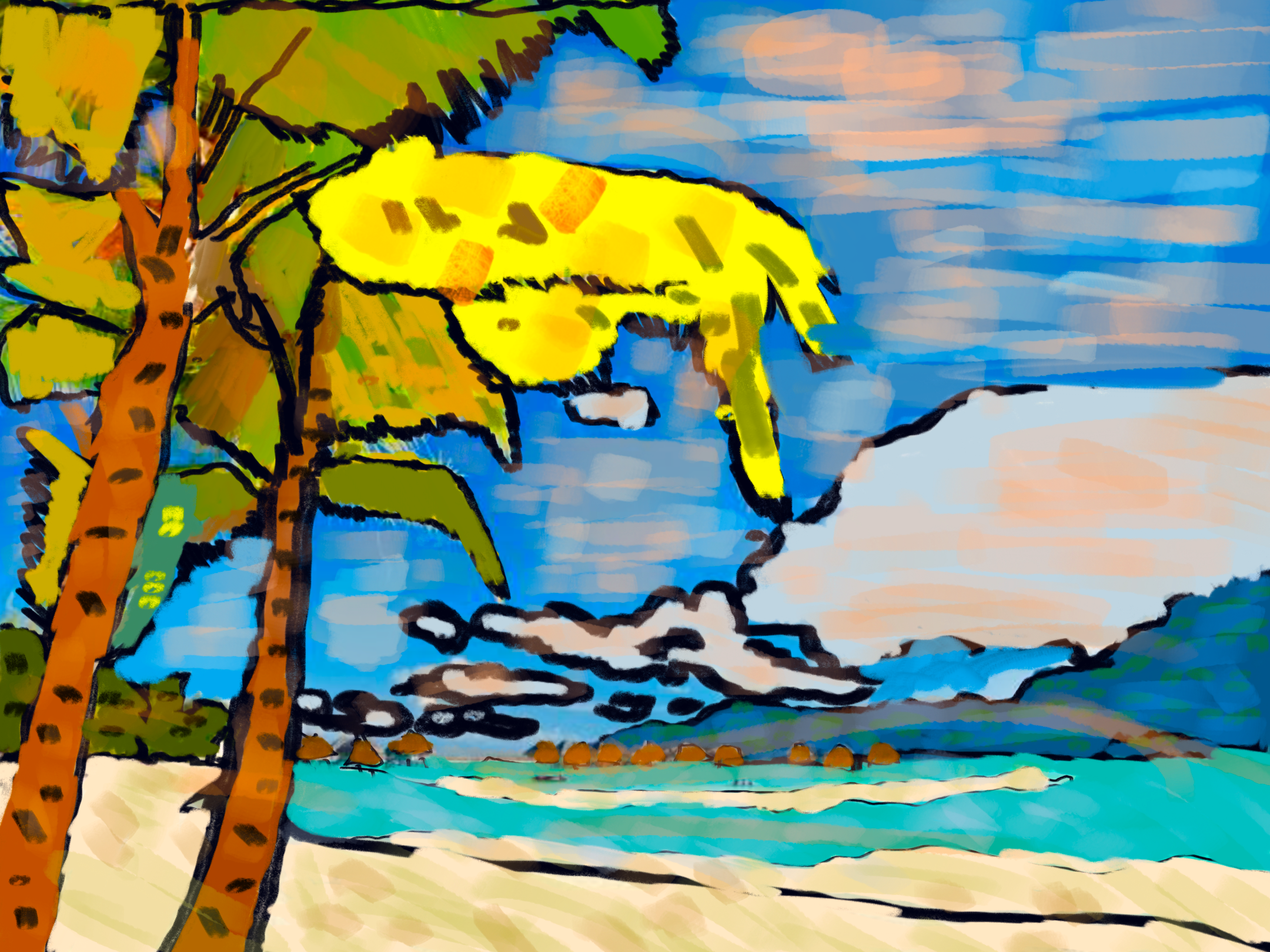
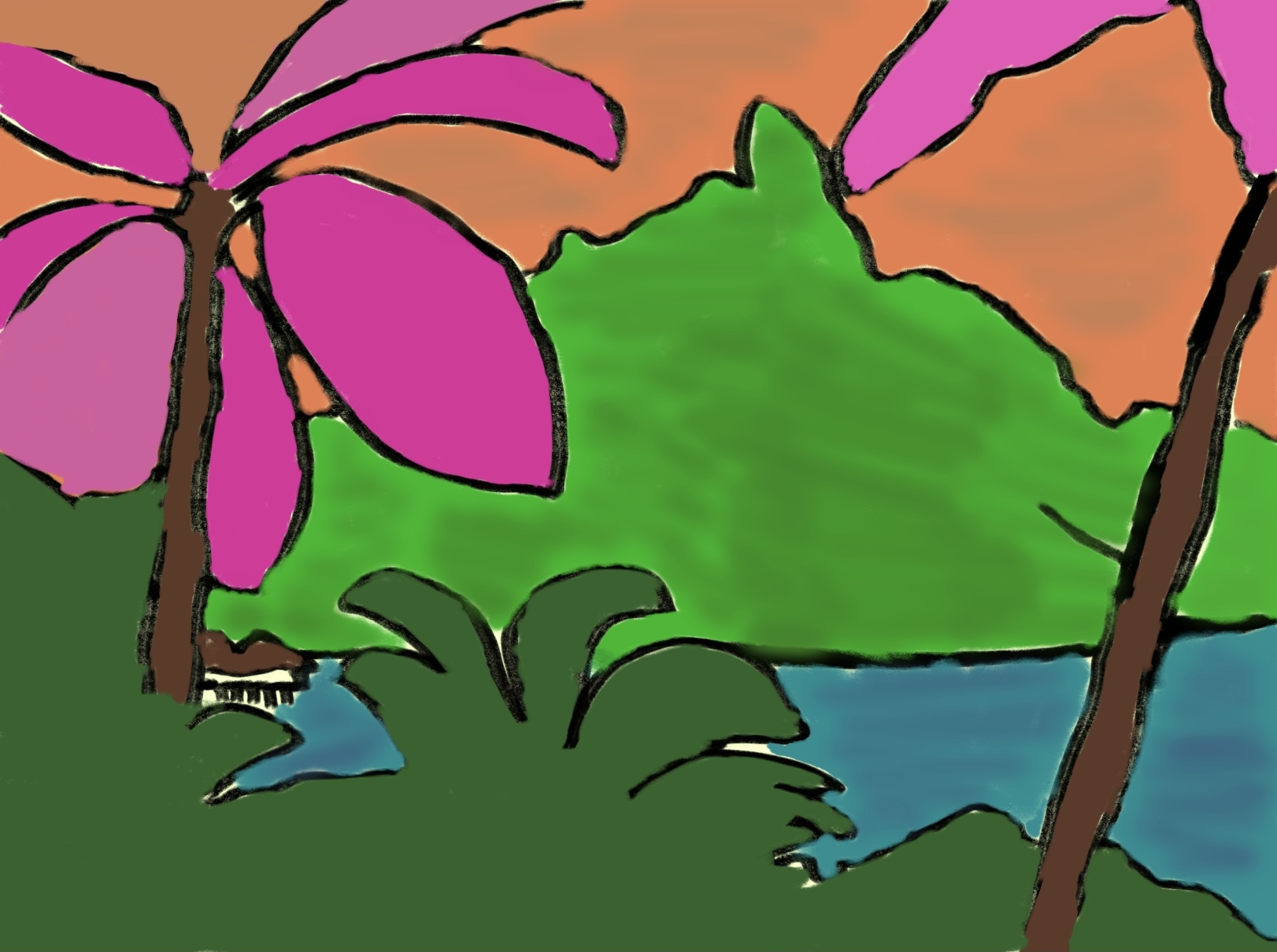
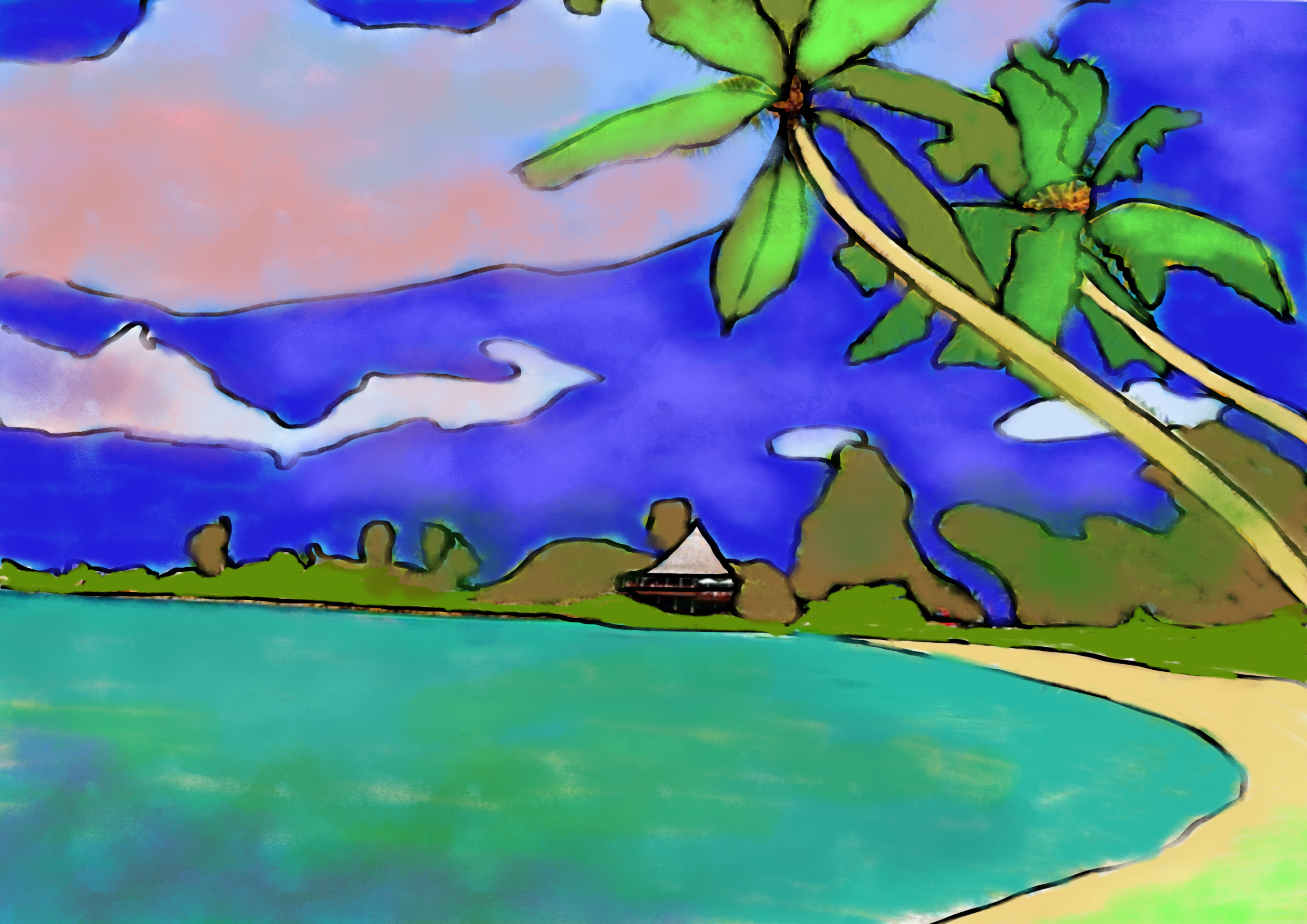
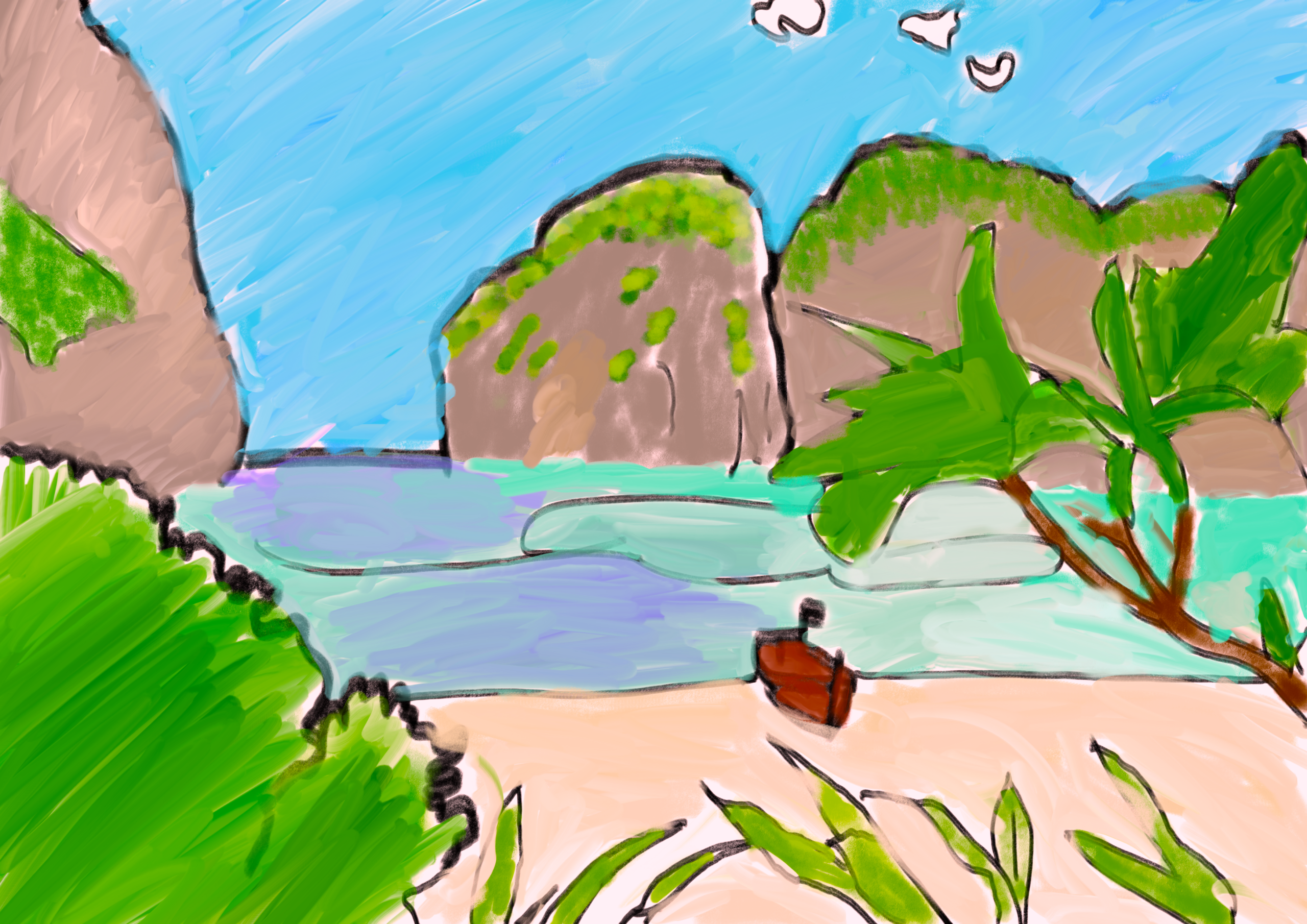
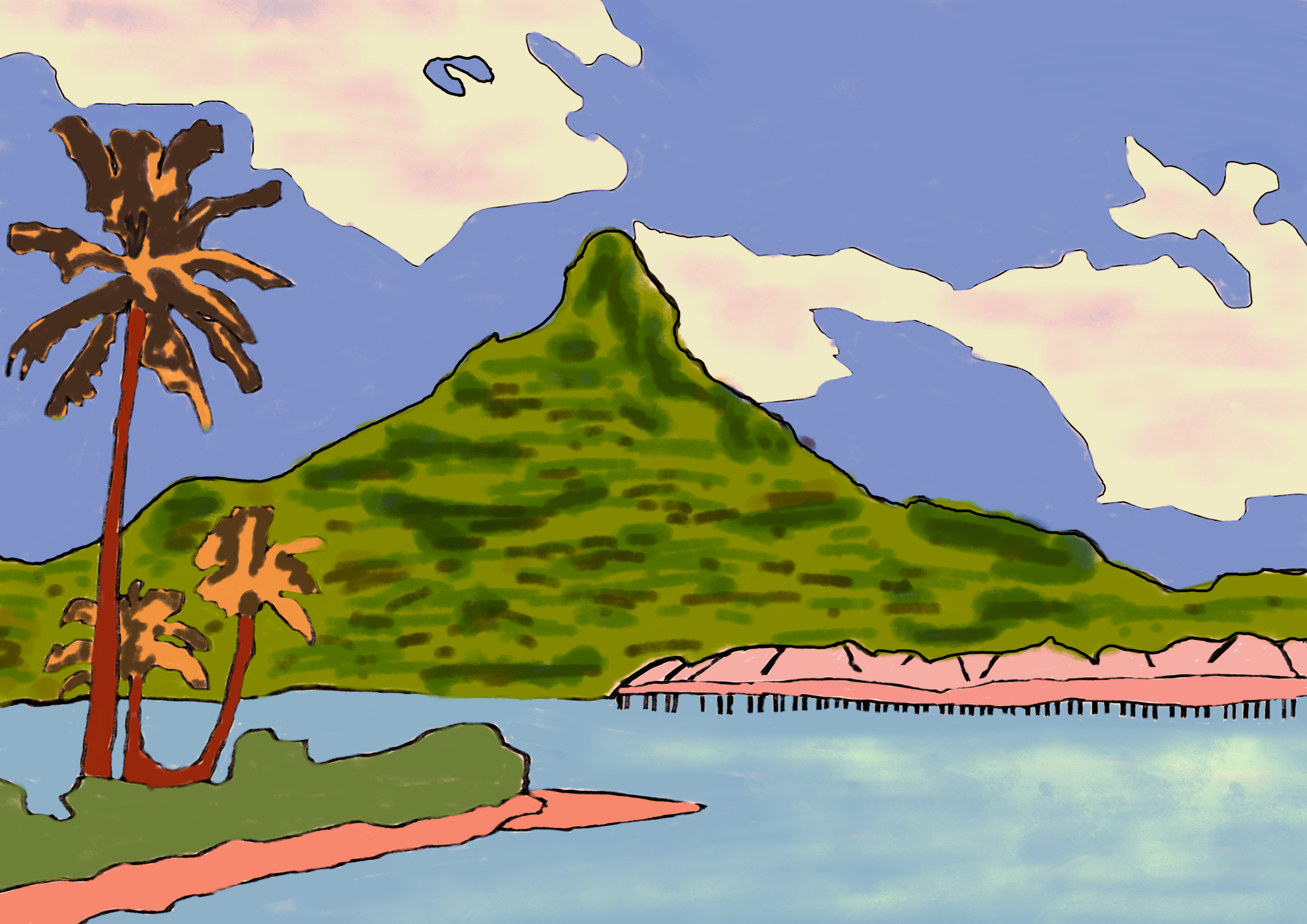
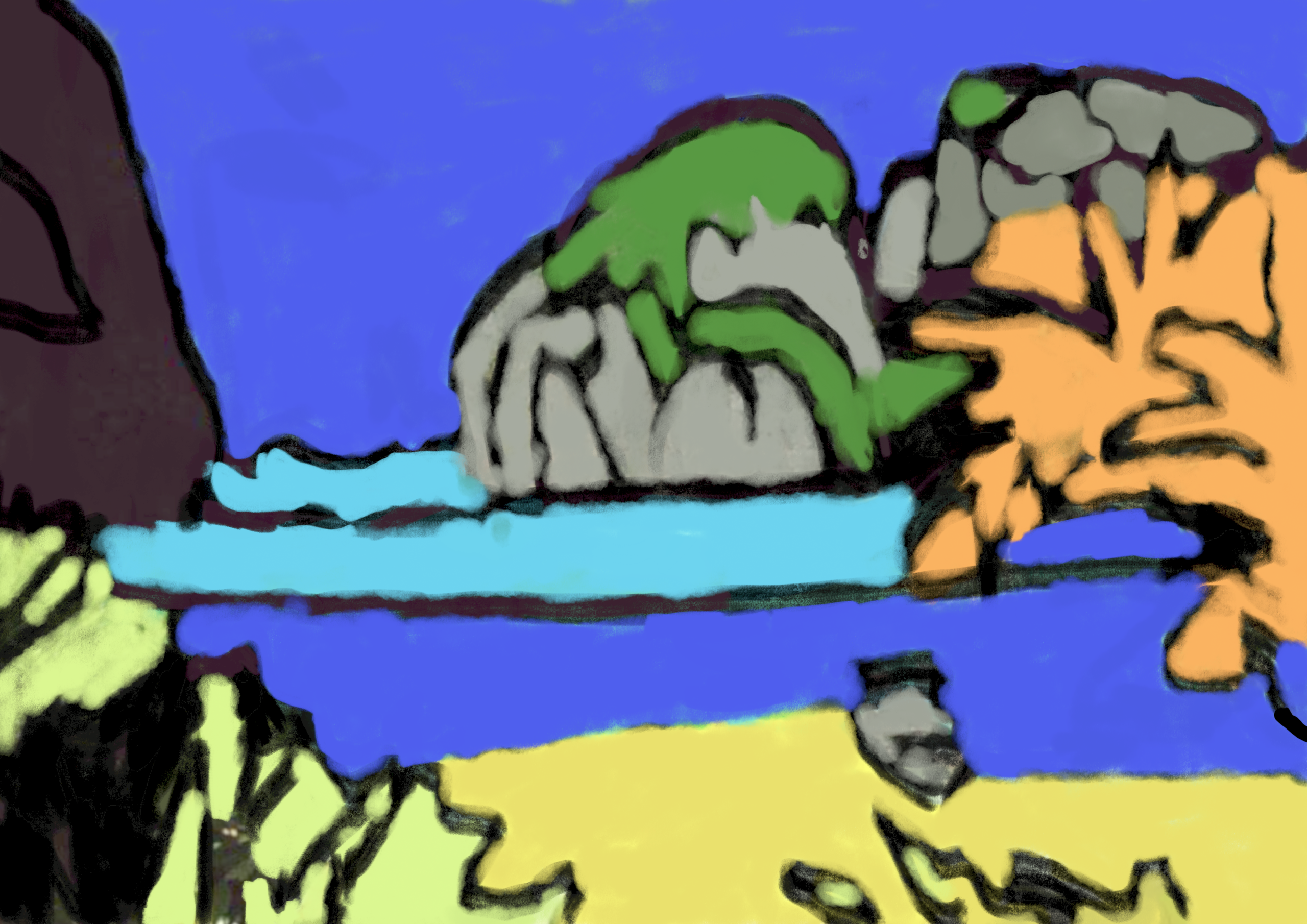
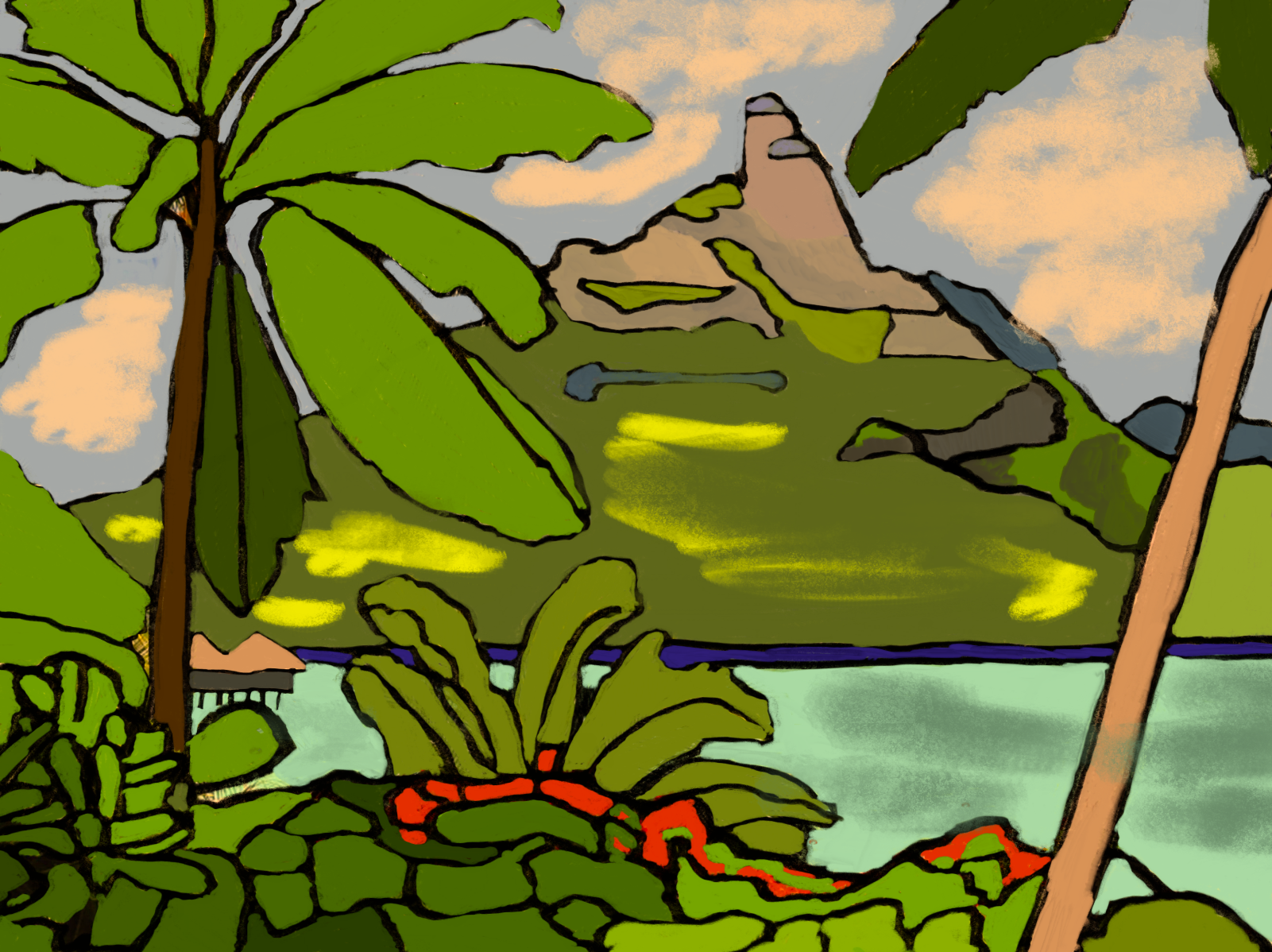
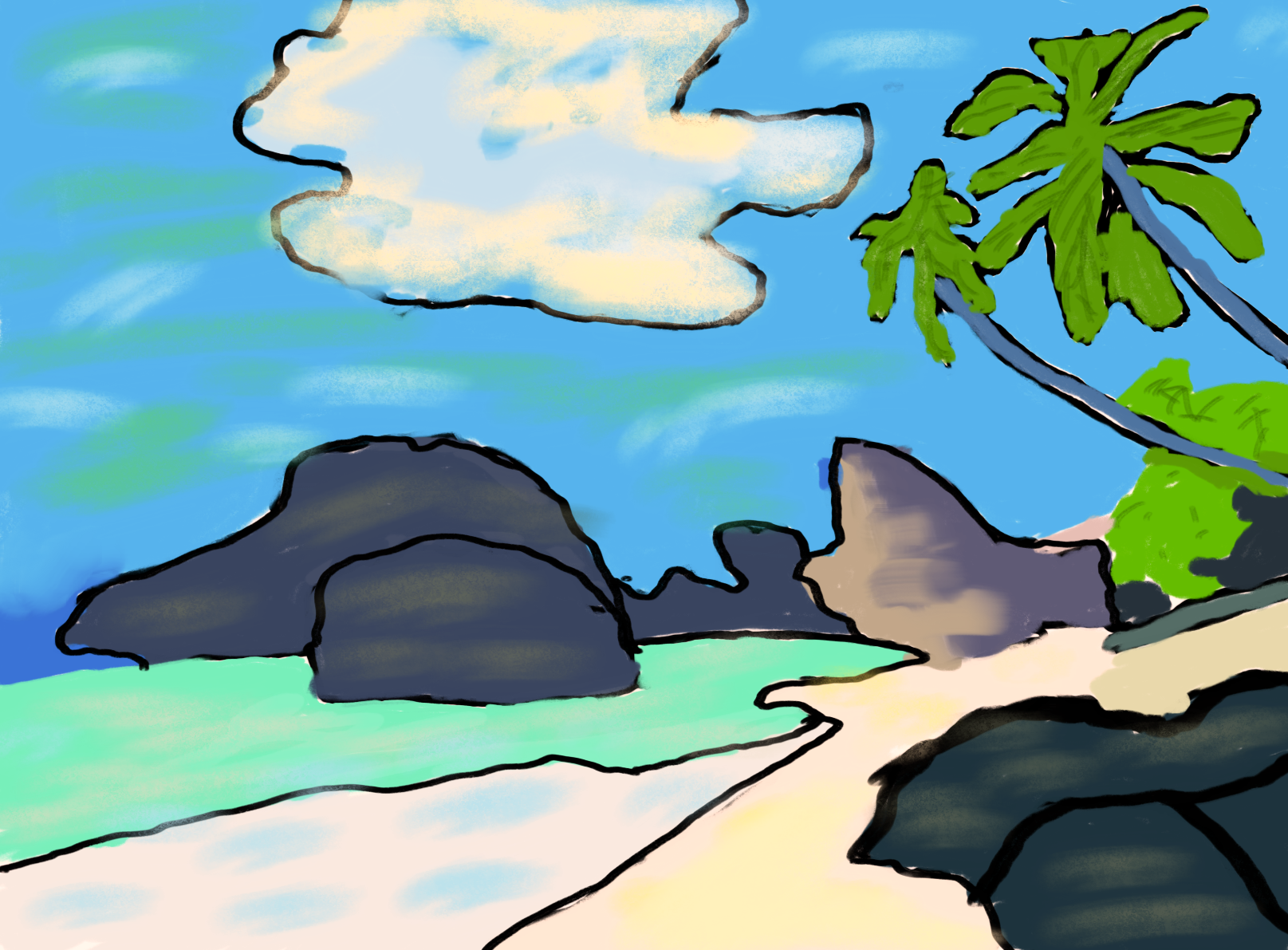
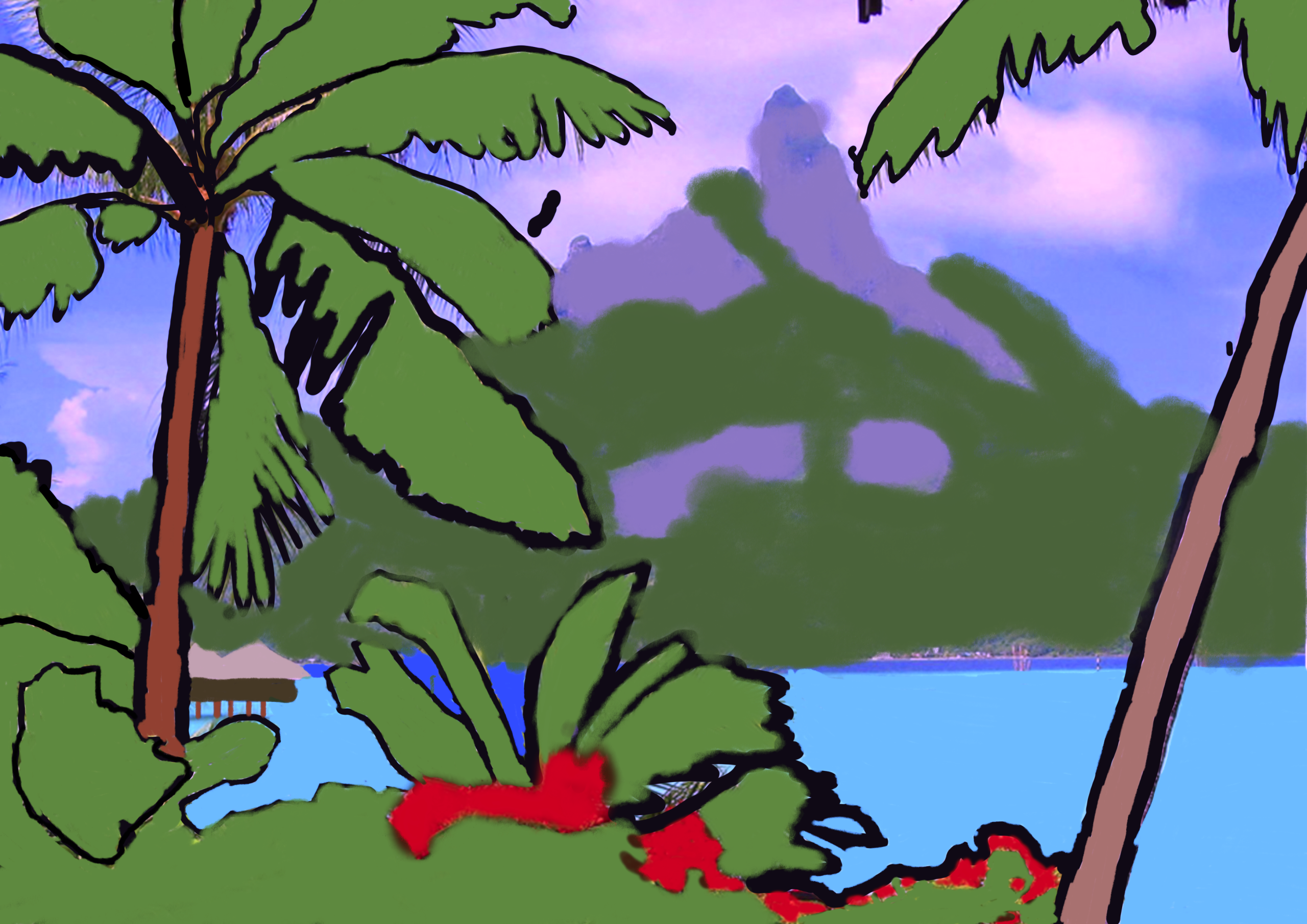
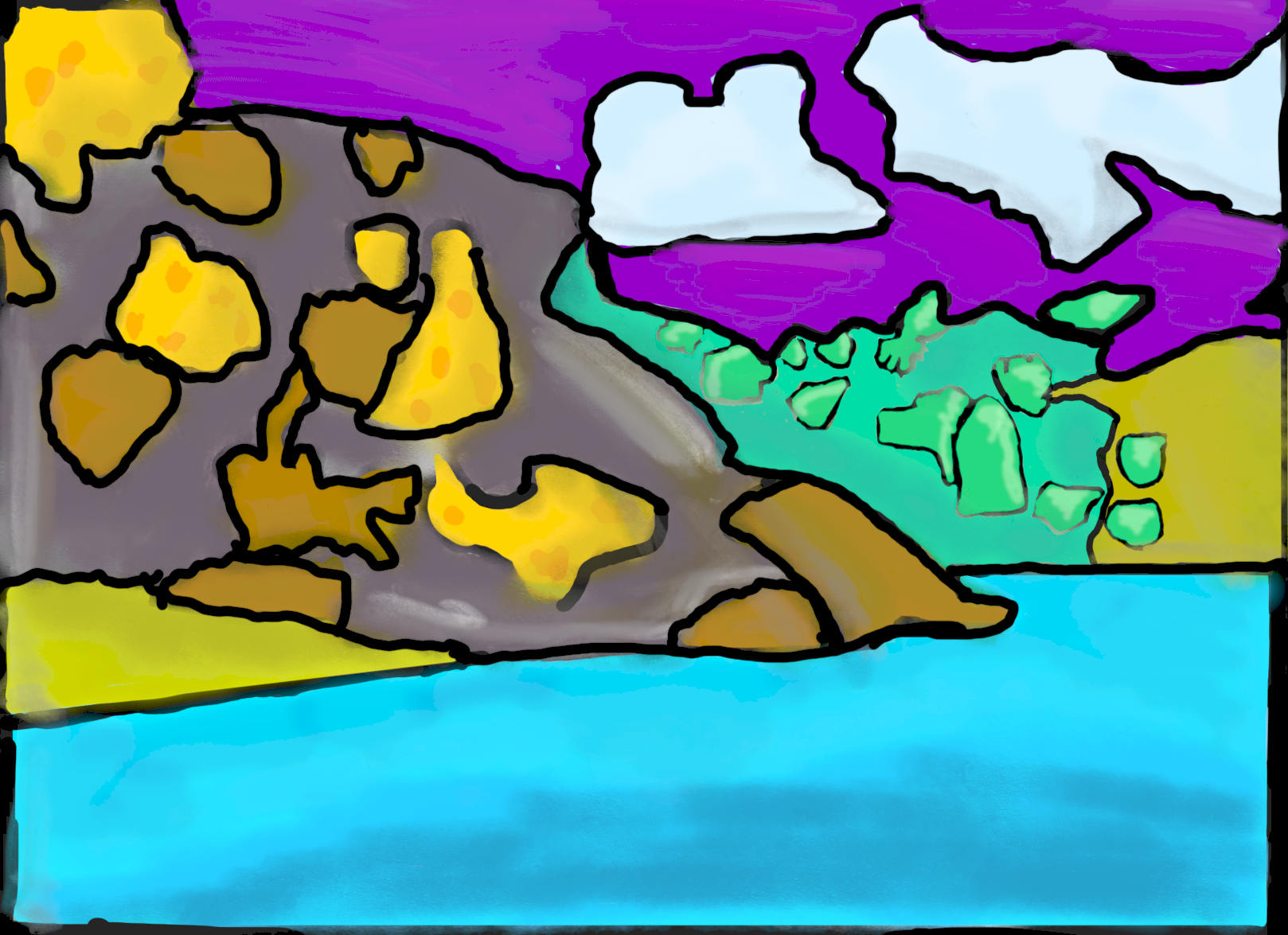
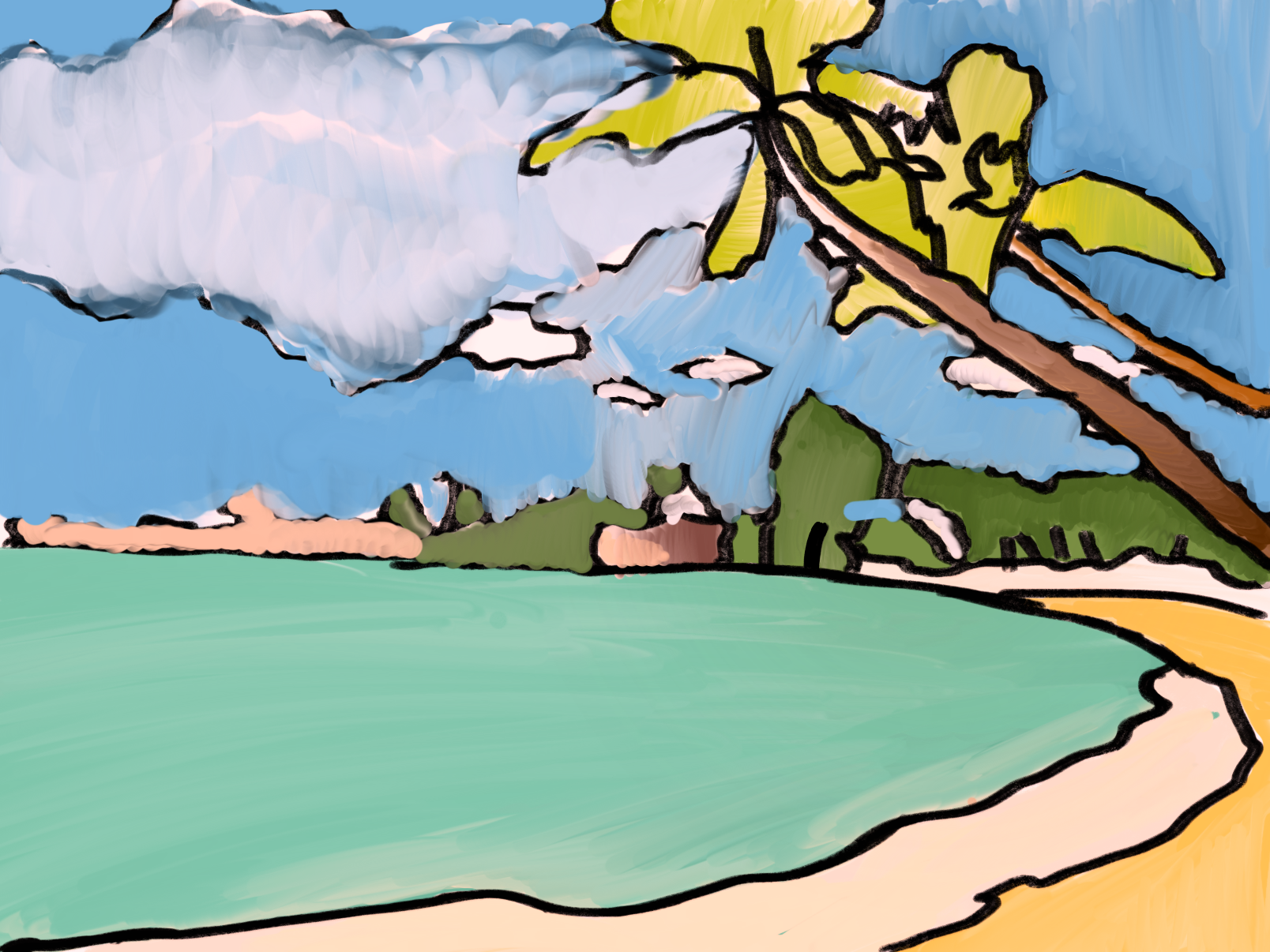
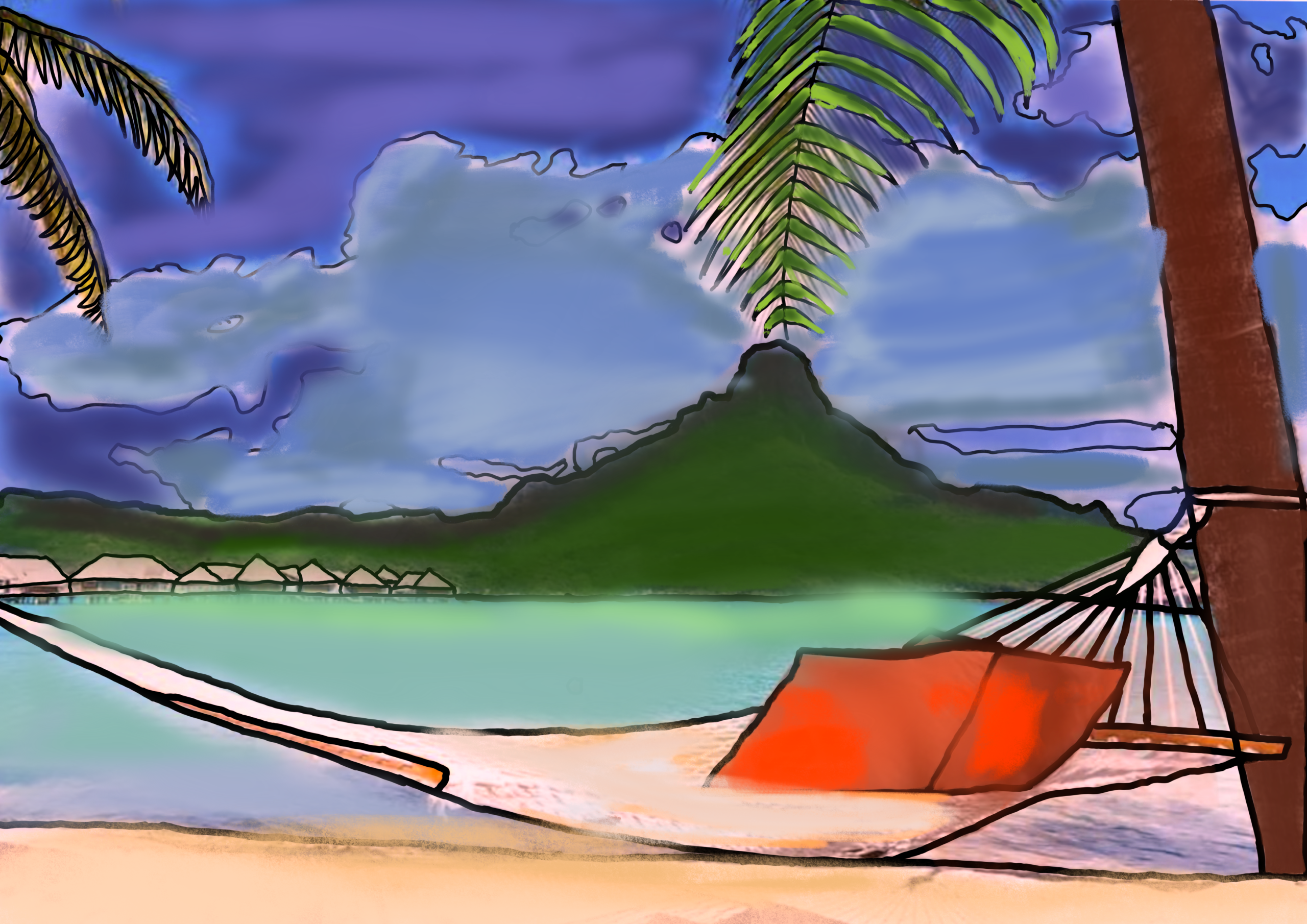
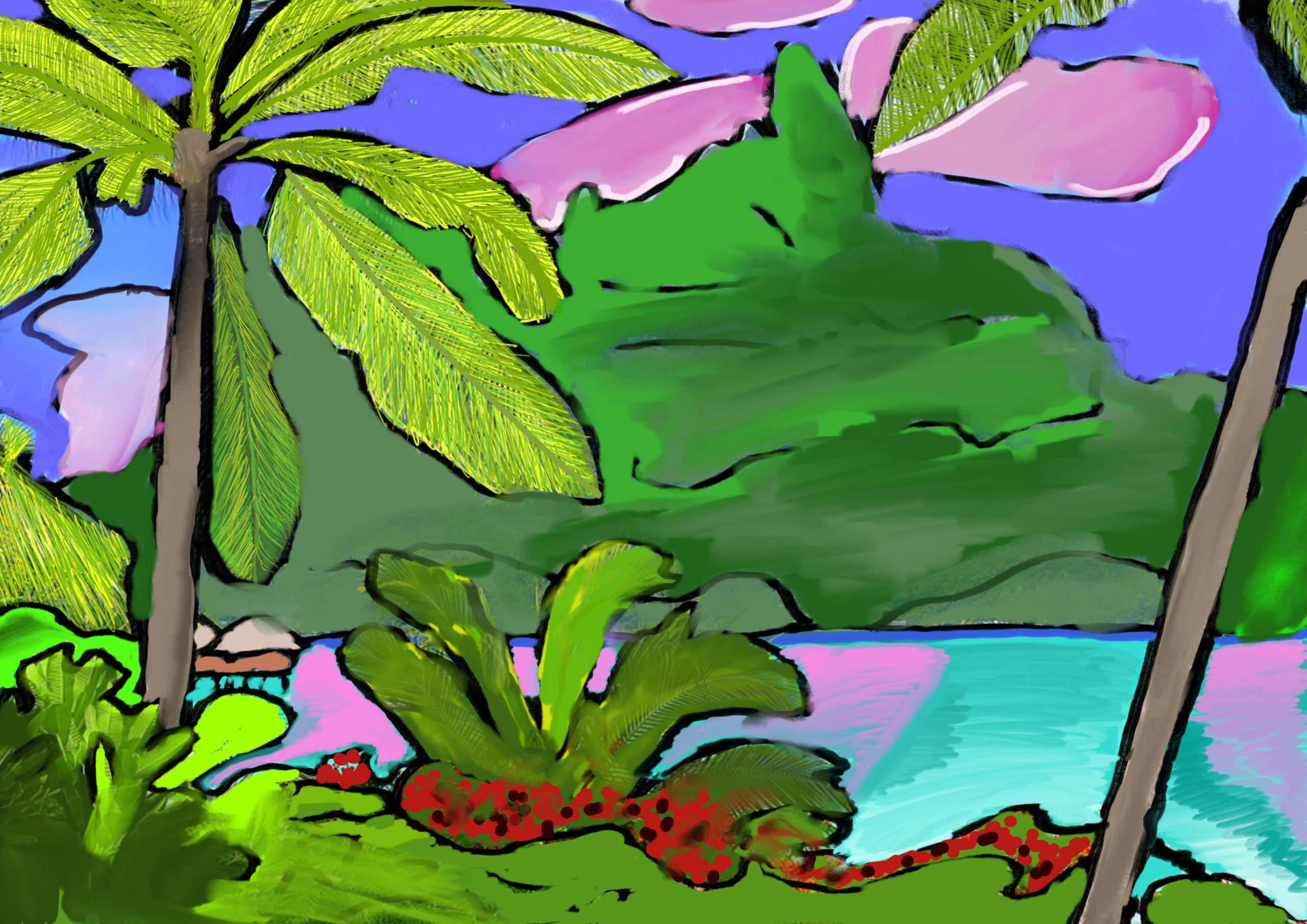
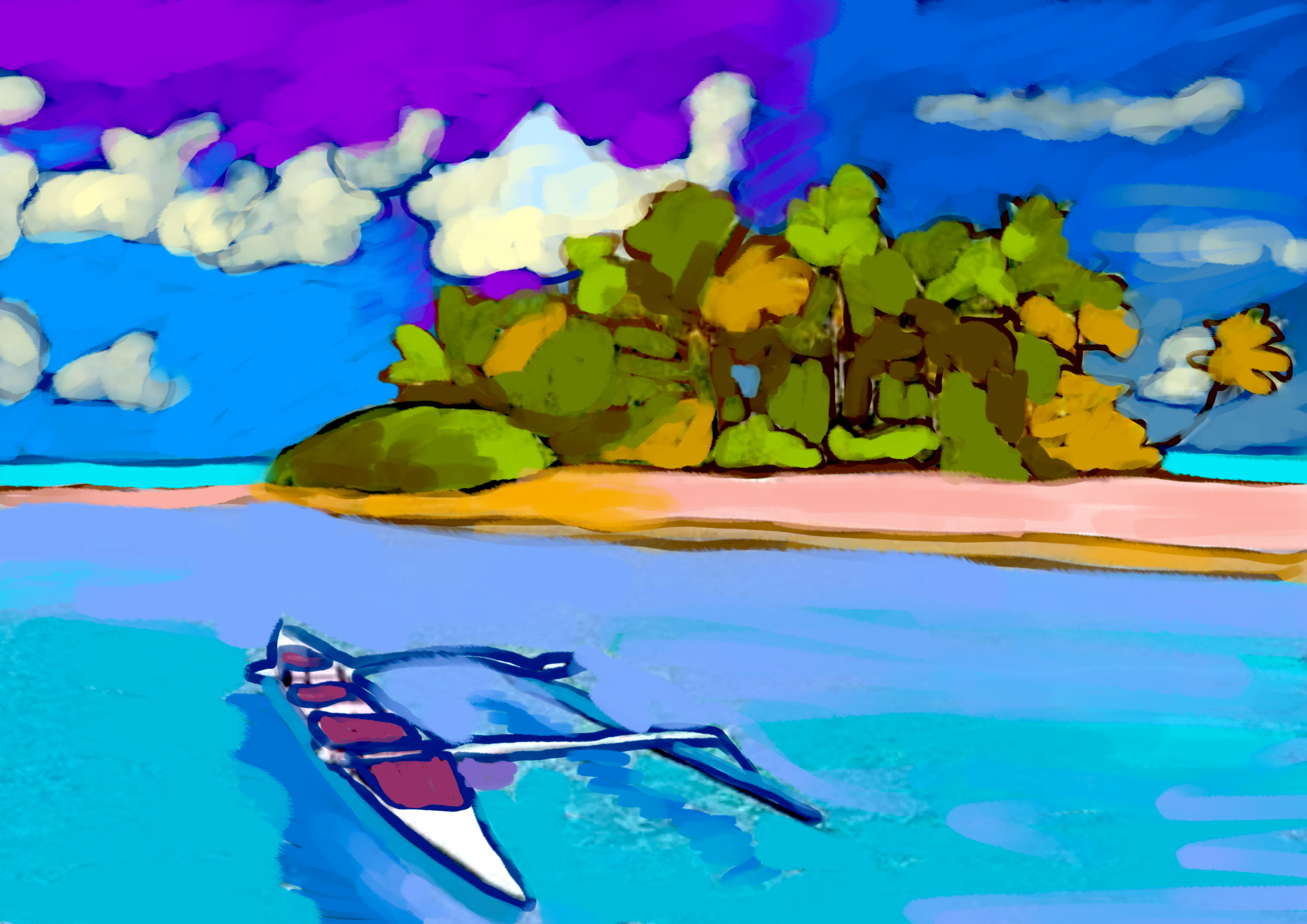
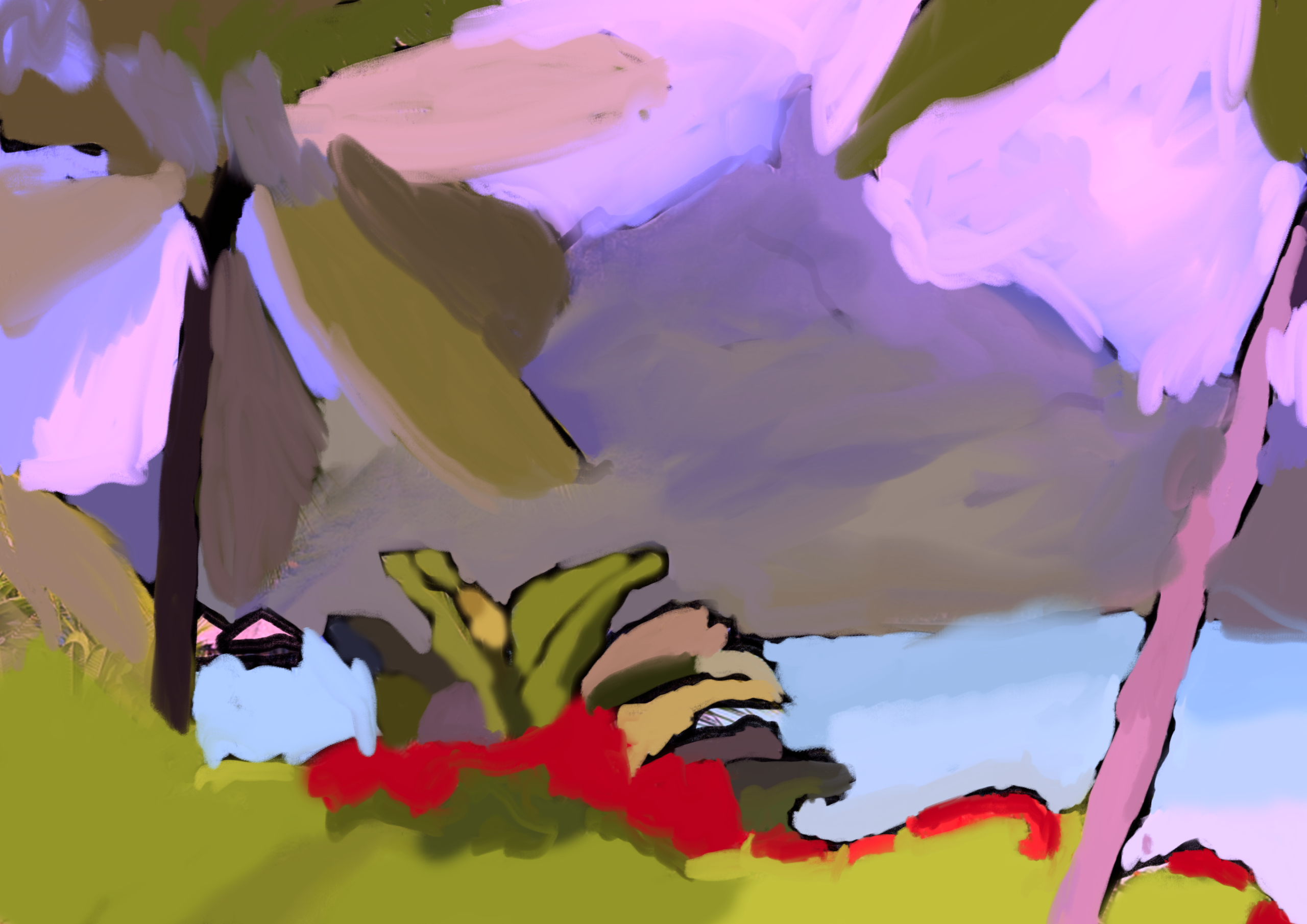
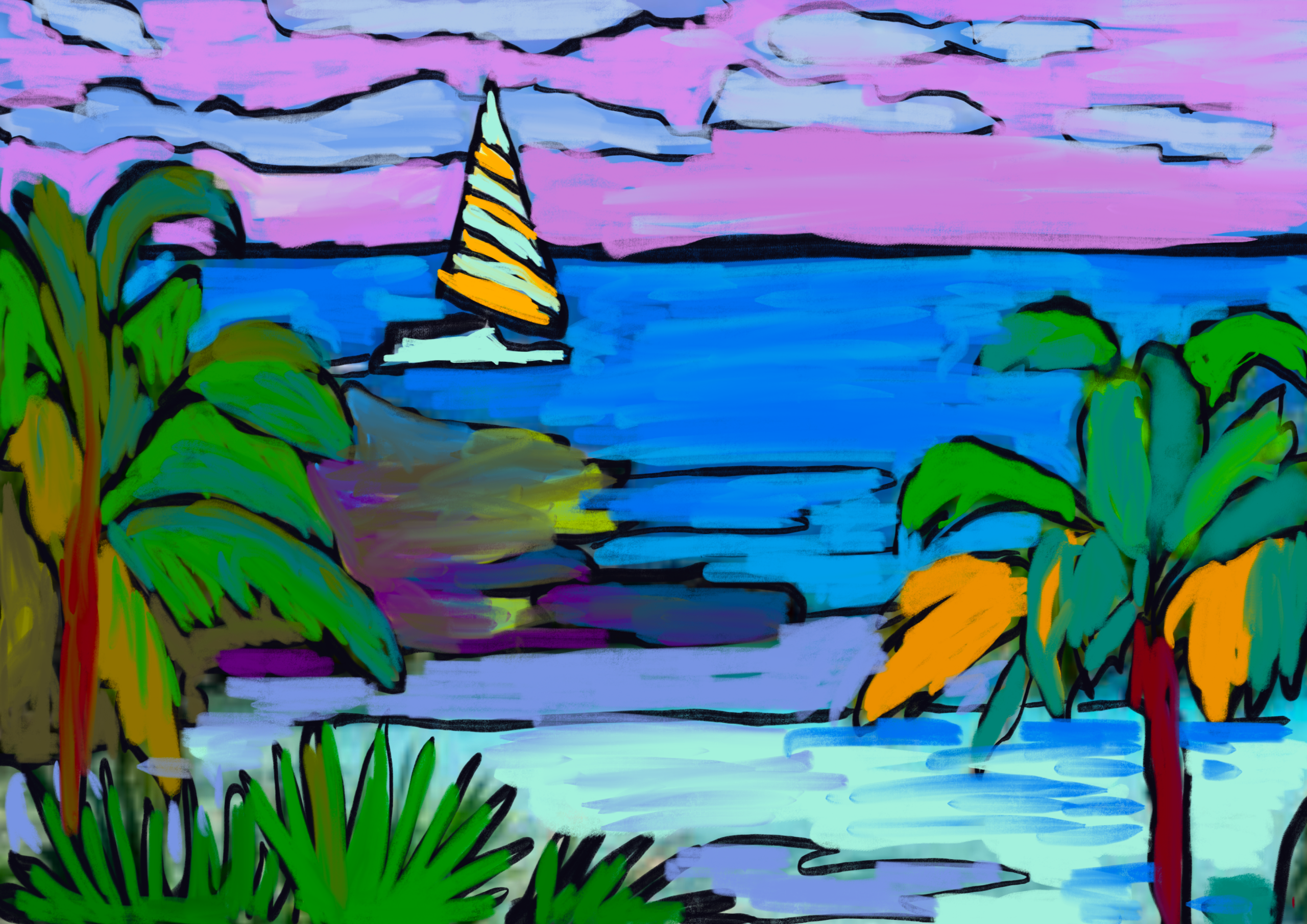
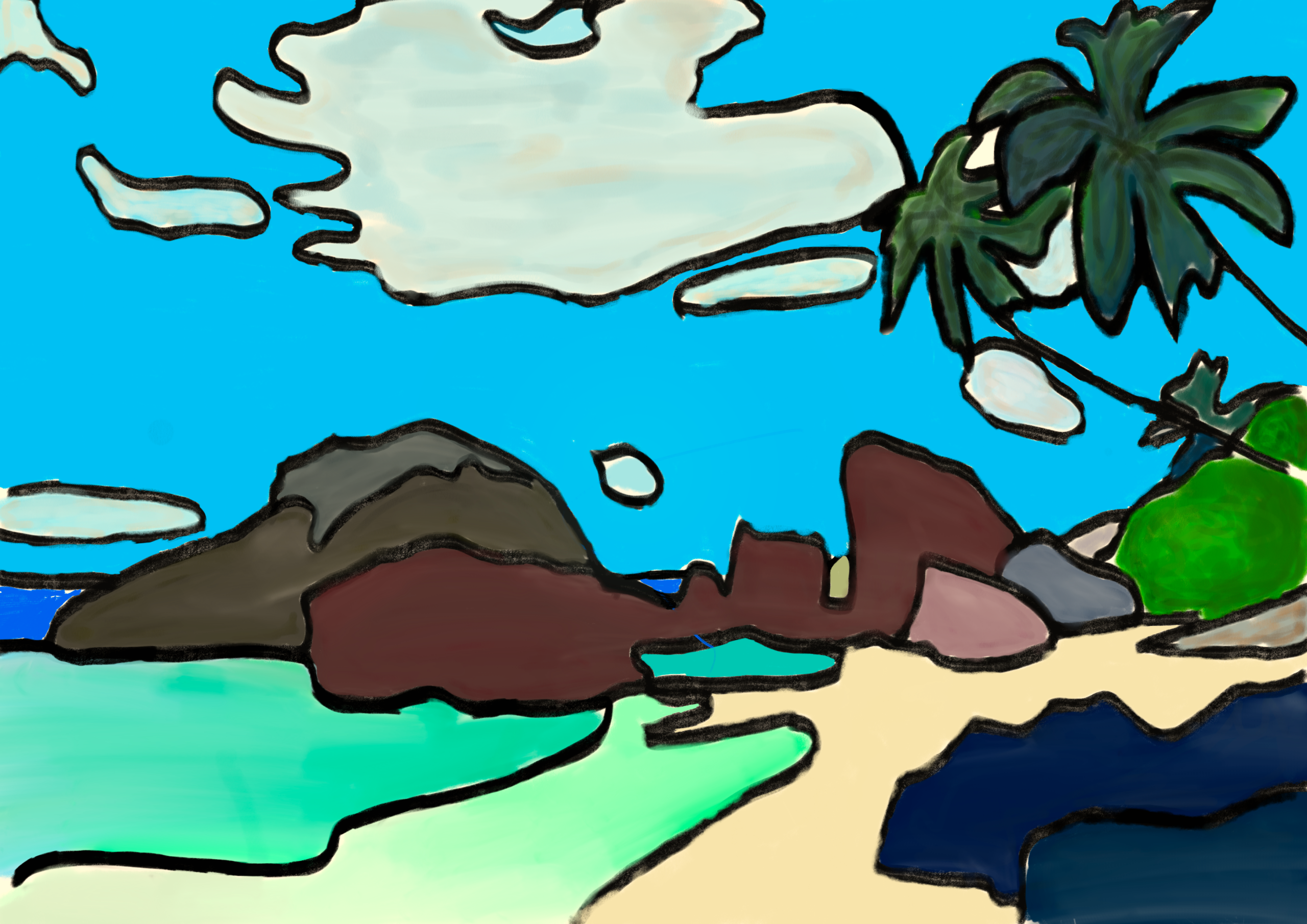
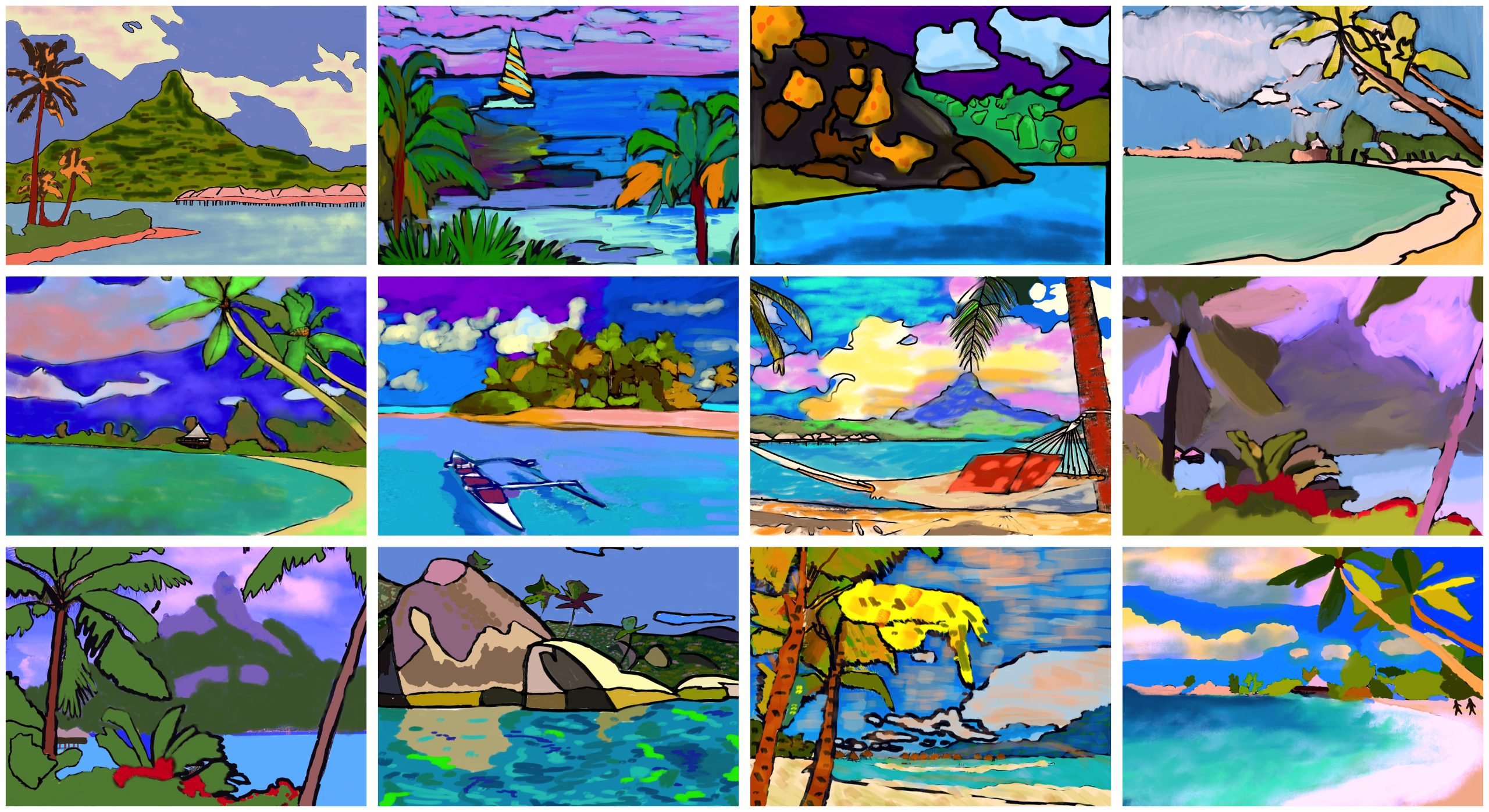
In this workshop, we let ourselves be inspired by the rebellious and visionary figure of Paul Gauguin. We explored how the artist spent his life searching for an untainted purity in the South Seas, translating his emotions into non-naturalistic colors and synthetic forms. Through this activity, we developed digital skills applied to art, learning to observe reality and then reinterpret it subjectively. Our goal was not to copy the real world, but to express what we feel, focusing on visual simplification and the expressive use of technology.
Required Materials:
- iPad or tablet
- Sketchbook App
- Apple Pencil or capacitive stylus
- Photographs of tropical landscapes
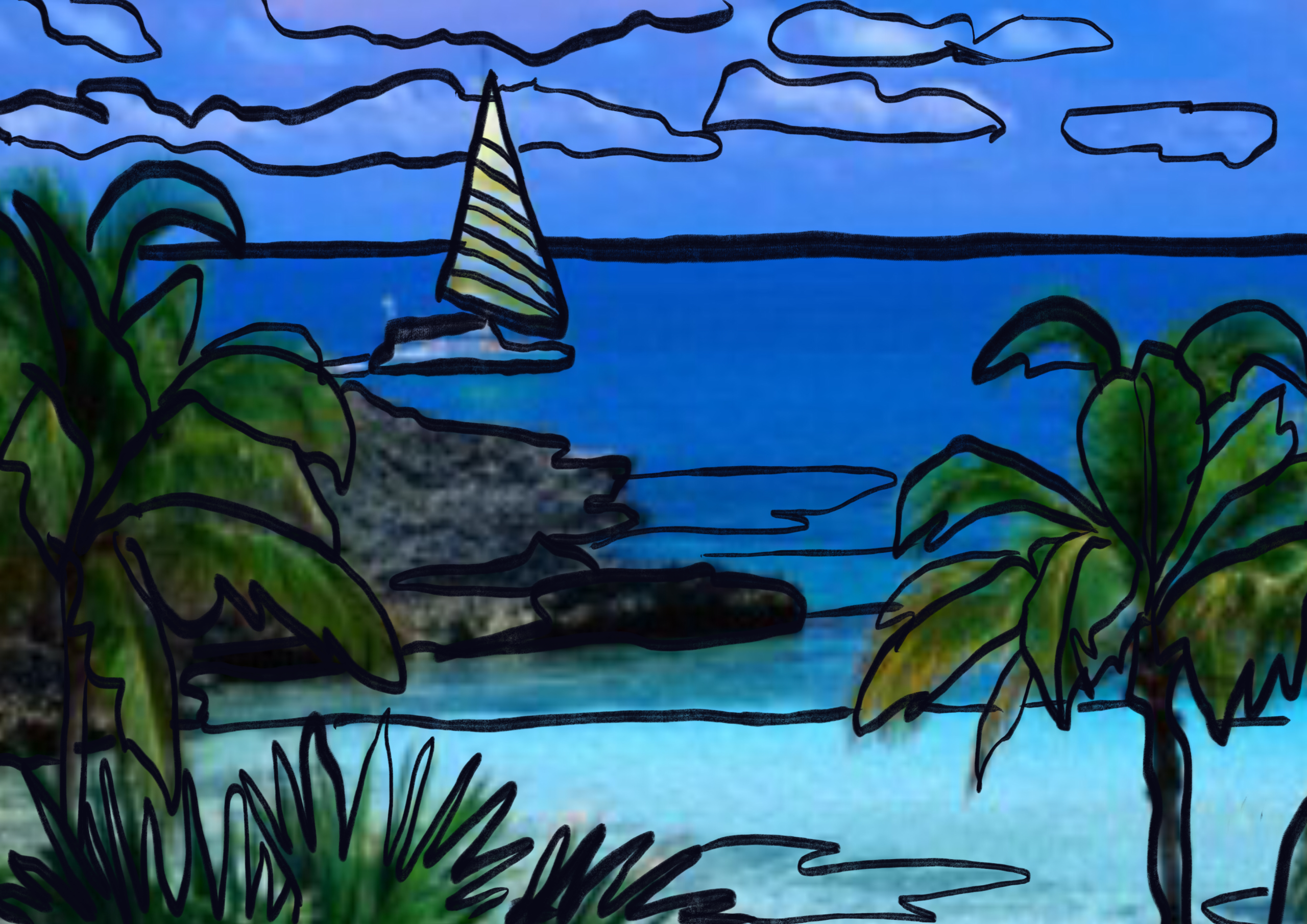
We started by choosing a photograph of a tropical landscape with a striking composition. After importing it into Sketchbook, we created a new layer above the image. Using a sharp, precise black line, we began to simplify the shapes. We removed unnecessary details to focus only on the main outlines, just as Gauguin did with his synthetic style.
For sharp outlines, the best brush is the Technical Pen with 100% opacity and a medium-thin size: this allows us to close the shapes perfectly without any blurring. We organized the layers panel hierarchically. The base layer was our reference photo, and we lowered its opacity to see it in transparency so it wouldn’t distract us while drawing. Above it, we created a layer for the black outlines: keeping the lines separate from the colors allowed us to fix mistakes without erasing what we had already colored.

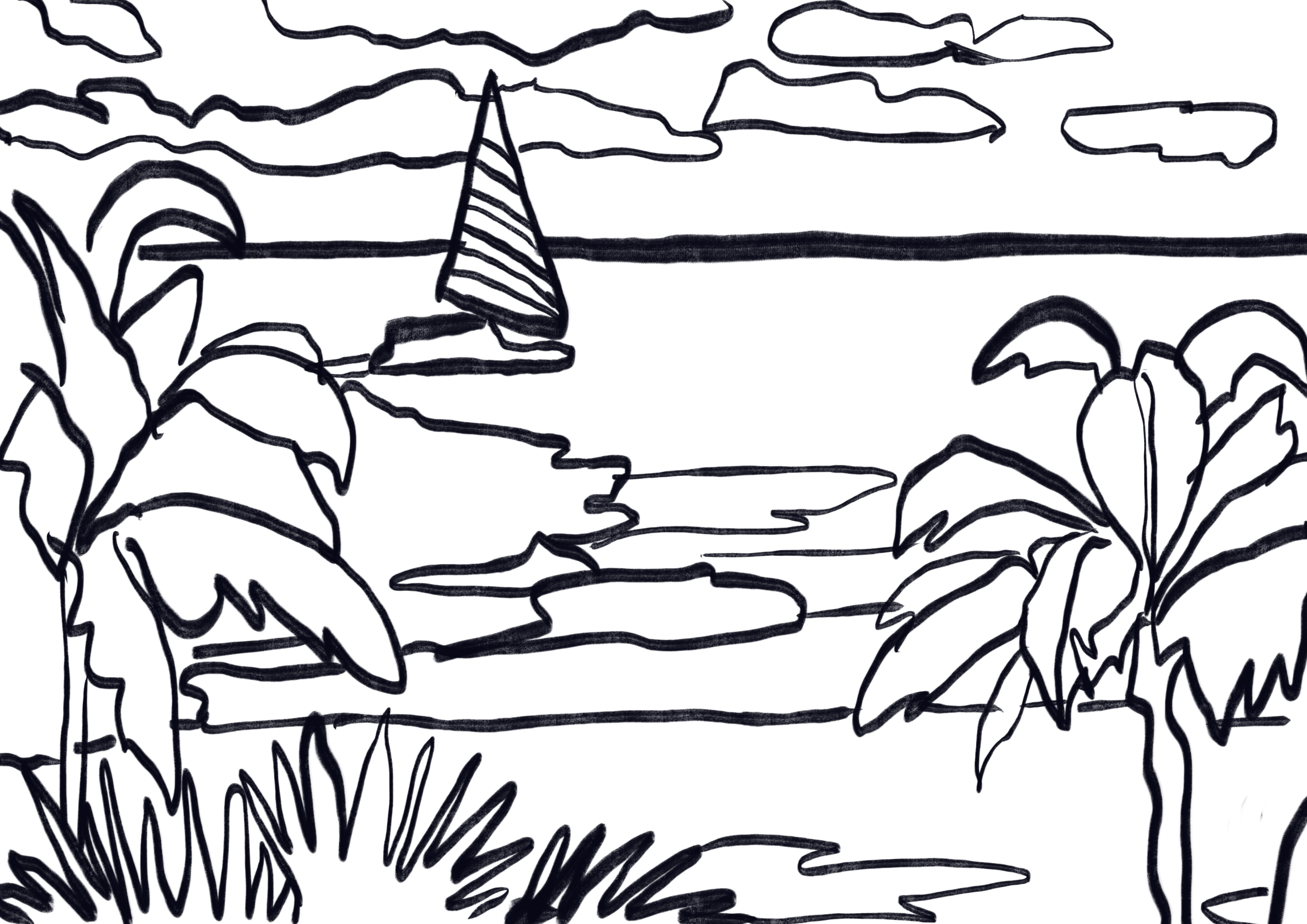
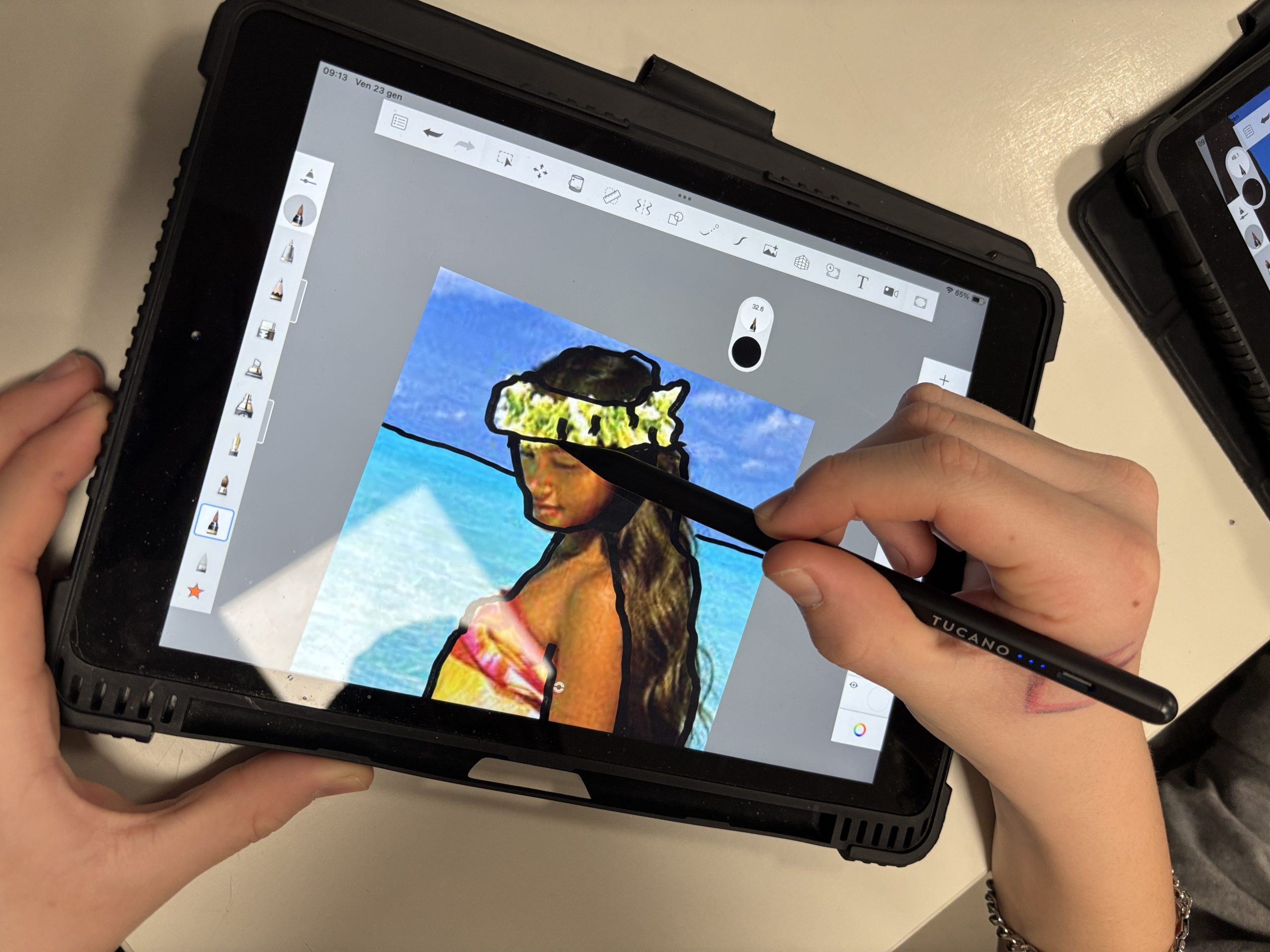
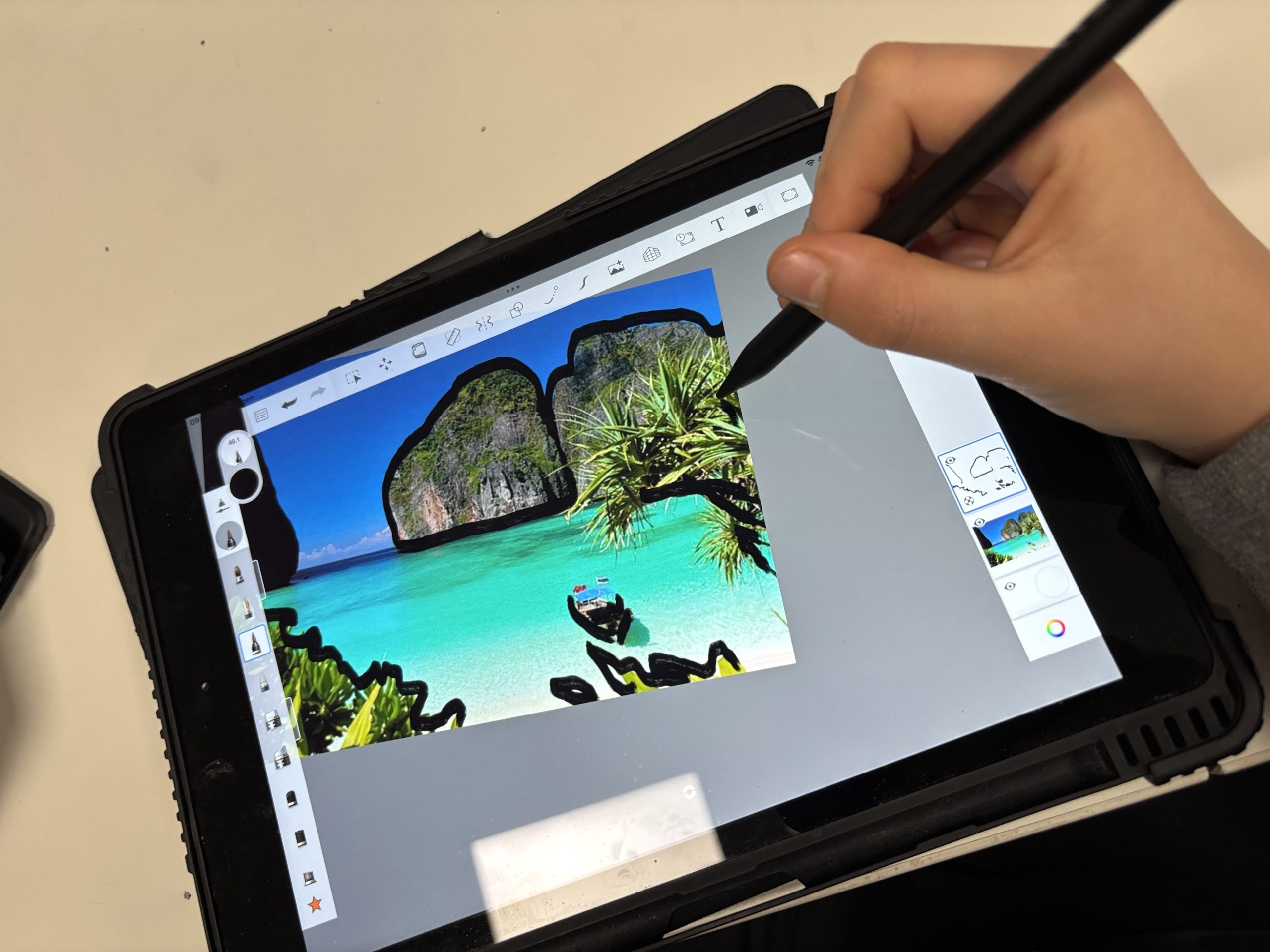
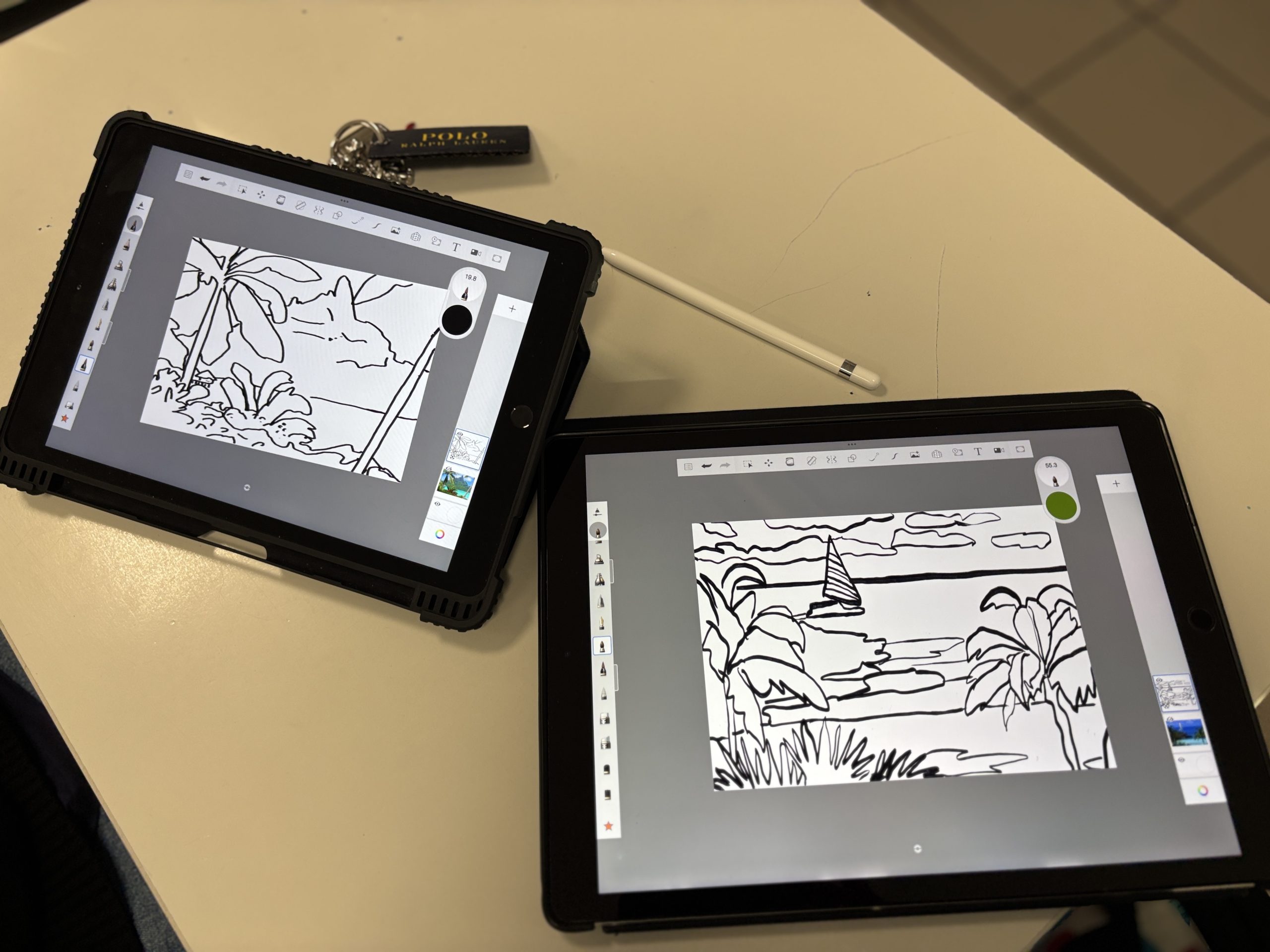
Once the structure of the drawing was defined, we moved on to the most creative phase: color interpretation. We worked on separate layers to better manage the different areas of the landscape. Instead of using the real colors from the photo, we chose flat fills and saturated tones that reflected our tastes and emotions, leaving behind realistic shading.
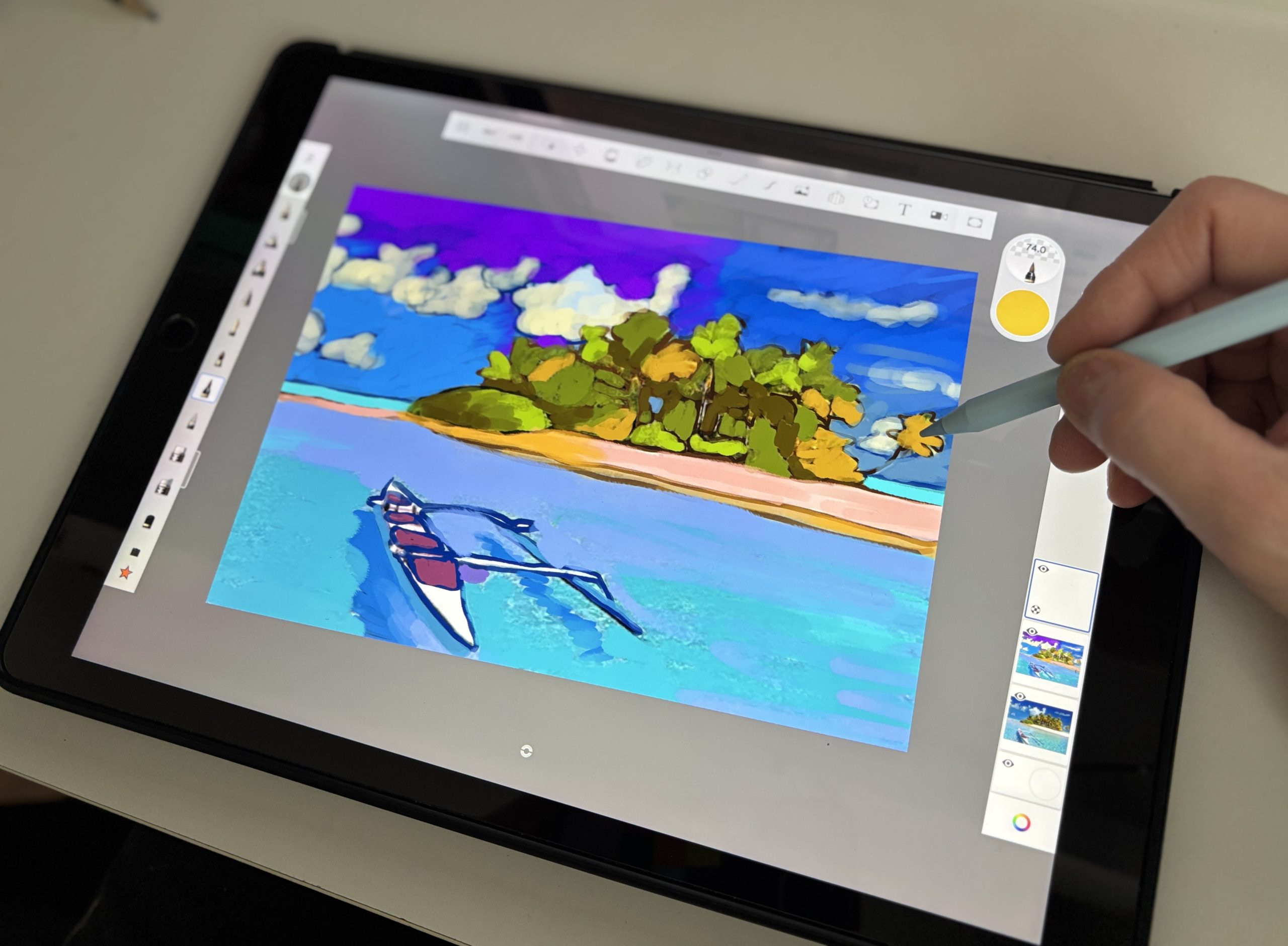
Experimenting with different digital brushes, we applied the color evenly, aiming to create vivid contrasts between different areas of the picture. We discovered that by changing saturation and brightness, we could completely transform the atmosphere of the original landscape, turning it into a magical and personal place.
Finally, we refined the details and ensured the overall composition was harmonious and communicative. The end result is a series of vibrant digital images, where each landscape has become an inner vision. We truly understood what Gauguin meant when he said he didn’t paint what he saw, but what he felt. Through this workshop, we learned to manage a complete graphic workflow: from choosing a reference to layer management and color modulation. This experience showed us that technology, when used mindfully, enhances expressiveness and offers new ways to communicate our emotions, looking at the world through different eyes—just like the great artists of the past.